Mongolia Family Adventure
mongolia
Mongolia Family Adventure
A seven-day family tour designed around the experiences that children remember longest: riding Mongolian horses across a valley, watching genuinely wild horses on the steppe, staying overnight with a nomadic family, and sleeping in a traditional ger with a wood stove and a sky full of stars visible through the crown ring.
Horseback riding for all ages -- your guide matches each family member to a horse suited to their experience
Meet and stay with a Mongolian nomadic family and learn how they live, work, and move with the seasons
Watch Przewalski wild horses at Khustai National Park -- the only truly wild horse species in the world
Explore Gorkhi-Terelj National Park: granite formations, Buddhist temple hike, and forest valleys
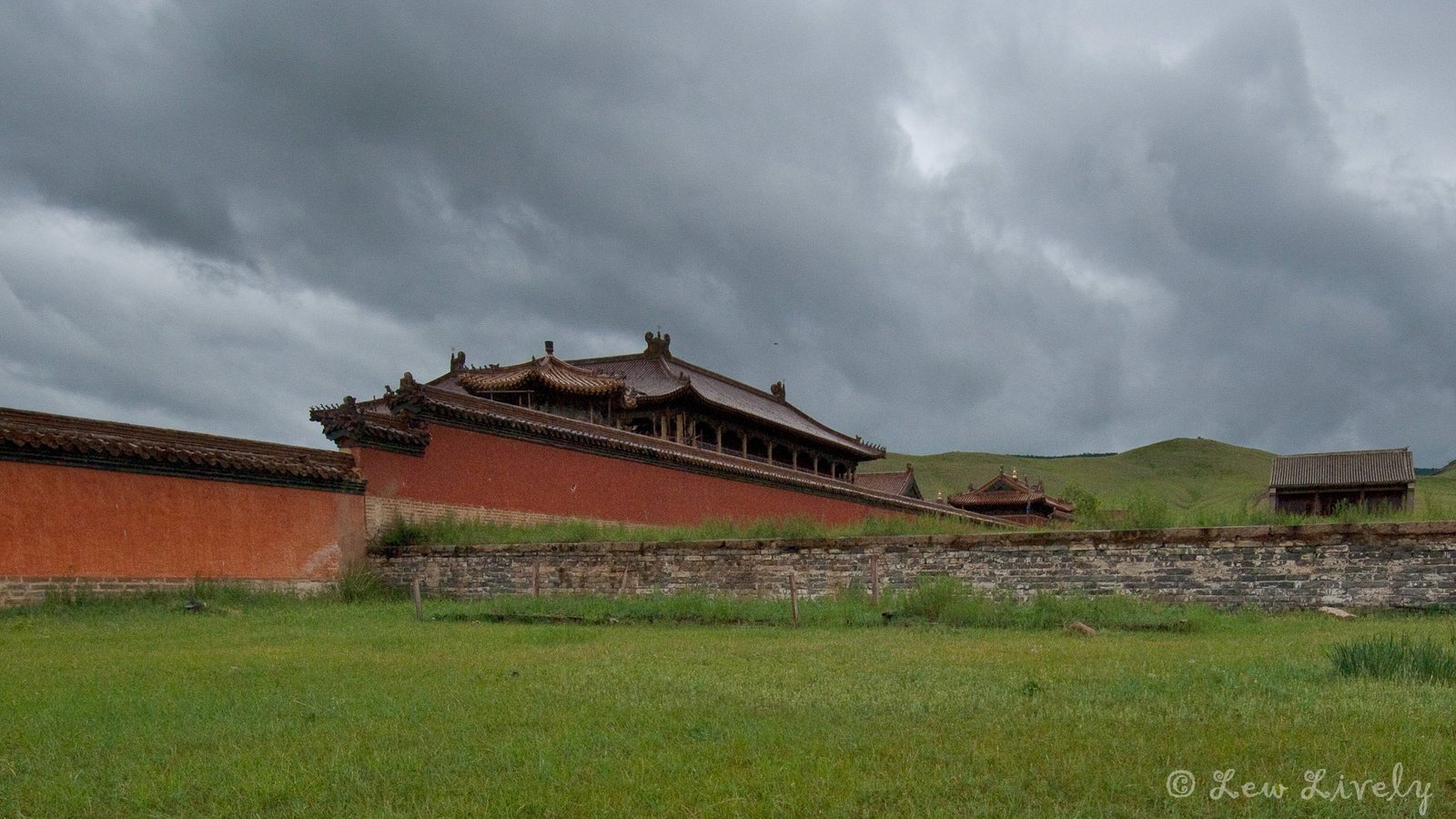
Visit Erdene Zuu Monastery at the ancient Mongol capital of Karakorum
Mongolia is one of the best family travel destinations in Asia -- the landscape is enormous and safe, the activities are physical and hands-on, and Mongolian culture is built around hospitality to travelers and affection for children. This tour is paced for families: shorter drive days than the standard routes, with time built in for rest, play, and the unstructured exploration that children need. The horseback riding in Terelj is adapted to every experience level. The wild horse search at Khustai is led by a park naturalist. The nomadic family visit is an afternoon and overnight at a working camp where children help with the animals and learn how the ger is built. The schedule is designed so that children stay engaged without being exhausted -- and so that parents can enjoy the landscape without managing logistics.
- 4WD Vehicle
- 1-8 guests (family groups)
- 7-Day, 6-Night
- Fulltime English Speaking Tour Guide
- Available May - October
INCLUTIONS & EXCLUSIONS
Inclusions:
- Airport transfers (arrival and departure)
- All transport in private 4WD vehicle throughout
- 1 night hotel in Ulaanbaatar
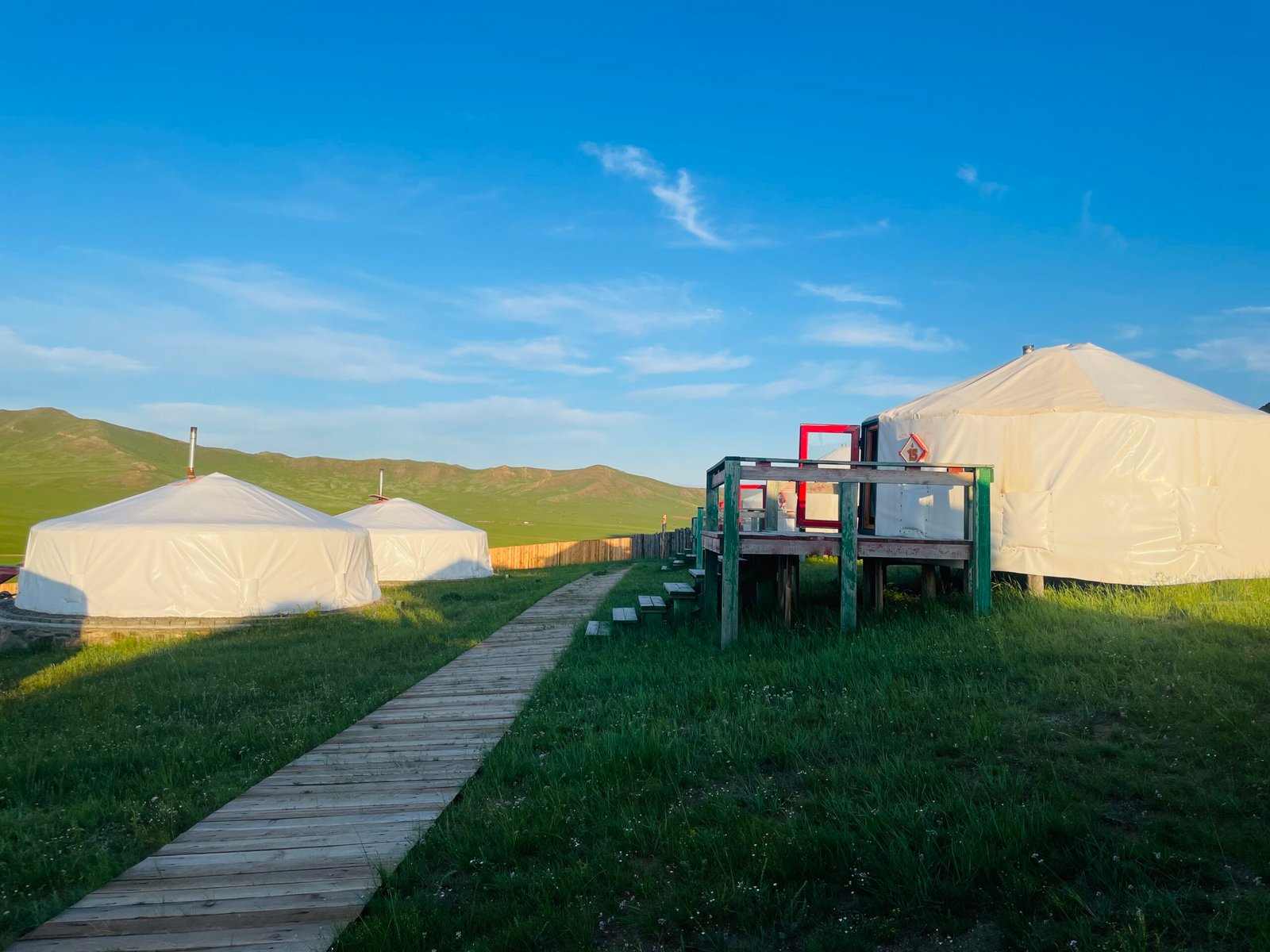
- 5 nights in traditional ger camps
- 1 night with nomadic family
- All meals throughout the tour (breakfast, lunch, dinner)
- Horseback riding session for all family members
- English-speaking guide throughout
- Entrance fees to all listed sites
Exclusions:
- International flights
- Mongolia visa fees
- Travel insurance (required, must cover children)
- Alcoholic beverages
- Personal purchases and souvenirs
- Tips for guide and driver
from our gallery
Day 1: Arrive in Ulaanbaatar
Airport Transfer
Duration: 30-45 minutes from Chinggis Khaan International Airport to your hotel.
Natural History Museum of Mongolia
Duration: 1.5-2 hours. One of the best dinosaur collections in Asia, with original Velociraptor, Protoceratops, and complete Tarbosaurus skeletons discovered in the Gobi Desert. Excellent for younger visitors.
Sukhbaatar Square Walk
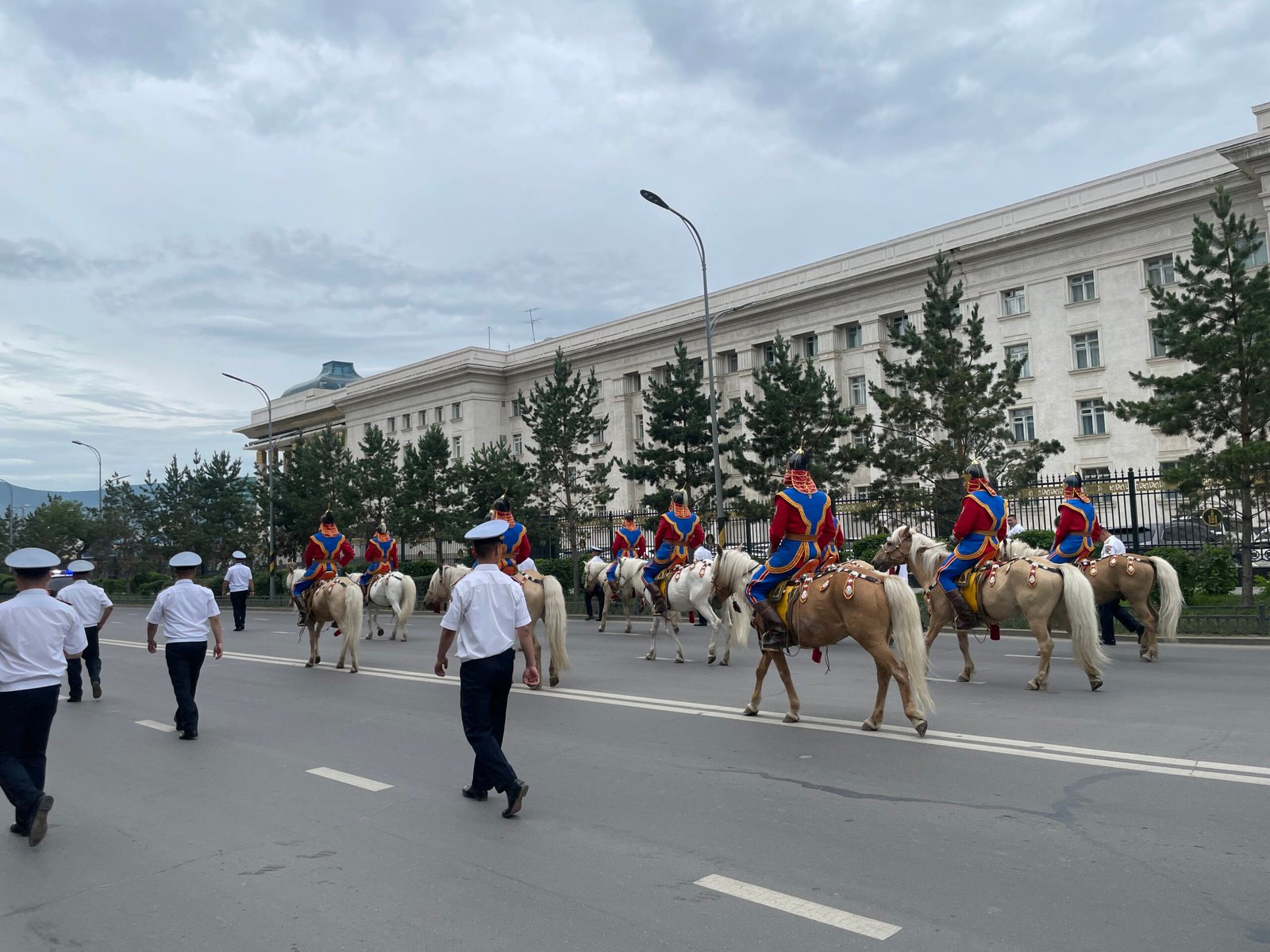
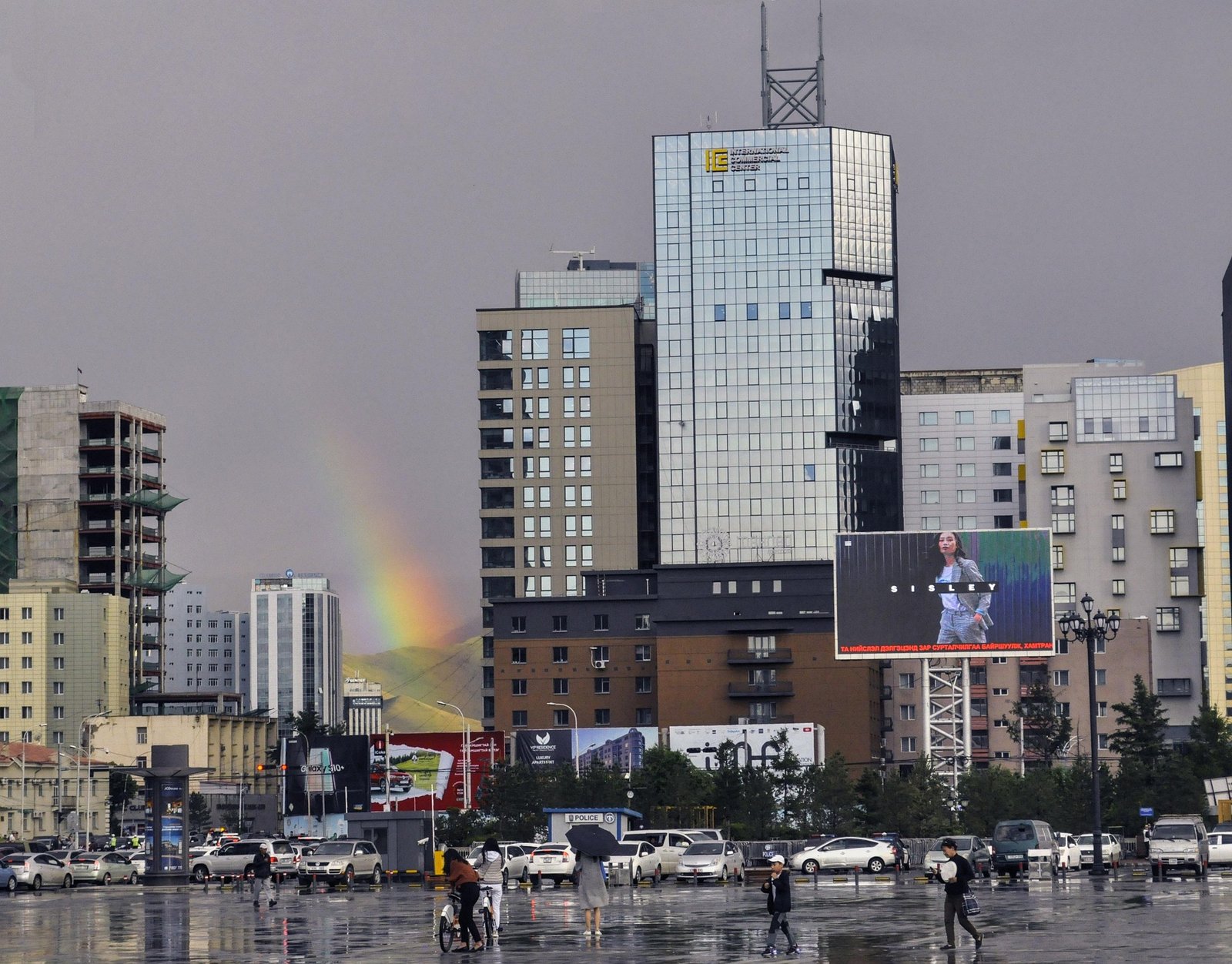
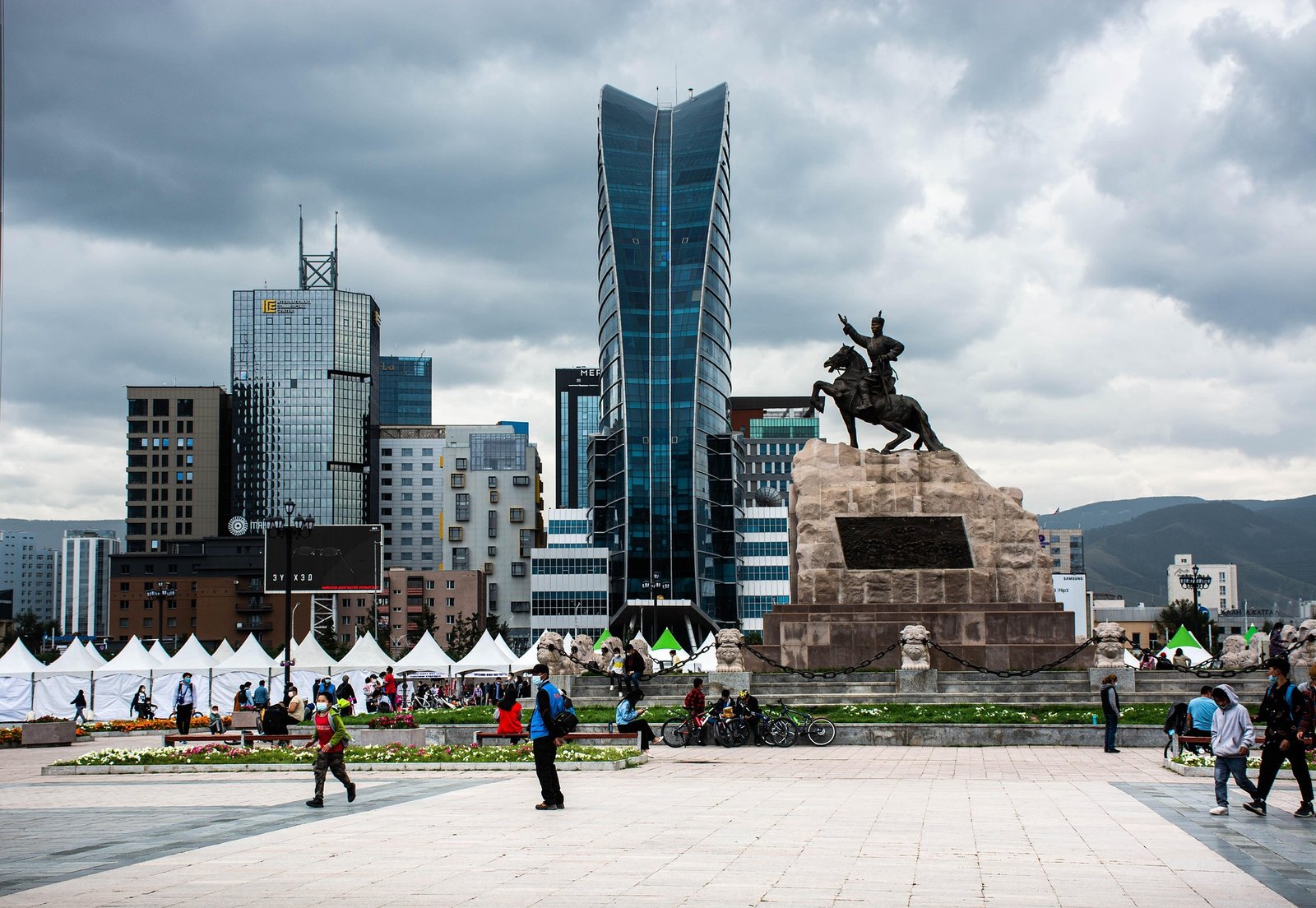
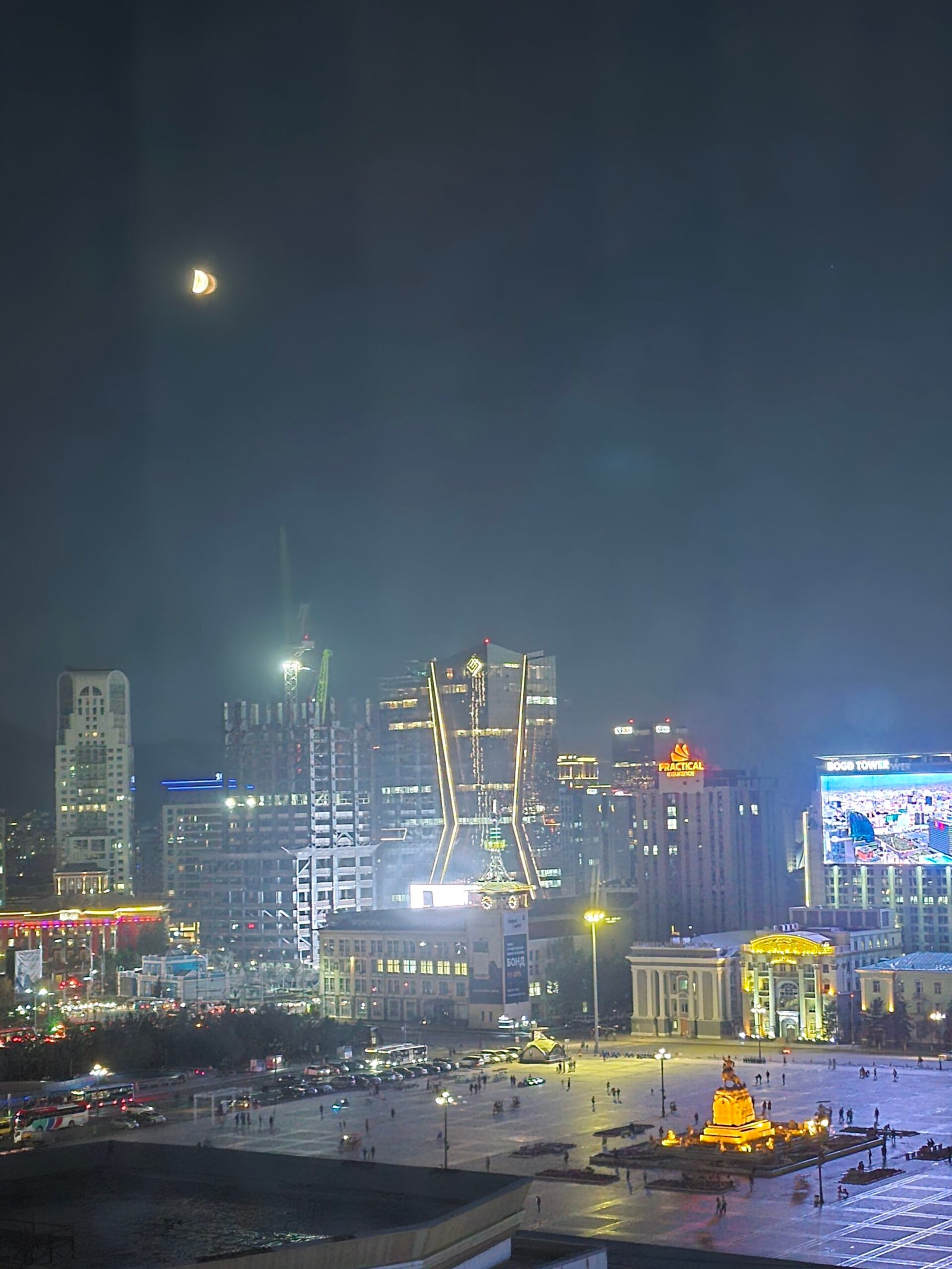
Duration: 45 minutes. The central square and Government Palace with its guard ceremony. A manageable walk for all ages before the first day on the road tomorrow.
Your guide meets the family at the airport and brings you into Ulaanbaatar for one night before the tour moves into the countryside. The city is worth an afternoon: the Natural History Museum has original dinosaur skeletons from the Gobi Desert — the Velociraptor discovered here in 1971 is the species that appeared in Jurassic Park — and the collection is small enough not to be overwhelming before a long week.
Sukhbaatar Square in the early evening is busy and social, which gives a sense of how Mongolians actually spend time in their capital. Dinner nearby, early night. Tomorrow is the first drive and the first ger.
Day 2: Chinggis Khan Statue & Gorkhi-Terelj
Chinggis Khan Equestrian Statue
Duration: 2 hours. 54km east of Ulaanbaatar. The 40-meter stainless steel statue sits at the site where, according to legend, Temujin found the golden whip. Take the elevator to the viewing deck and walk along the observation deck at the rider's chest level -- an impressive experience for all ages.
Drive to Gorkhi-Terelj National Park
Duration: 1.5 hours (80km northeast of UB). Enter the park by mid-afternoon.
Ger Camp & First Evening
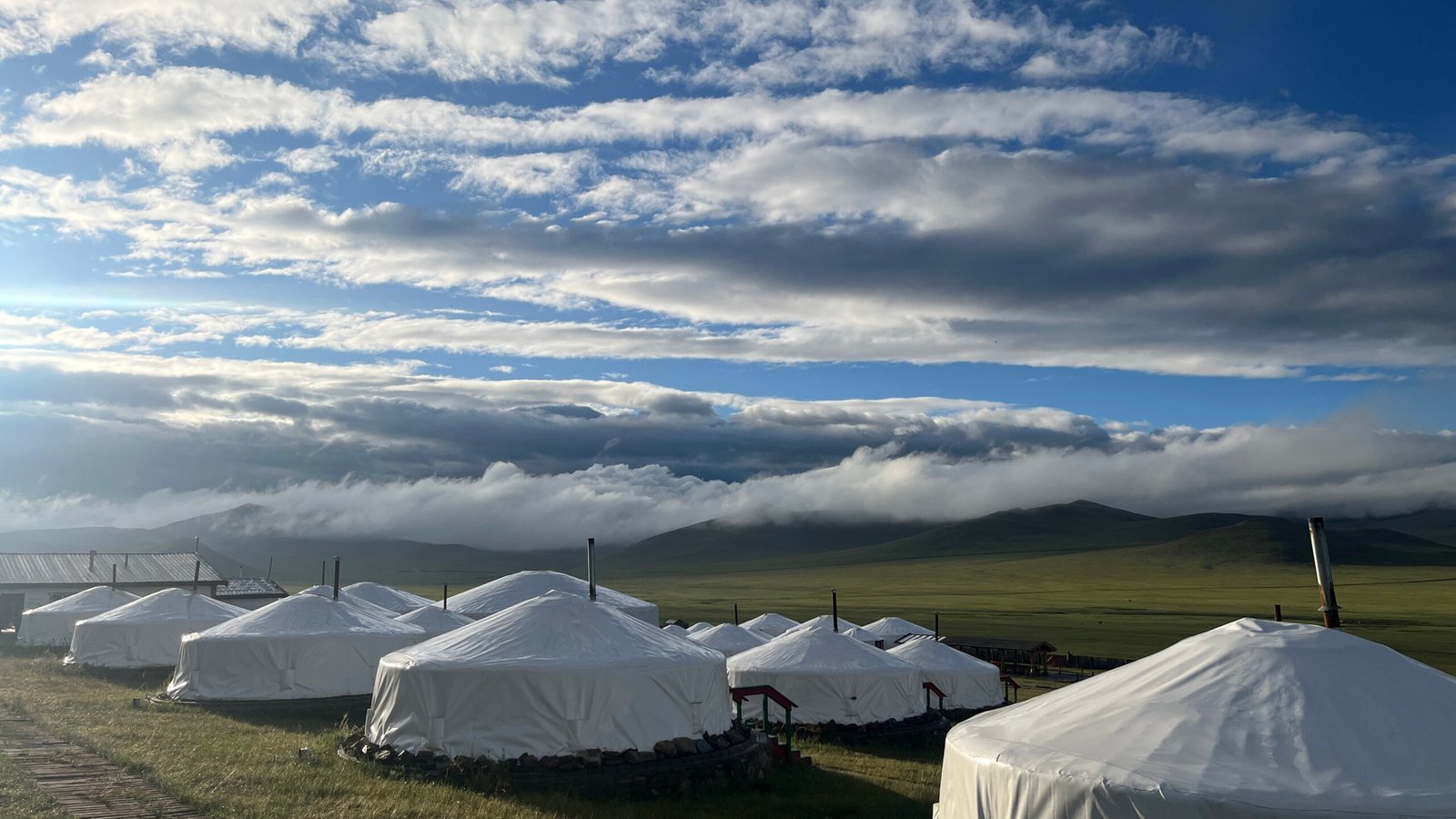
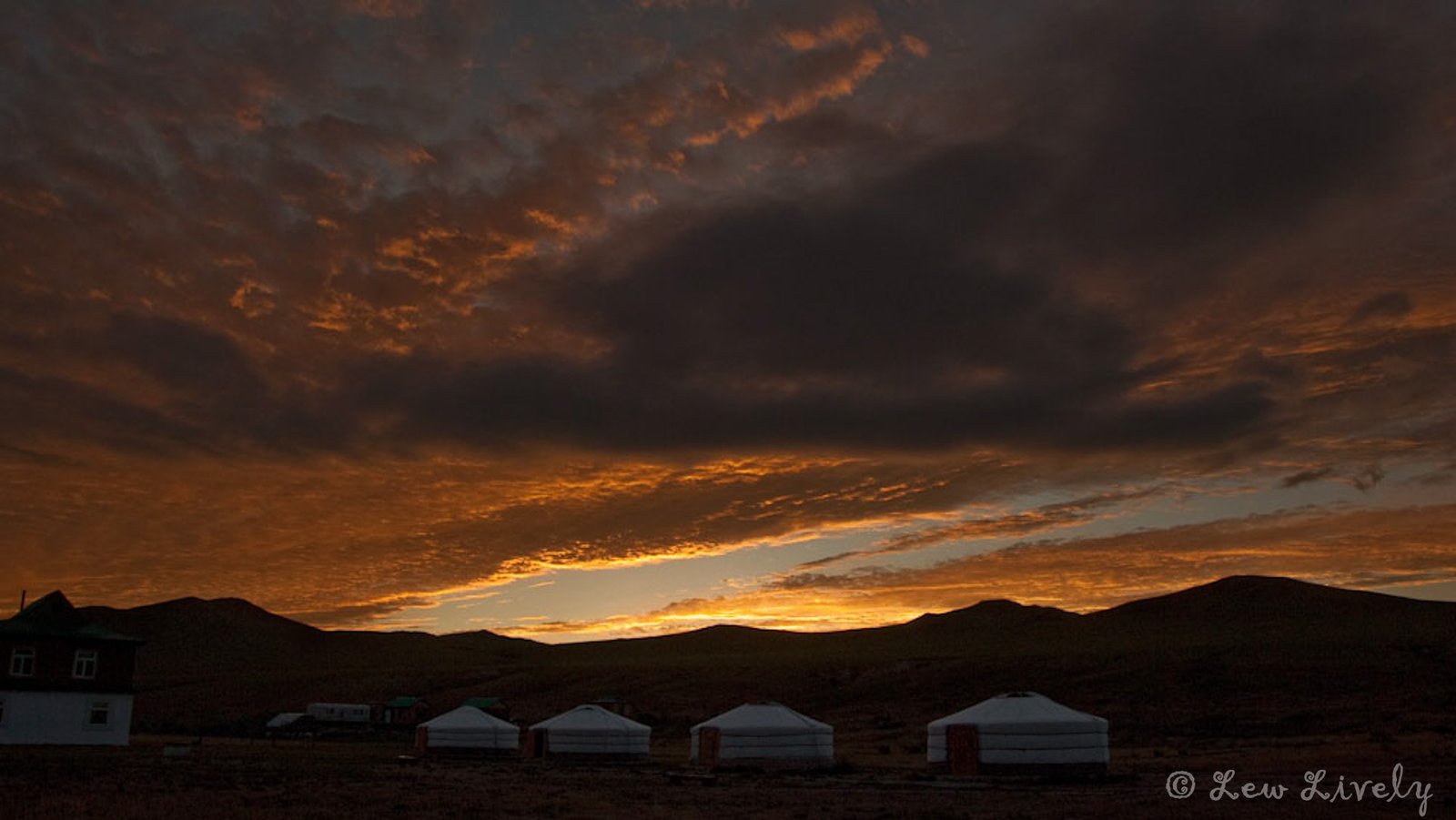
First night in a traditional ger: wood stove, hand-carved wooden furniture, and the sound of the steppe. Your guide explains how the ger is assembled and how families live year-round in this structure.
Overnight: Traditional ger camp in Terelj National Park
Two destinations on day two: the Chinggis Khan statue in the morning, Terelj in the afternoon. The statue complex includes a Mongolian empire-era museum inside the base and a small area where children can try on traditional armor and take photos. The elevator ride inside the horse to the viewing platform is the main event — looking out across the steppe from that height, in every direction, clarifies why the Mongols built their empire from here.
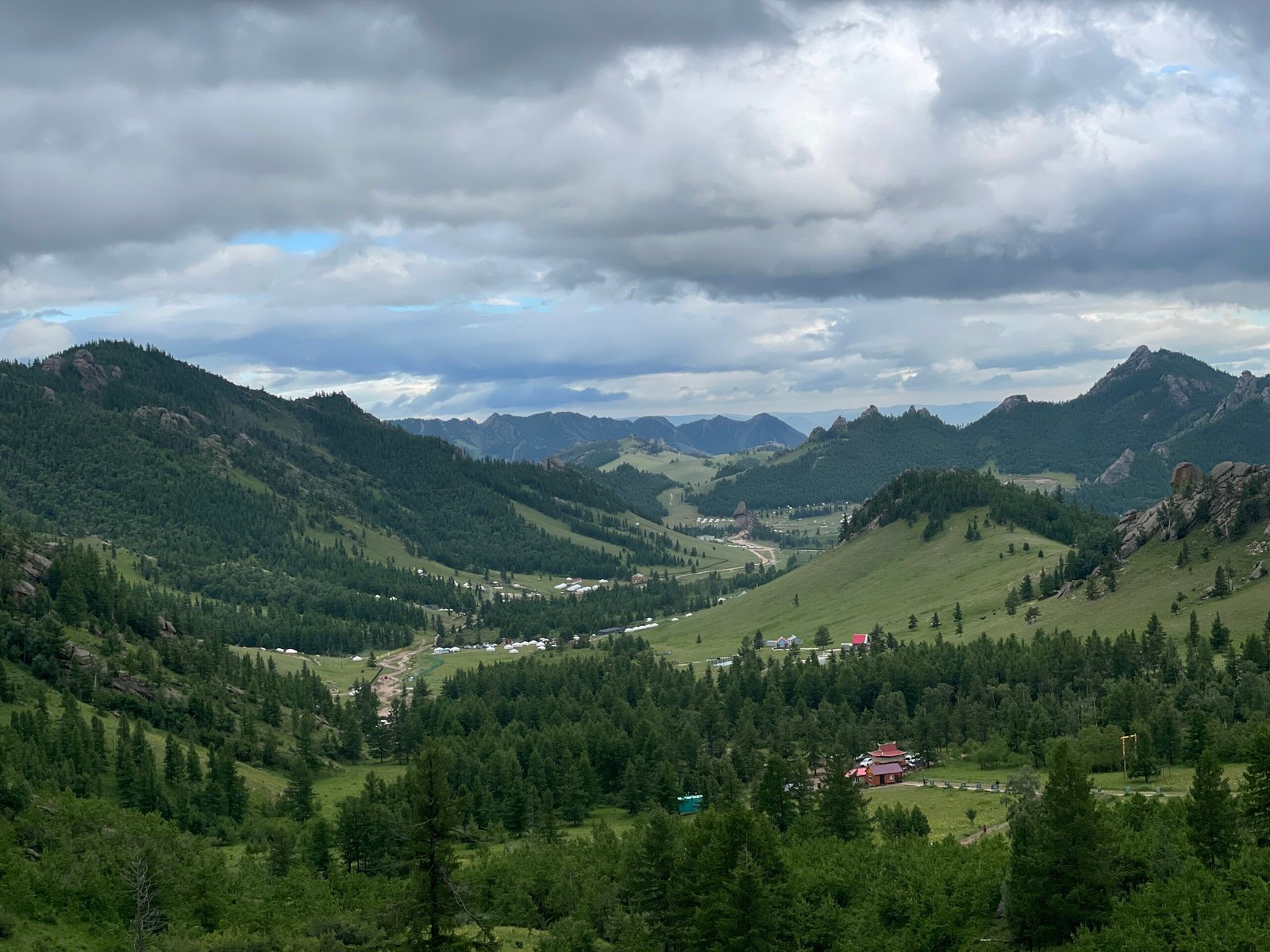
The afternoon in Terelj is for settling into the first ger. Camp staff will show the children how to start the stove and explain the symbolism of the ger’s structure — the crown ring at the top, the two central pillars, the way the door always faces south. It tends to stick in a way that a museum exhibit doesn’t.
Day 3: Terelj National Park Activities
Turtle Rock & Ariyabal Temple Hike
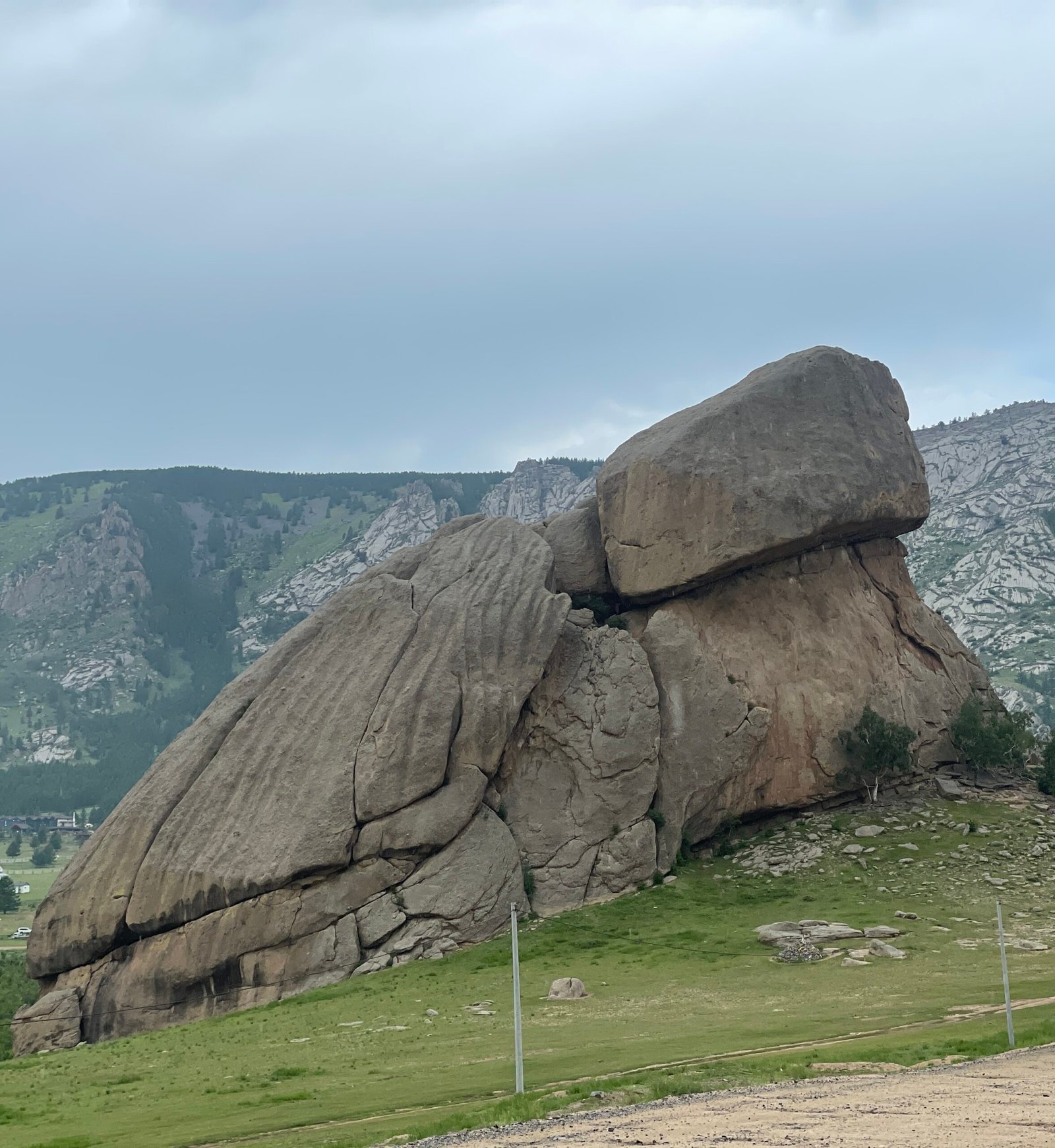
Duration: 2 hours. Walk to Turtle Rock, then climb 108 steps to the hilltop meditation temple. Manageable for children aged 7 and up. Good views of the forested valley from the top.
Horseback Riding
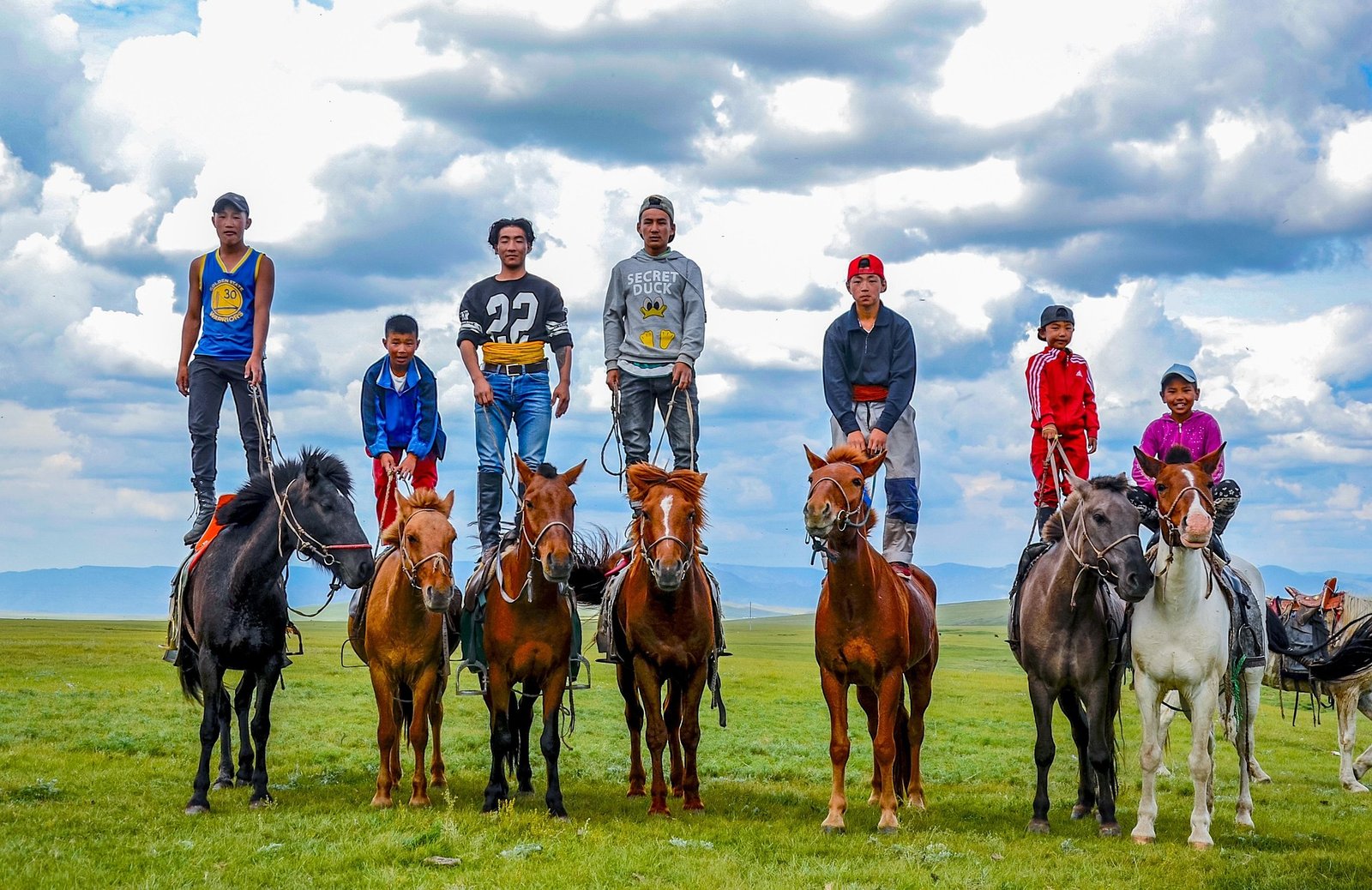
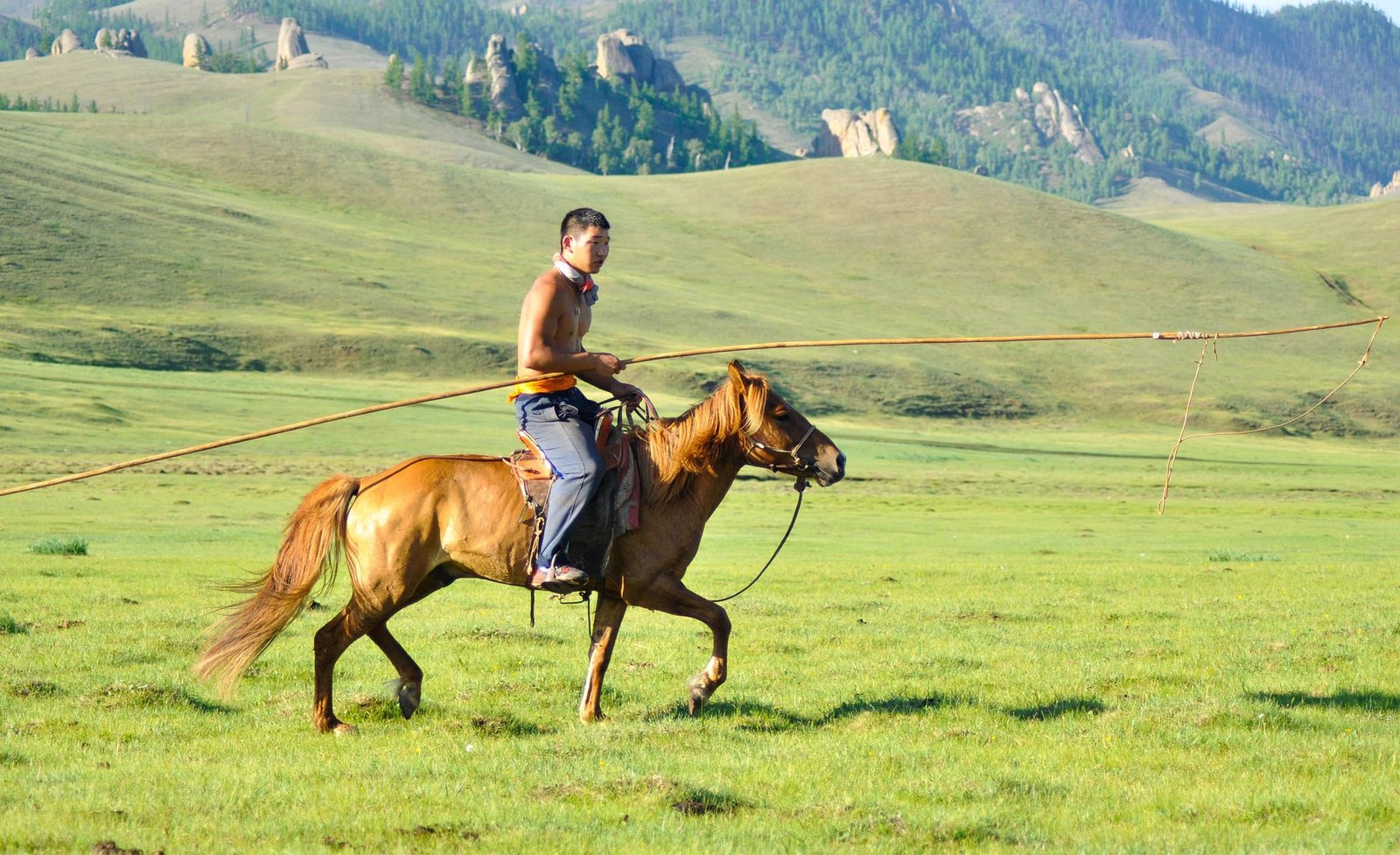
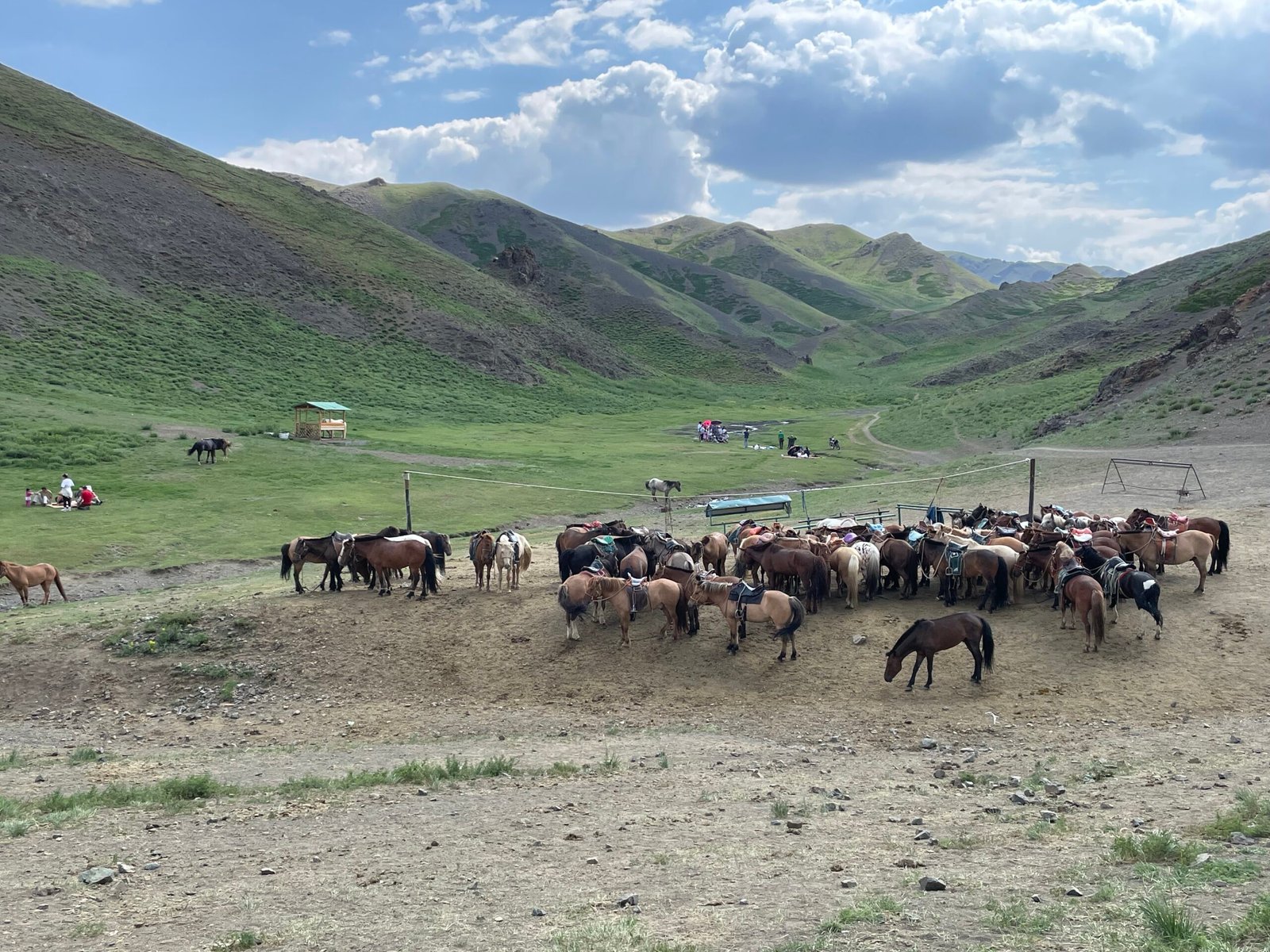
Duration: 2-3 hours. Your guide and the camp horse handler match each family member to a suitable horse. Children under 8 ride with a handler on a lead. The route covers open meadows and forest tracks above the camp -- enough variety to feel like a real ride.
Overnight: Traditional ger camp in Terelj National Park
A full day in Terelj with the two activities that most children remember longest from a Mongolia trip: climbing a mountain to a Buddhist temple and riding a horse across a valley.
The horseback ride is adapted to whatever experience the family brings. Mongolian horses are short, stocky, and patient — generations of handling by nomadic children has made them comfortable around inexperienced riders. Your guide and the local handler make sure every family member is properly equipped and comfortable before the ride begins. Most children who have never ridden before manage two hours without difficulty. Most who have ridden before want to go faster.
Day 4: Khustai National Park -- Wild Horses
Drive to Khustai National Park
Duration: 2 hours (180km west of UB). Arrive at the park entrance by mid-morning.
Wild Horse Tracking
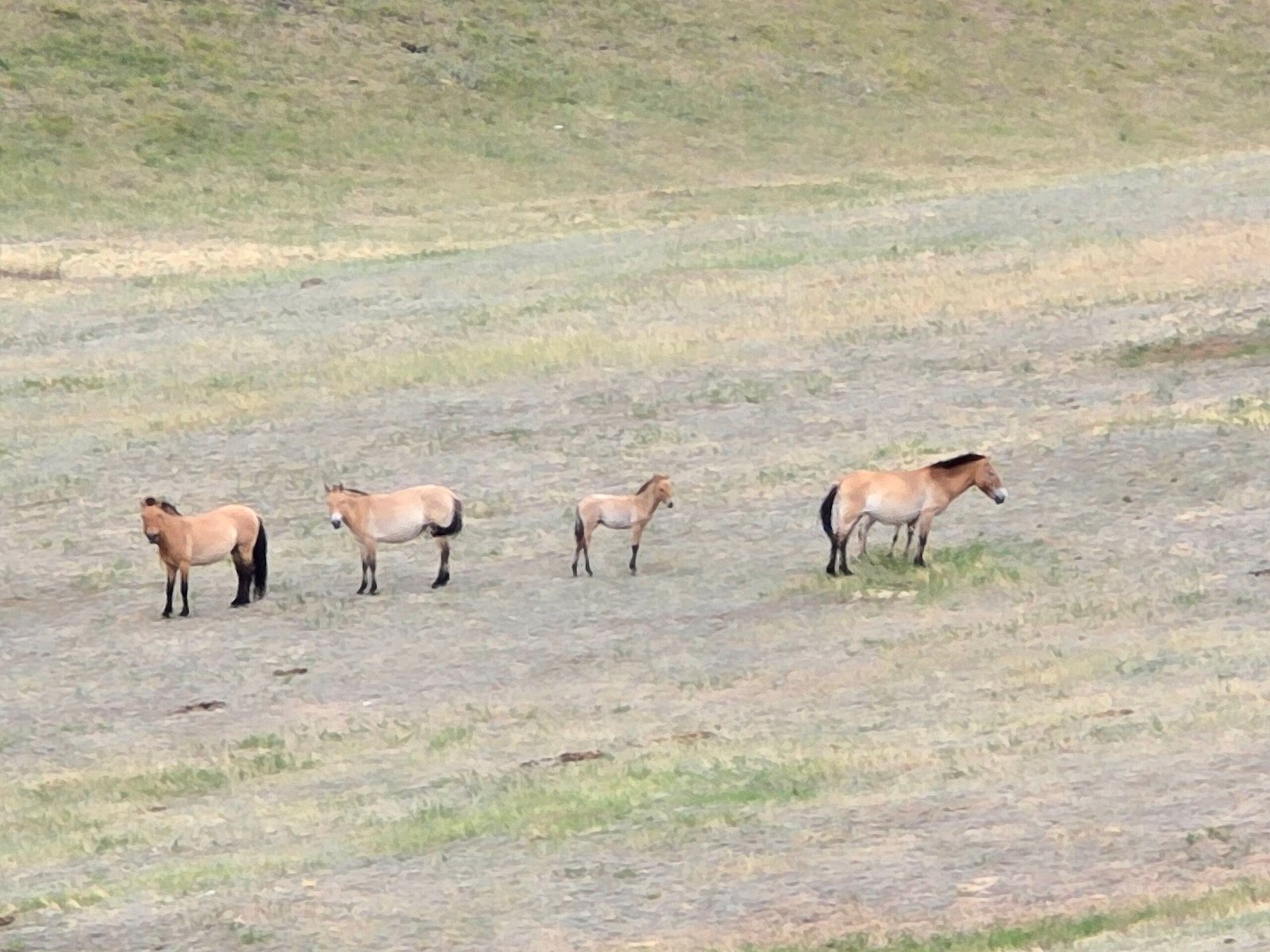
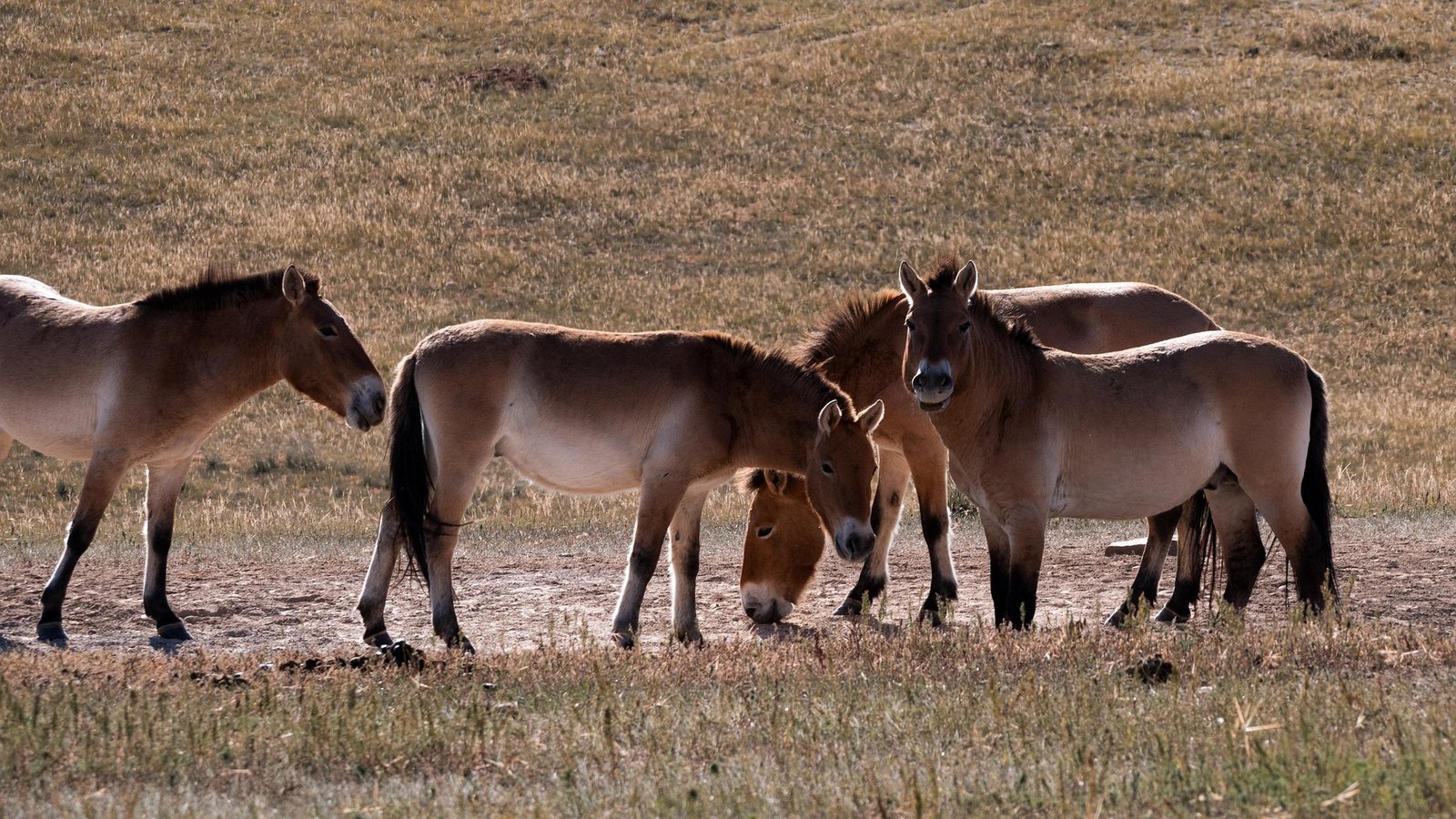
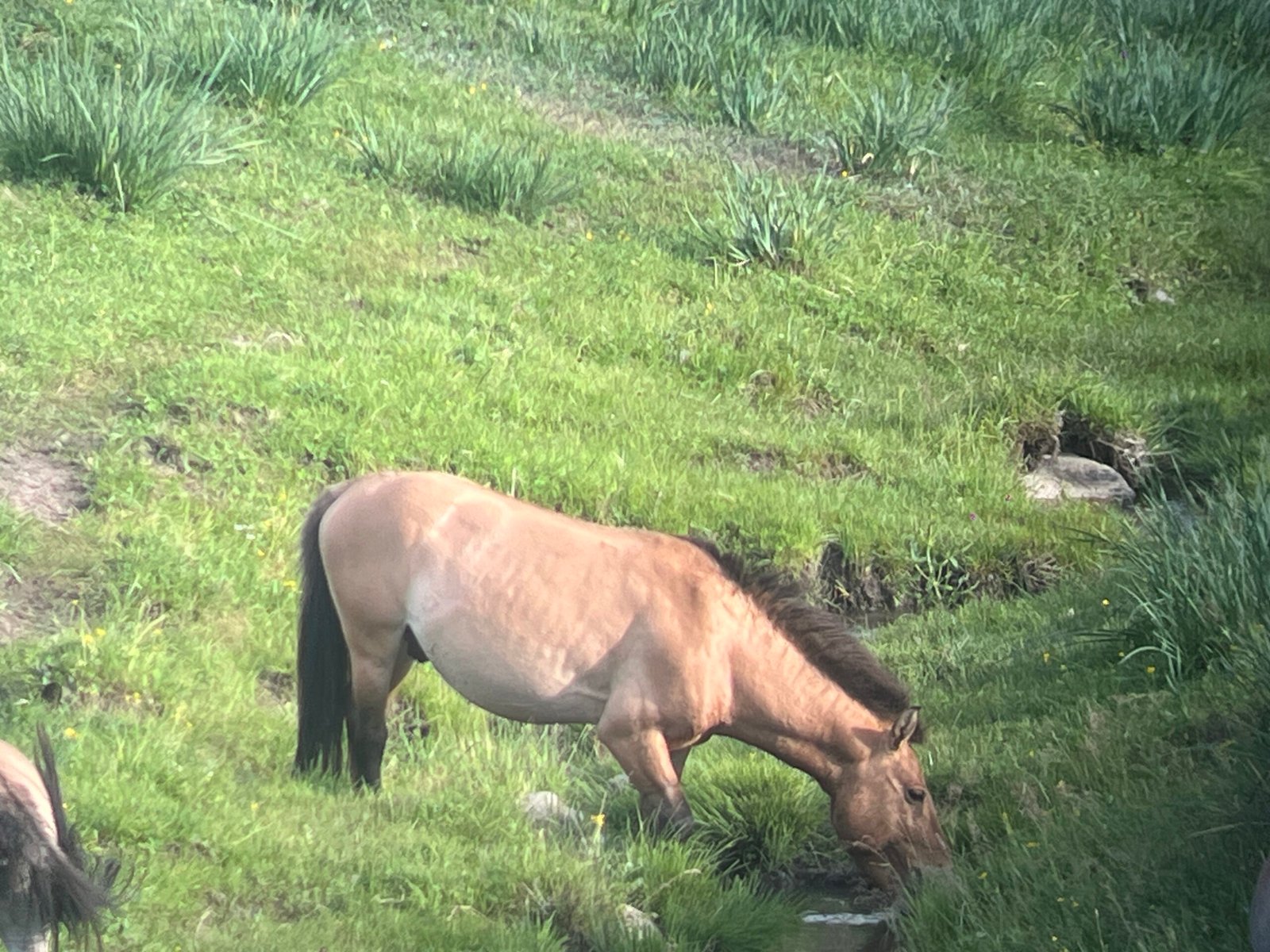
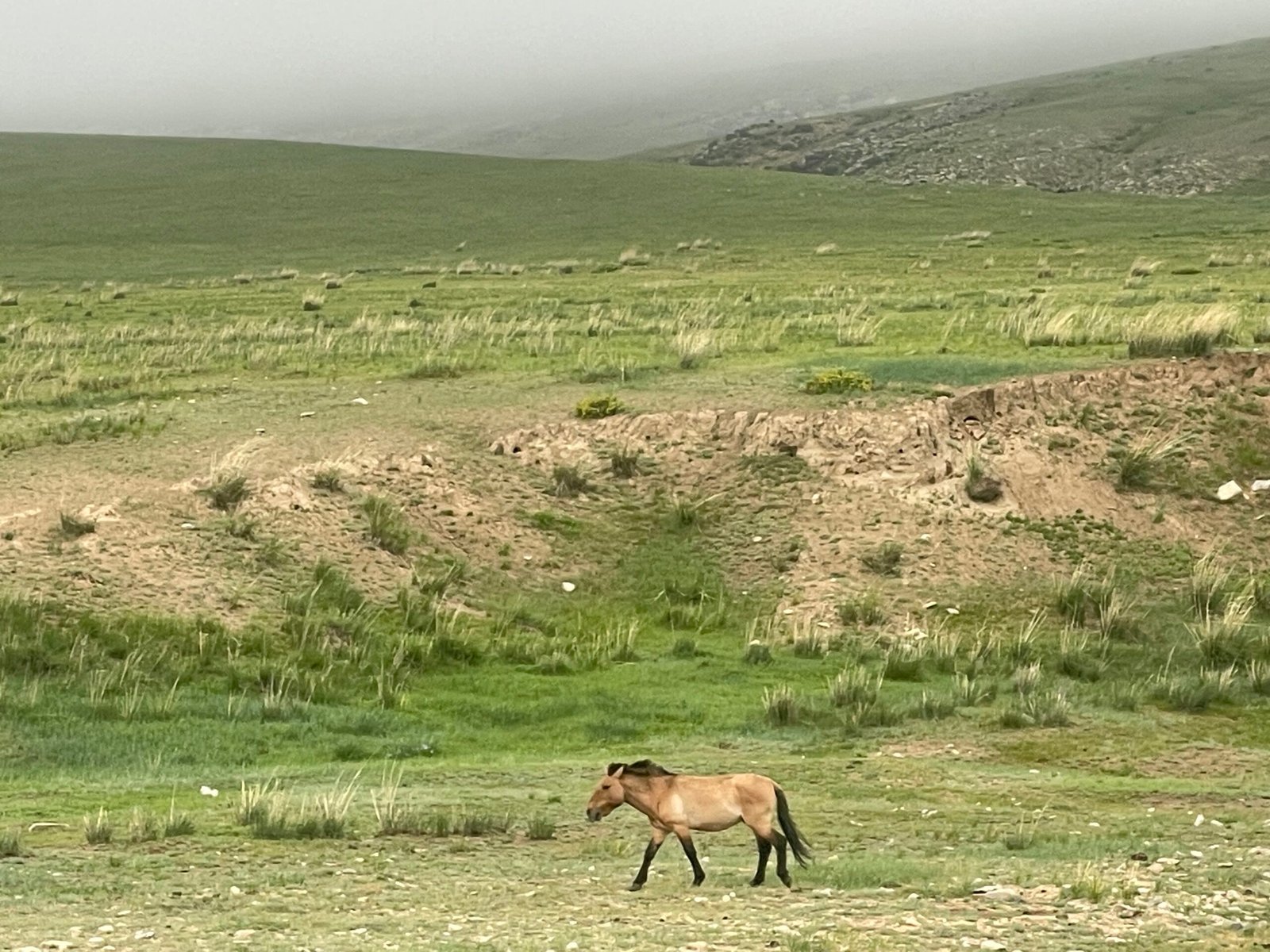
Duration: 2-3 hours with the park's naturalist. The Takhi herds are tracked by the park team daily -- your guide knows where to go. The horses roam in family groups of 5-20 and are genuinely wild: no fences, no handlers, no feeding.
Continue West to Karakorum
Duration: 3 hours (330km). Arrive at the ger camp near Kharkhorin by early evening.
Overnight: Ger camp near Kharkhorin
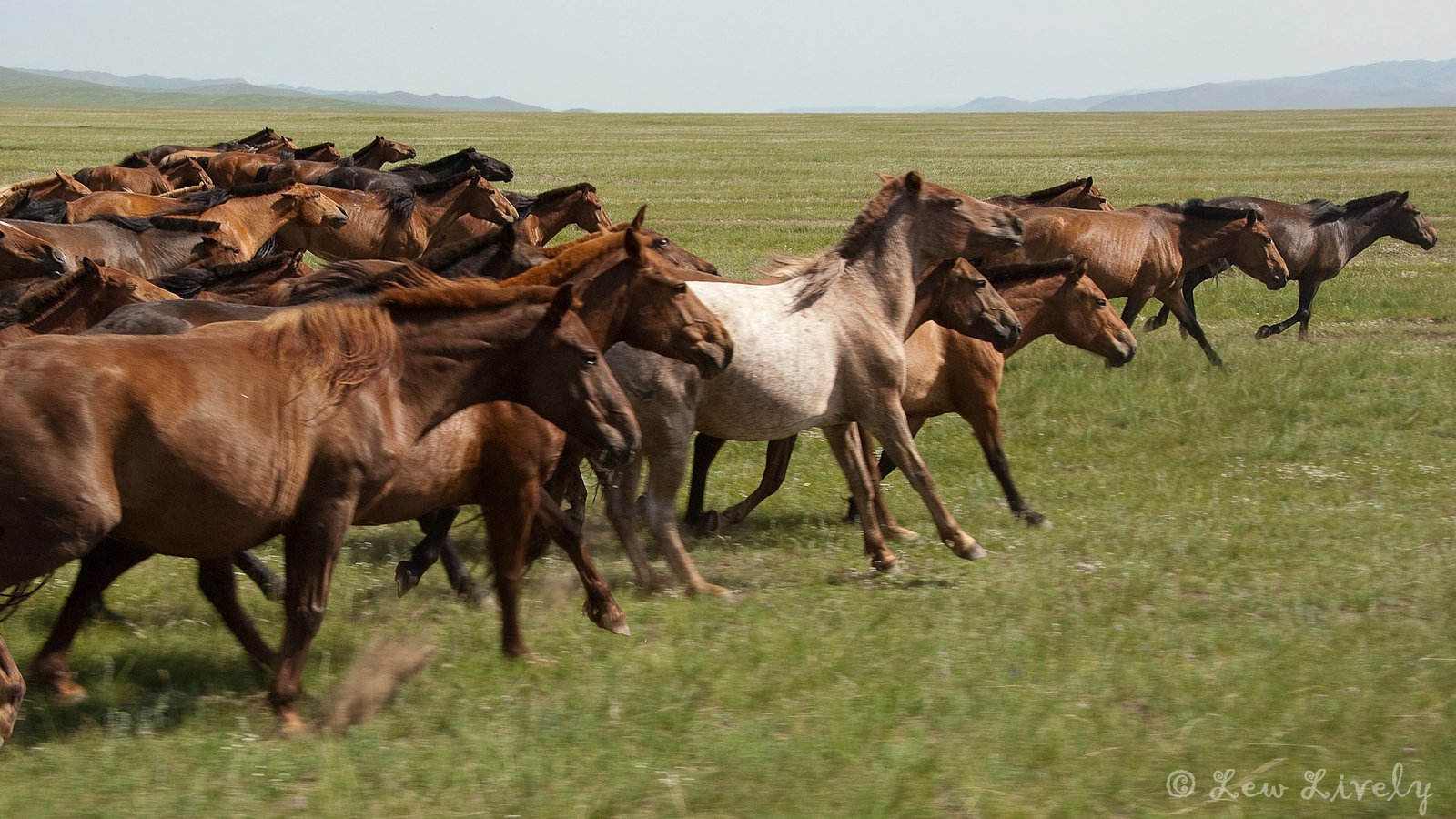
Khustai is 45 minutes west of Ulaanbaatar and holds a herd of Przewalski’s wild horses — the only equine species never domesticated. They were extinct in the wild by 1969, existing only in European zoos. The reintroduction to Khustai in 1992 was one of the most successful wild horse conservation programs in history, and the herd now numbers over 300 animals.
Watching a family group of wild horses — mares, foals, and a stallion — crest a ridge and disappear into the steppe is something that stays with children in a way that a zoo exhibit cannot replicate. The horses are aware of you from distance and move away, which makes them feel genuinely wild rather than habituated. The afternoon drive west to Karakorum covers open steppe with nothing obstructing the horizon.
Day 5: Erdene Zuu Monastery & Nomadic Family Visit
Erdene Zuu Monastery
Duration: 1.5 hours. Three surviving temples from the original 62, surrounded by 108 white stupas that still form intact walls. Built in 1586 from the stones of the demolished Mongol capital. A good entry point for explaining the Mongol Empire to children.
Nomadic Family Visit & Lunch
Duration: 3-4 hours. Visit a local nomadic family's ger camp for lunch and an afternoon of learning: how to lasso, how to milk a mare, how to fold and unfold the ger structure. The family has hosted many visiting families and the interaction is natural and unhurried.
Overnight: With the nomadic family (guest ger provided)
Erdene Zuu is easier to understand when you know what it was built from: the stones of Karakorum, the 13th-century Mongol capital that once rivaled the great cities of Asia. Walking the walls and looking at the empty steppe to the south, you can explain to children that where the grass is now, there was once a planned city with markets, Buddhist temples, churches, and a mosque — all within a single walled compound.
The nomadic family visit in the afternoon is the activity most families rate as the highlight of the entire trip. You arrive at a working camp during the afternoon milking and help (or watch) the family manage their horses. Dinner is cooked over the central stove in the main ger. After dark, with no light pollution for 200 kilometers, the sky is the kind that most children have never seen.
Day 6: Orkhon Valley & Return Drive
Morning Walk in Orkhon Valley
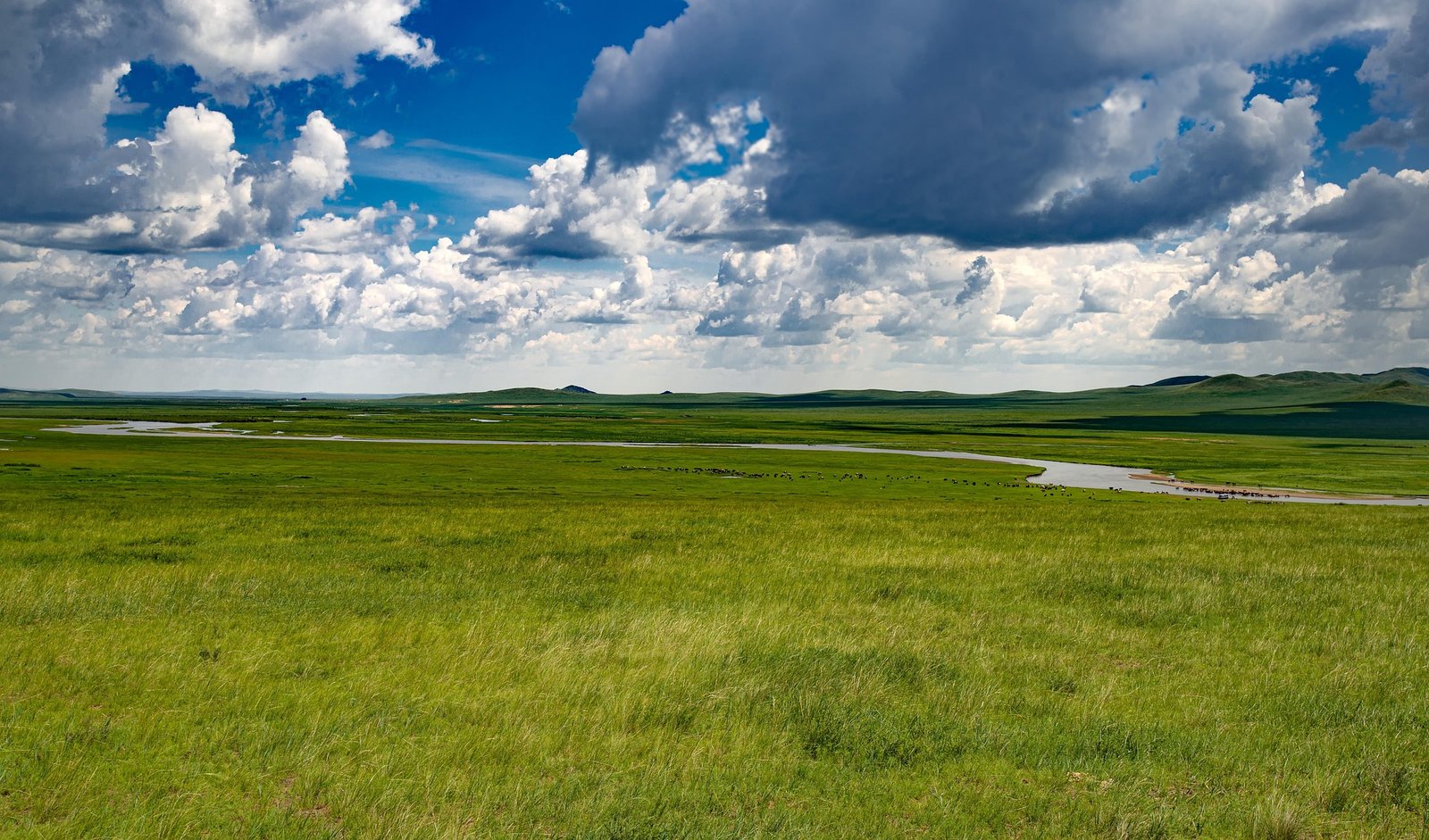
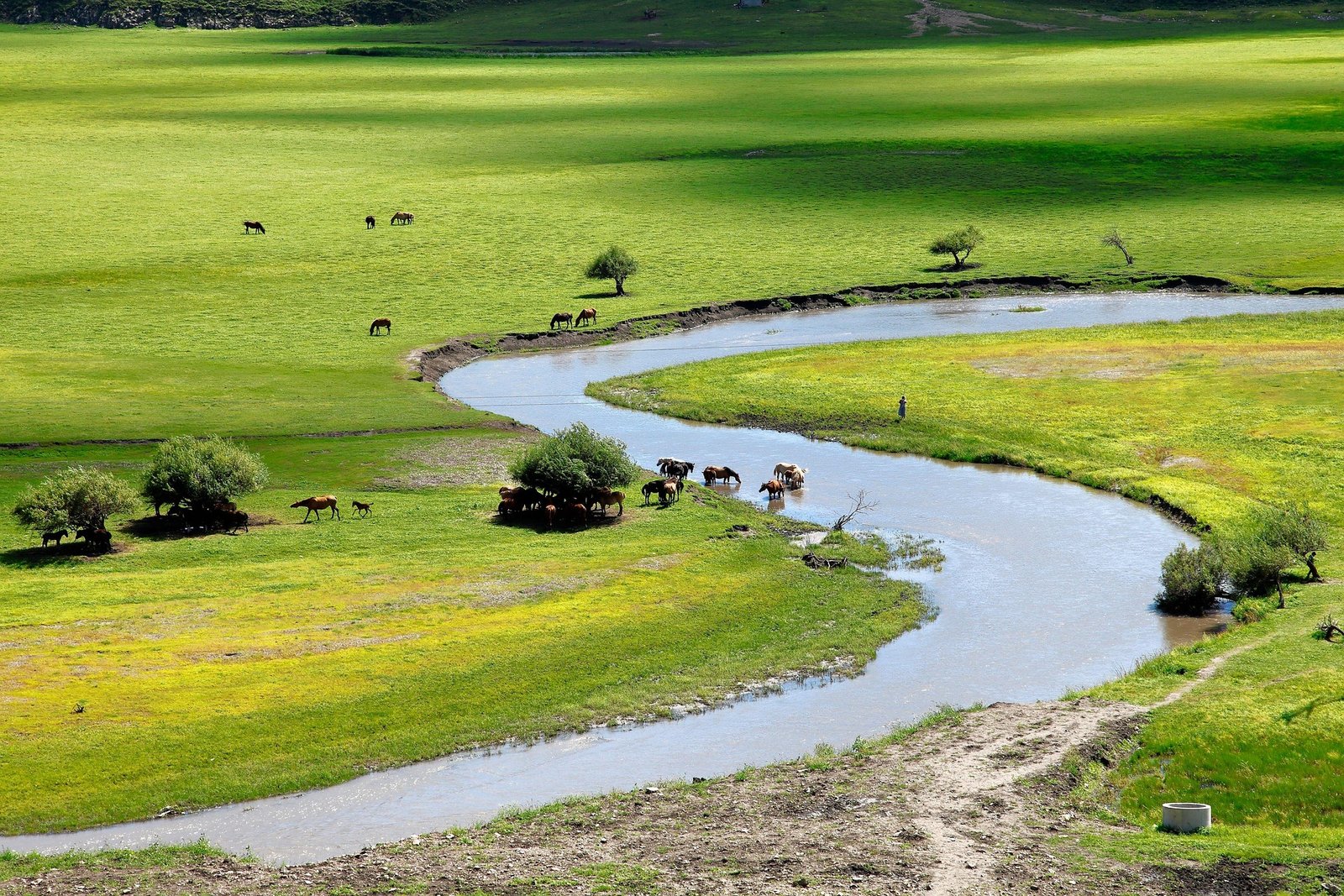
Duration: 1.5-2 hours. Walk along the Orkhon River below Erdene Zuu -- the same river that flows past the ruins of five successive Mongol imperial capitals. Good for a relaxed morning before the drive.
Return Drive Toward Ulaanbaatar
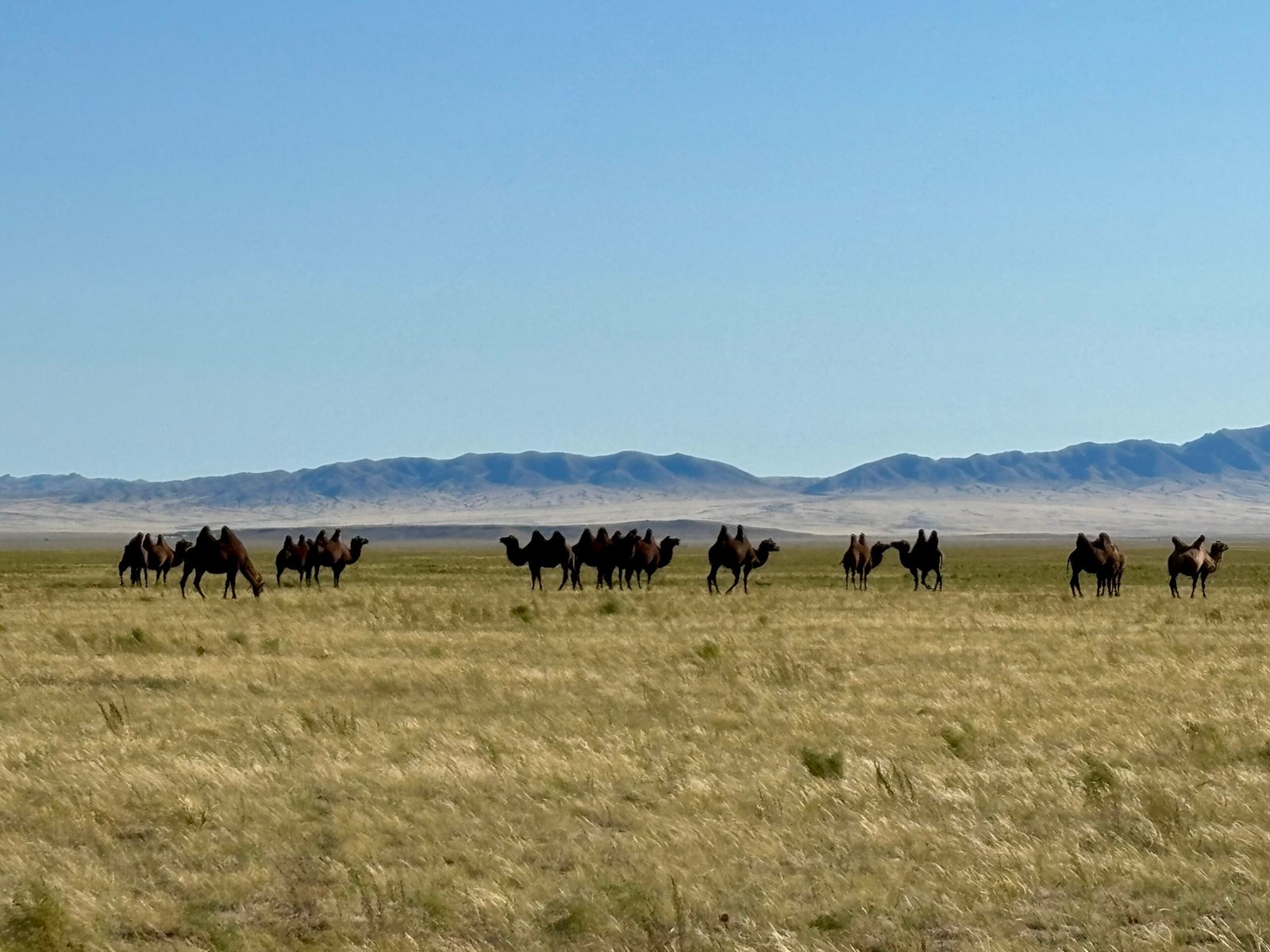
Duration: 5-6 hours (360km east). The route crosses the broad Mongolian steppe -- a long drive with regular stops for stretching, snacks, and watching the landscape.
Overnight: Ger camp on the central steppe
Meals: Breakfast, Lunch, Dinner
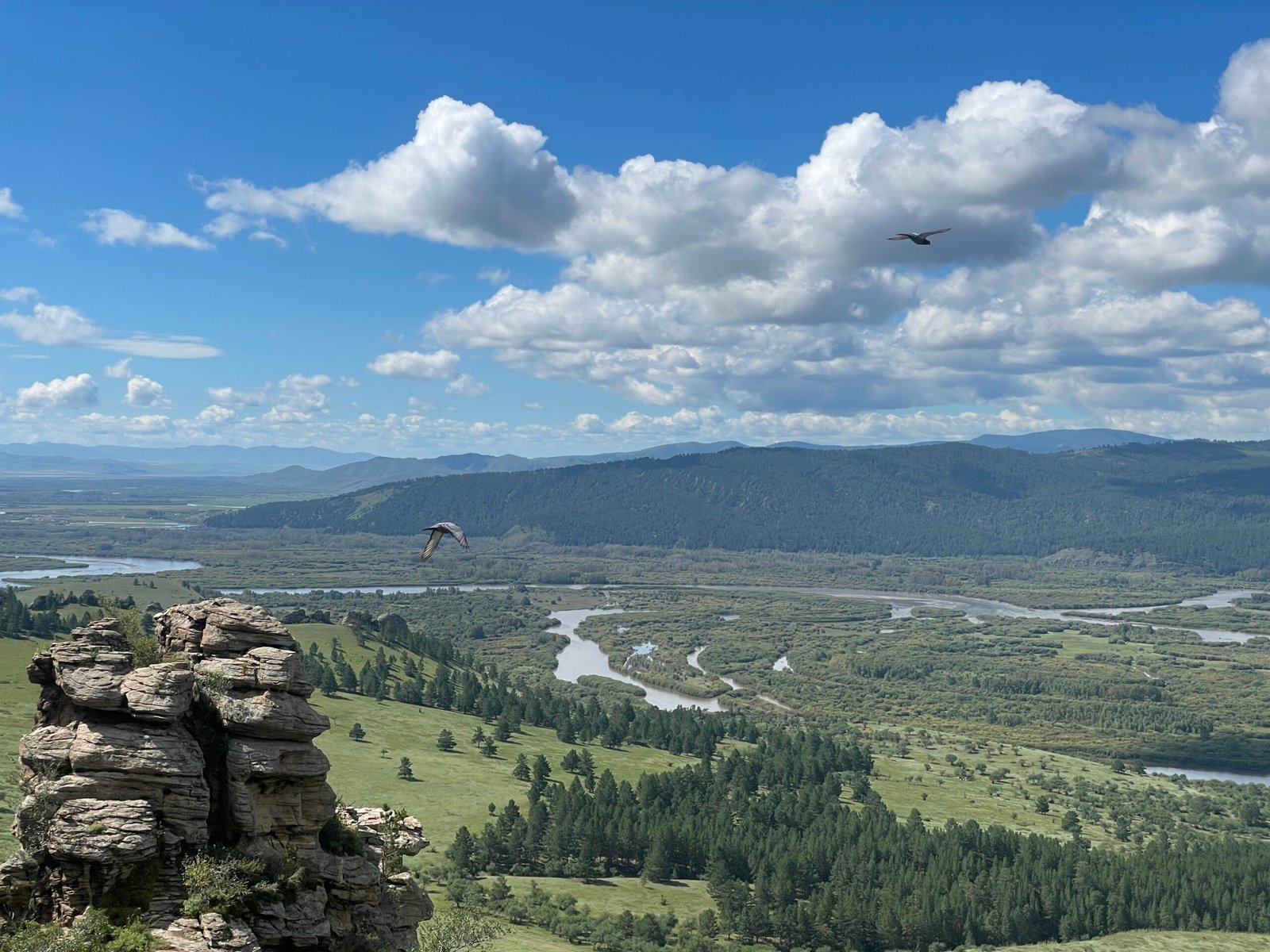
An easy morning in the Orkhon Valley before the long drive back east. The river in summer is clear and shallow in places, good for a short walk or a paddle. The surrounding landscape — open valley, distant mountains, the occasional herder family moving their animals to higher pasture — is the Mongolia that doesn’t make it into most travel photos but that most travelers remember most clearly.
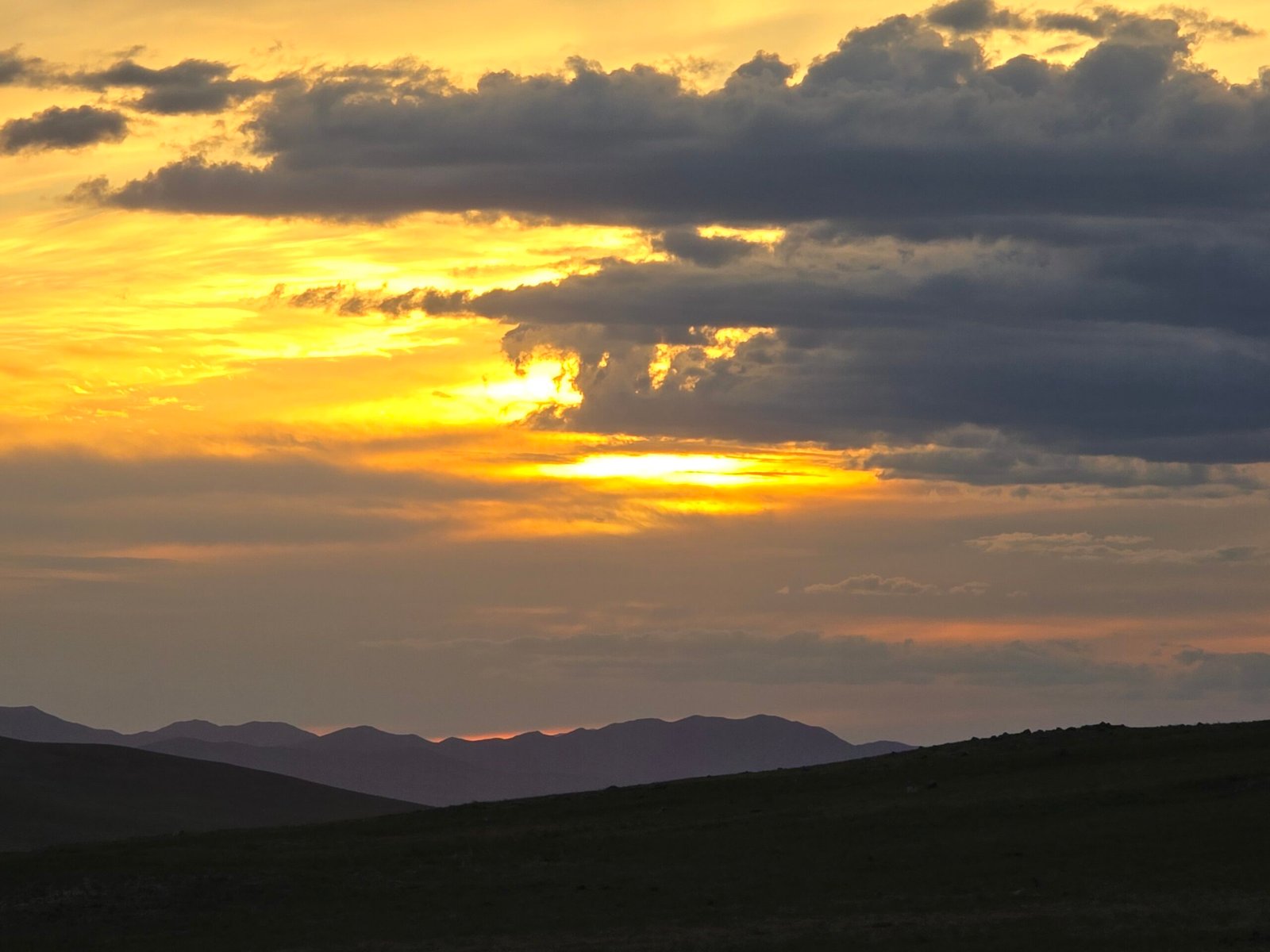
The drive back across the central steppe is the longest of the trip. Your guide knows where to stop: a rise with a good view, a spring where you can watch how nomadic families water their herds, and occasionally a family willing to wave you in for tea. The last ger camp tonight is on open steppe — the kind of location where the view from the doorway in every direction is the same: grass, sky, and nothing else.
Day 7: Return to Ulaanbaatar & Departure
Final Drive to Ulaanbaatar
Duration: 2-3 hours. Arrive back in the capital by midday.
Souvenir Shopping (Optional)
Duration: 1-2 hours. The State Department Store and nearby Narantuul market have good quality cashmere, felt crafts, and traditional items. Your guide knows which vendors are reputable.
Airport Transfer
Duration: 45-60 minutes to Chinggis Khaan International Airport for your departure flight.
The final morning back in Ulaanbaatar has a different texture from the arrival — the city looks smaller after six days of open steppe. If your flights allow time, the State Department Store in the center has the best concentrated selection of Mongolian crafts: cashmere, felt items, traditional chess sets, and the hand-painted miniature paintings that children tend to choose.
The drive to the airport gives one last view of the mountains that ring the city. The six days in the countryside — the wild horses, the nomadic family dinner, the horseback ride in Terelj, the monastery on the steppe — have a way of staying clear and specific in memory long after other trips have blurred. Most families leave already discussing a return.

Mon - Fri, 9.00am until 6.30pm