Mongolia Travel Vaccines and Health Guide: What You Need Before Your Trip
The CDC recommends Hepatitis A, Typhoid, and routine boosters (MMR, Tdap, Polio) for all Mongolia travelers. If you’re heading into remote areas, add Rabies and Tick-Borne Encephalitis to that list. Start the process six to eight weeks before departure — some vaccines need multiple doses, and you don’t want to be scrambling at the last minute.
We put this guide together because we’ve seen what happens when travelers show up unprepared. After years of running tours through the Gobi, the Altai, and the central steppe, we know which health risks actually matter on the ground — and which ones travel blogs tend to overstate. Here’s the practical version.
- Required vaccines: Hepatitis A, Typhoid, and up-to-date routine boosters (MMR, Tdap, Polio). Add Rabies and TBE for remote itineraries.
- Start early: Book your travel health appointment 6-8 weeks before departure. Some vaccines need multiple doses.
- Water safety: Tap water is not safe anywhere in Mongolia. Drink bottled or purified water only, and carry purification tablets as backup.
- Pack a medical kit: Bring your own supplies — antidiarrheal medication, oral rehydration salts, pain relievers, tweezers for ticks, and sunscreen SPF 50+. Outside Ulaanbaatar, pharmacies are rare.
- Get travel insurance: Medical evacuation coverage is non-negotiable. If something goes wrong in the Altai or Gobi, you may need an air ambulance.
Recommended Vaccines for Mongolia
Start the vaccine conversation with your doctor at least six to eight weeks before your departure date. Some vaccines require multiple doses spaced weeks apart, and you want full protection before you board the plane.
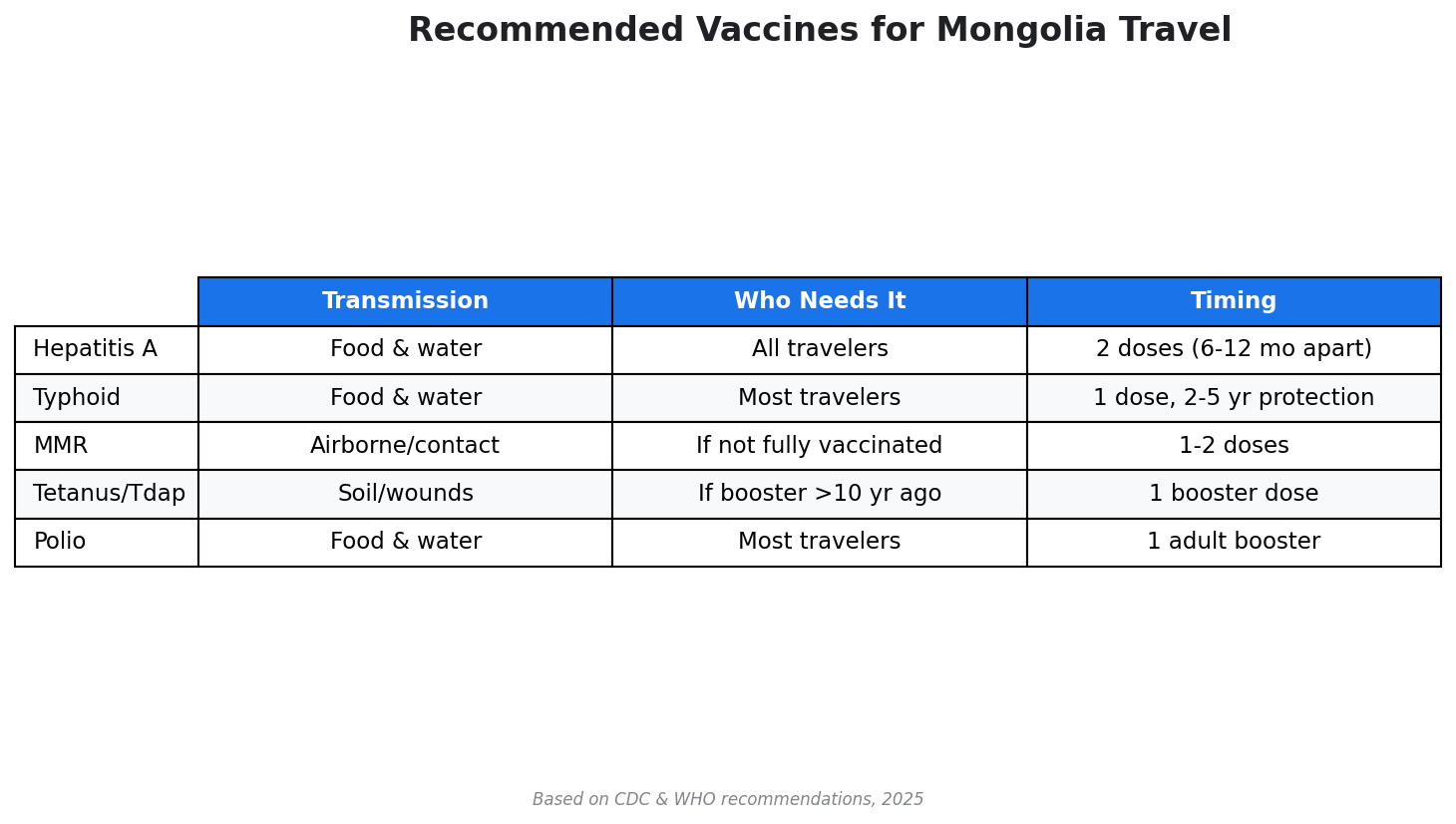
The CDC and WHO recommend the following vaccines for most travelers to Mongolia:
Hepatitis A
Hepatitis A tops the list because it spreads through contaminated food and water — both real risks when you are eating in local restaurants or staying with nomadic families. The vaccine is a two-dose series, with the second shot given six to twelve months after the first. Even a single dose before your trip provides strong short-term protection.
Typhoid
Typhoid is another food-and-water-borne illness that the CDC recommends for most Mongolia travelers, particularly if you are visiting rural areas or smaller cities outside Ulaanbaatar. You have two options: an injectable vaccine (effective for two years) or an oral vaccine (effective for five years). The oral version requires refrigeration and the ability to swallow capsules.
Routine Vaccine Boosters
Before any international trip, confirm that your routine vaccinations are current:
- Measles-Mumps-Rubella (MMR): Cases of measles have been rising globally. If you were born after 1957 and have not received two doses, get the booster before you go.
- Tetanus-Diphtheria-Pertussis (Tdap): Especially important in Mongolia where outdoor activities increase your exposure to soil-borne tetanus bacteria. If your last tetanus booster was more than ten years ago, get a new one.
- Polio: Due to a global increase in cases, an additional adult booster is now recommended for most international travelers.
- COVID-19: Stay current with the latest recommended doses before traveling to any international destination.
- Influenza: Mongolia’s flu season runs from approximately October through March. If you are traveling during those months, a flu shot is worth getting.
Vaccines for Higher-Risk Travelers
Depending on your itinerary and activities, your doctor may recommend additional vaccines beyond the standard list.
Rabies
Mongolia is classified as a high-risk country for rabies, with infected dogs found across the country. The rabies pre-exposure vaccine is a three-dose series and is strongly recommended if you will be spending time in rural or remote areas where access to post-exposure treatment is limited. On a tour through the Gobi Desert or the Altai Mountains, you could be a full day’s drive from the nearest hospital that stocks rabies immunoglobulin.
We always tell our guests: if a dog approaches you in a rural area, stay calm and don’t run. Stray dogs are common around ger camps and small towns, and most are harmless — but you don’t want to take chances with an animal you don’t know.
The pre-exposure vaccine does not eliminate the need for treatment after a potential exposure, but it simplifies and shortens the post-exposure protocol significantly — and removes the need for rabies immunoglobulin, which is in short supply worldwide.
Tick-Borne Encephalitis (TBE)
If your Mongolia itinerary takes you through the northern provinces of Bulgan, Darkhan-Uul, Selenge, or Orkhon — particularly if you will be hiking, camping, or spending extended time outdoors — discuss the TBE vaccine with your doctor. Ticks carrying the virus are most active from early spring through late autumn.
The TBE vaccine requires three doses for full protection. If time is short, an accelerated schedule is available.
Hepatitis B
Mongolia has an intermediate-to-high prevalence of Hepatitis B. The vaccine is recommended if your activities could expose you to blood or body fluids — this includes adventure sports with injury risk, getting dental or medical treatment abroad, or stays longer than one month.
Altitude Sickness in Mongolia
Mongolia is not the Himalayas, but altitude sickness is a genuine risk that catches many travelers off guard. The western Altai Mountains reach above 4,000 meters, and even parts of the central steppe sit above 1,500 meters. Ulaanbaatar itself is at roughly 1,350 meters.
The danger comes from rapid altitude changes. If you fly into Ulaanbaatar from sea level and then drive directly to a high-altitude destination in the Altai, your body has not had time to adjust.
How to Prevent Altitude Sickness
- Ascend gradually. Above 3,000 meters, increase your sleeping elevation by no more than 500 meters per day.
- Build in rest days. Take a rest day at the same altitude every three to four days when climbing steadily.
- Stay hydrated. The dry Mongolian air dehydrates you faster than you realize.
- Avoid alcohol during your first days at altitude.
- Consider acetazolamide (Diamox). This prescription medication helps with acclimatization. Talk to your doctor before your trip if you plan to travel above 3,000 meters.
Watch for symptoms of acute mountain sickness (AMS): headache, nausea, fatigue, loss of appetite, and difficulty sleeping. If symptoms appear, stop ascending. If they worsen, descend immediately — this is always the most effective treatment.
Food and Water Safety
Tap water in Mongolia is not safe to drink. This applies everywhere — Ulaanbaatar, regional towns, and especially rural areas. Stick to these rules throughout your trip:
- Drink only bottled or purified water. Check that bottle seals are intact before drinking.
- Avoid ice in drinks unless you are confident it was made with purified water.
- Use bottled water for brushing teeth in remote areas.
- Carry water purification tablets or a UV purifier as a backup, especially on multi-day tours through the countryside.
Mongolian cuisine centers on meat and dairy, with less emphasis on raw vegetables. This actually works in your favor from a food safety perspective, since thoroughly cooked meat carries less risk. That said, follow these guidelines:
- Eat freshly cooked food served hot.
- Be cautious with dairy products in rural areas. Traditional Mongolian dairy (airag, aaruul, tarag) is part of the cultural experience, but unpasteurized milk products carry a small risk of tick-borne encephalitis and brucellosis.
- Wash your hands frequently or use hand sanitizer with at least 60% alcohol content, especially before meals.
- Bring a traveler’s diarrhea kit. Over 70% of travelers experience digestive issues abroad. An antidiarrheal medication and oral rehydration salts can make the difference between a minor inconvenience and a derailed itinerary.
Tick and Insect Protection
Ticks are the primary insect concern in Mongolia, particularly in the forested northern regions and grassy steppe areas. Beyond tick-borne encephalitis, ticks in Mongolia can carry Crimean-Congo hemorrhagic fever and other diseases.
Tick Prevention
- Wear long sleeves and long pants when hiking through grass or forest.
- Tuck pants into socks — it looks ridiculous and works brilliantly.
- Use insect repellent containing at least 20% DEET on exposed skin.
- Treat clothing with permethrin before your trip. Permethrin-treated clothing remains effective through multiple washes.
- Check your entire body for ticks every evening, paying attention to hairline, armpits, and waistband. Remove ticks promptly with fine-tipped tweezers by pulling straight up with steady pressure.
- Wear light-colored clothing to spot ticks more easily.
Mosquitoes are less of a concern in Mongolia than in tropical destinations. There is no malaria risk. However, basic mosquito repellent is still worth packing for summer evenings, when mosquitoes can be persistent near rivers and lakes.
Medical Facilities and Healthcare in Mongolia
This is where honest preparation matters most. Healthcare in Mongolia varies dramatically between Ulaanbaatar and everywhere else.
In Ulaanbaatar, you will find modern hospitals and clinics, including some with English-speaking doctors. Pharmacies are available, though medications are primarily sourced from China and Russia — you may not recognize brands or dosage formats.
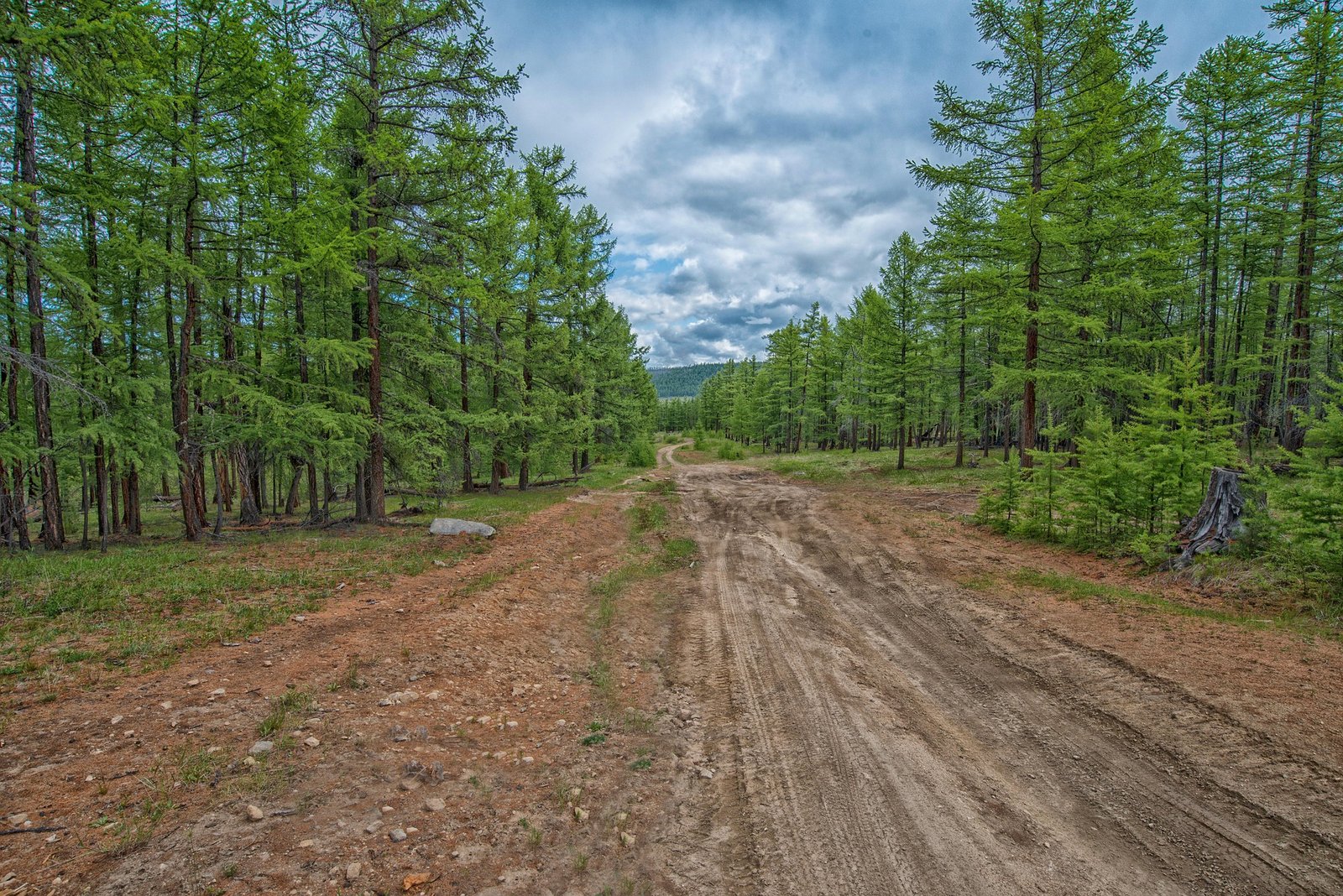
Outside Ulaanbaatar, medical facilities are basic at best. In rural areas, the nearest clinic may be several hours away by car — over unpaved roads. Doctors in regional hospitals rarely speak English.
A few practical realities to plan for:
- Hospitals in Mongolia typically require 80% advance payment before treatment. Carry proof of insurance and access to emergency funds.
- Rabies post-exposure treatment may only be available in larger urban facilities. If you are bitten by an animal in a remote area, you will need to get to Ulaanbaatar quickly.
- Bring all prescription medications you might need, in their original labeled packaging. Carry a doctor’s letter listing your prescriptions if you take controlled medications.
- Verify that your prescriptions are legal in Mongolia before you travel. Contact the Mongolian embassy if you are unsure.
When you travel with Atlas Mongolia Travel, your guides carry first aid supplies and know the location of the nearest medical facilities along every route. On remote tours, we carry a satellite phone and a comprehensive first aid kit — and our drivers know the fastest routes to provincial hospitals. On tours like the Gobi Wonders Expedition, your support vehicle is always nearby, and your team can coordinate emergency evacuation if needed.
Travel Health Insurance
We will publish a detailed guide to Mongolia travel insurance soon, but here is the short version: do not travel to Mongolia without comprehensive travel health insurance that explicitly covers:
- Medical evacuation (including air ambulance). This is non-negotiable. If you are injured in the Altai Mountains or the Gobi Desert, ground evacuation to Ulaanbaatar could take a full day. Air evacuation to a hospital in Beijing or Seoul is the backup plan for serious injuries.
- Emergency medical treatment with adequate coverage limits. Hospital costs in Mongolia are lower than Western countries, but evacuation costs are not.
- Repatriation in worst-case scenarios.
- Trip cancellation and interruption — useful given the remote and weather-dependent nature of Mongolia travel.
There are no reciprocal healthcare agreements between Mongolia and most Western countries. You will pay out of pocket and file claims after the fact.
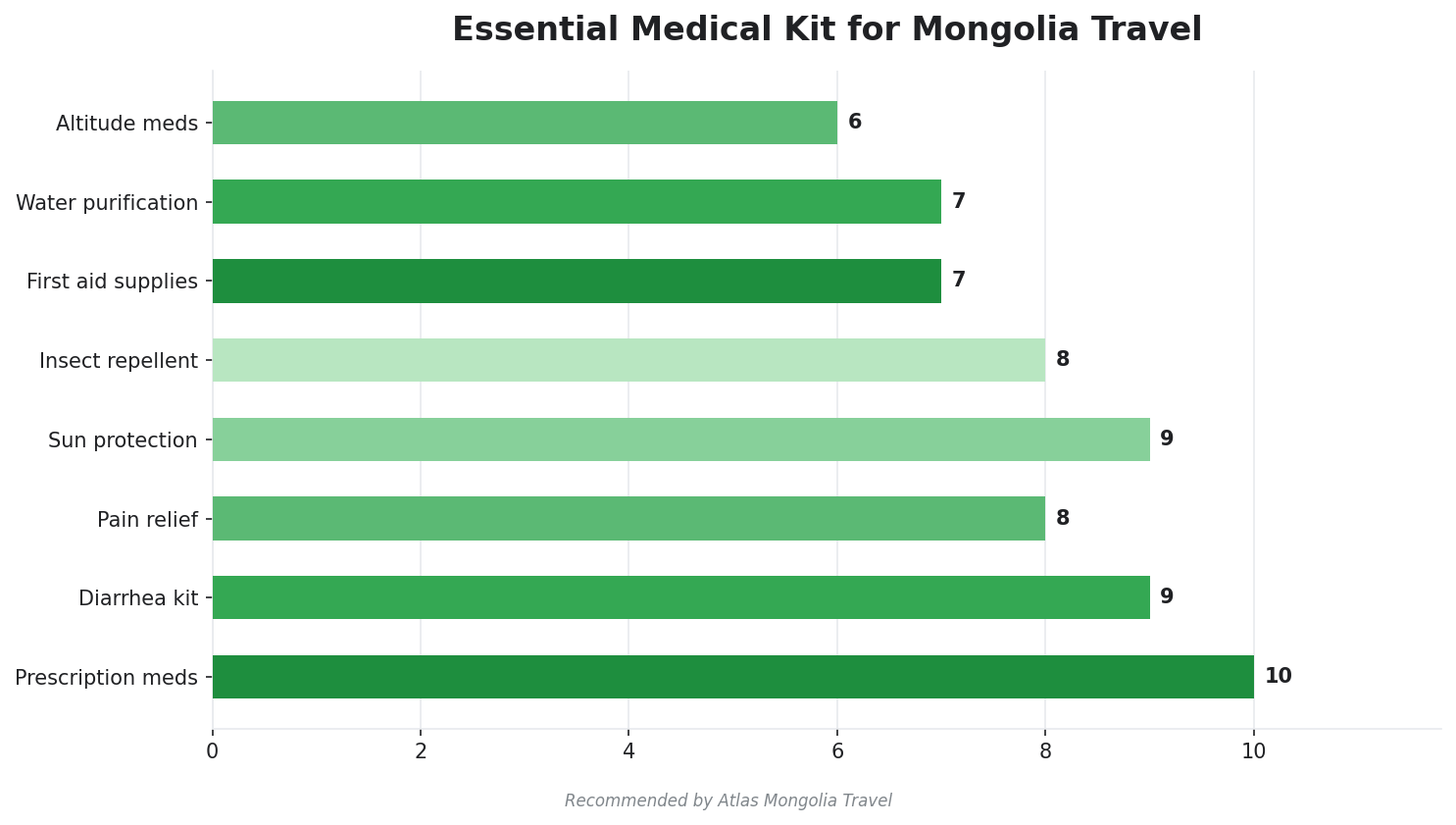
What to Pack in Your Medical Kit
Pack a personal medical kit and keep it in your daypack, not buried in checked luggage. Here is what we recommend based on what we’ve seen travelers actually need on the road:
Essentials:
- Prescription medications (full supply plus extras for delays)
- Antidiarrheal medication (loperamide)
- Oral rehydration salts
- Pain relievers (ibuprofen, paracetamol)
- Antihistamine for allergic reactions
- Broad-spectrum antibiotic (get a prescription from your doctor for travel)
- Adhesive bandages and blister plasters
- Antiseptic wipes and wound closure strips
- Tweezers (for tick removal)
- Digital thermometer
Sun and Environment:
- Sunscreen SPF 50+ (the Mongolian sun at altitude is intense — we have seen guests burn through their shirts on Gobi tours)
- Lip balm with SPF
- Insect repellent (20%+ DEET)
- After-bite cream or hydrocortisone
Extras Worth Carrying:
- Water purification tablets
- Hand sanitizer (60%+ alcohol)
- Motion sickness medication (useful on rough Mongolian roads — and trust us, some of those roads will test you)
- Eye drops (dry air and dust are constant companions on the steppe)
- Altitude sickness medication (acetazolamide) if traveling above 3,000 meters
- Small first aid manual or downloaded app
Seasonal Health Considerations
Your health preparation should factor in when you are visiting Mongolia. The country’s extreme continental climate means very different health challenges depending on the season.
Summer (June-September): This is peak travel season and the most popular time for tours. The main concerns are sun exposure at altitude (UV intensity is significantly higher on the steppe and in the Gobi), dehydration from dry air, tick activity in northern and central regions, and heat stroke during July and August when temperatures in the Gobi can exceed 40 degrees Celsius. For help choosing the right time for your visit, see our guide to the best time to visit Mongolia.
Autumn (September-October): Temperatures drop rapidly, especially at night. The Eagle Festival in the Altai takes place in early October at elevations above 2,000 meters, where temperatures can dip below freezing overnight. Layer up and protect extremities.
Winter (November-March): Mongolia is one of the coldest countries on earth. Frostbite and hypothermia are real risks. Ulaanbaatar’s winter air pollution is among the worst in the world, which can aggravate respiratory conditions. If you have asthma or bronchial conditions, consult your doctor before a winter visit.
Spring (April-May): Dust storms are common. Carry eye protection and a face covering for dusty days. Allergies can flare up as the steppe comes to life.
For practical tips on navigating Mongolia’s payment systems while you travel, check out our guide on payments in Mongolia.
Frequently Asked Questions
Do I need a rabies vaccine for Mongolia?
Yes, the rabies pre-exposure vaccine is strongly recommended for Mongolia, especially if your itinerary includes rural or remote areas. Mongolia is classified as high-risk for rabies, and stray dogs are common nationwide. The three-dose vaccine series won’t prevent infection on its own, but it buys you time and simplifies treatment if you are bitten — which matters when the nearest hospital with rabies immunoglobulin could be a full day’s drive away.
Is tap water safe to drink in Mongolia?
No. Tap water is not safe to drink anywhere in Mongolia, including Ulaanbaatar. Stick to sealed bottled water or use a UV purifier or purification tablets. Be careful with ice in drinks, and use bottled water for brushing your teeth in rural areas. On our tours, we provide bottled water throughout the trip, but we still recommend carrying purification tablets as a backup for longer excursions off the beaten path.
What medical facilities are available in Mongolia?
Ulaanbaatar has modern hospitals and clinics, some with English-speaking staff. Outside the capital, medical care is limited. Regional hospitals exist in provincial capitals, but they are basic, rarely have English-speaking doctors, and may be hours away over unpaved roads. Hospitals generally require 80% advance payment before treatment. For serious injuries in remote areas, evacuation to Ulaanbaatar or internationally to Beijing or Seoul is the standard protocol.
Do I need travel insurance for Mongolia?
Absolutely — and not just any policy. You need comprehensive travel health insurance that explicitly covers medical evacuation, including air ambulance. Mongolia has no reciprocal healthcare agreements with Western countries, so you will pay out of pocket for treatment and file claims afterward. Given how remote most Mongolia itineraries are, evacuation coverage is the single most important feature of your policy.
What is the biggest health risk for travelers in Mongolia?
For most travelers, the biggest day-to-day health risk is digestive issues from unfamiliar food and water. Over 70% of international travelers experience some form of stomach trouble. The more serious (but less common) risks are tick-borne diseases in northern regions, altitude sickness in the Altai Mountains, and animal bites in rural areas. All of these are manageable with proper preparation — vaccines, a good medical kit, and a guide who knows the terrain.
How far in advance should I get vaccines for Mongolia?
Book your travel health appointment at least six to eight weeks before your departure date. Several recommended vaccines, including Rabies and Tick-Borne Encephalitis, require multiple doses spaced over weeks. Even if you are short on time, a single Hepatitis A dose and a Typhoid shot can still provide meaningful protection. Your travel health doctor can work out the best schedule based on your departure date.
Written by the Atlas Mongolia Travel team — a locally operated tour company based in Ulaanbaatar.
Start Your Mongolia Trip Prepared
The best Mongolia trips start months before you board the plane. Book that travel health appointment, get your vaccines lined up, and pack a proper medical kit. The time you spend preparing now means fewer worries on the ground — and more freedom to focus on the wide-open landscapes, the warmth of nomadic hospitality, and the kind of silence you can only find on the Mongolian steppe.
Ready to experience Mongolia for yourself? Get in touch with Atlas Mongolia Travel for a free, no-obligation consultation. Our team handles the logistics so you can focus on the adventure — and we will make sure your itinerary accounts for the health and safety considerations that matter most for your specific route.
Health prep sorted? Start planning the trip itself. Browse all our Mongolia tours or check the best time to visit Mongolia guide to find the right season for your interests.

Atlas Mongolia Travel
Atlas Mongolia Travel is a locally operated tour agency based in Ulaanbaatar, Mongolia, specializing in authentic private and group tours across Mongolia.
Leave a Reply