15 Best Mongolian Foods to Try: A Local Guide to What You’ll Actually Eat
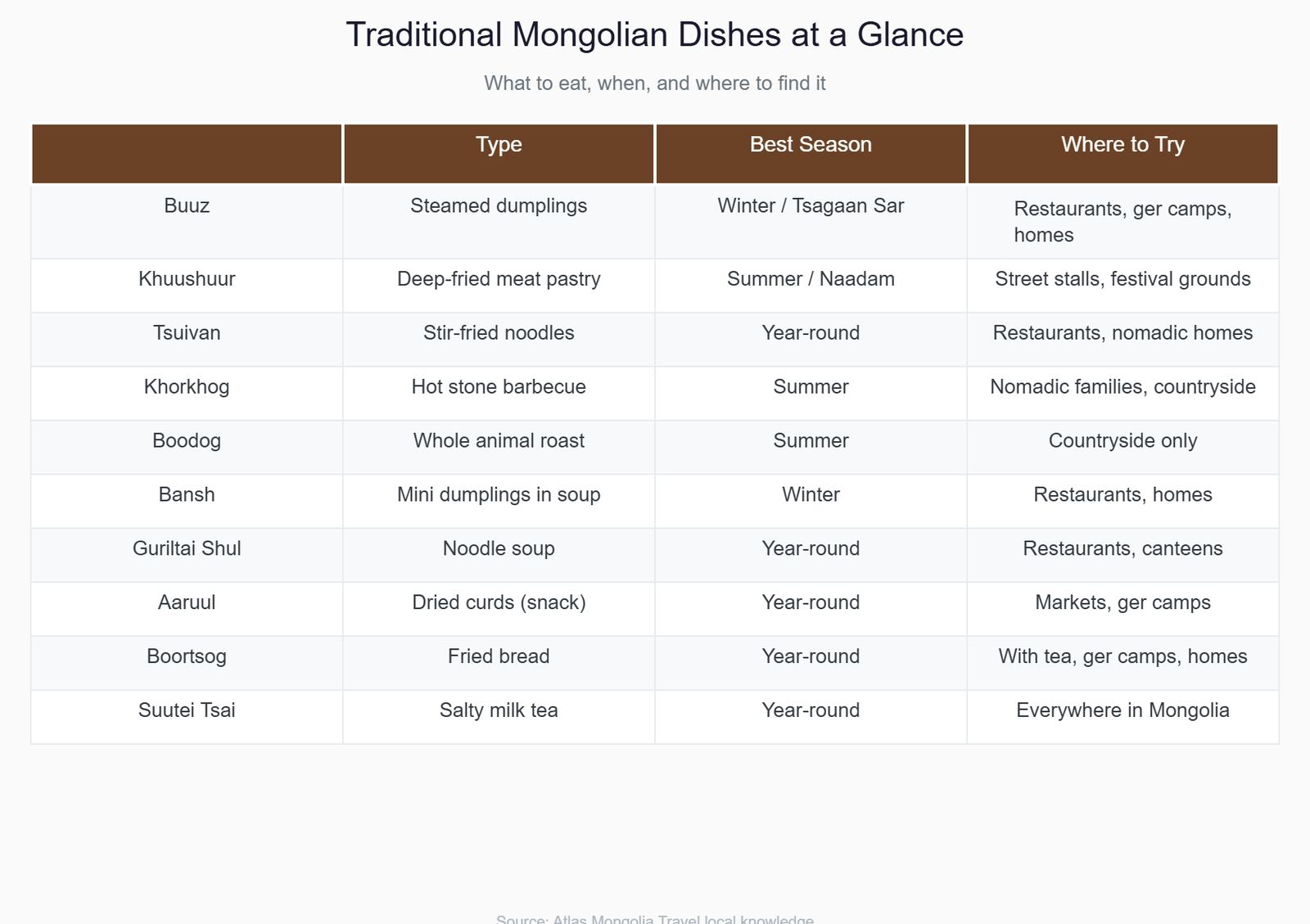
The best Mongolian foods to try are buuz (steamed dumplings), khuushuur (fried meat pastries), tsuivan (stir-fried noodles), khorkhog (hot-stone barbecue), and suutei tsai (salty milk tea). These five dishes define Mongolian cuisine, and you’ll find them everywhere from Ulaanbaatar restaurants to countryside ger camps.
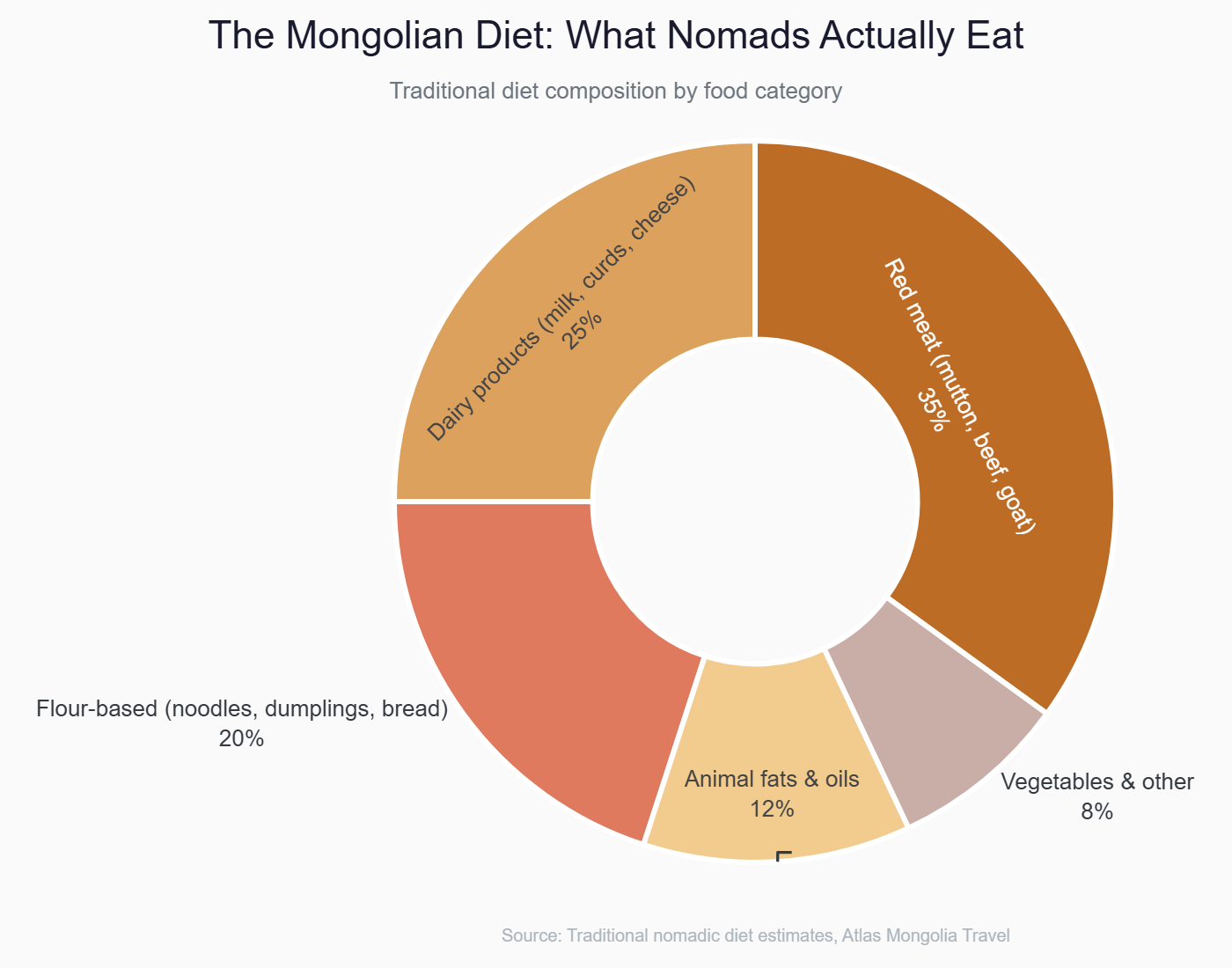
But the full picture goes well beyond those five. Real Mongolian cuisine is built around two things: meat and dairy. That’s not a limitation — it’s a philosophy shaped by thousands of years of nomadic life on the steppe. When your ancestors spent centuries herding livestock across some of the harshest terrain on earth, you learn to use every part of every animal, and you learn to do it well.
The food here is hearty, honest, and tied to the seasons and the land. In summer, nomadic families shift toward tsagaan idee — “white foods” made from the milk of horses, cows, yaks, and camels. In winter, the diet turns to meat, cooked in ways designed to fuel the body through temperatures that drop below -40. There’s no pretension in Mongolian cooking. Every dish exists for a reason.
Here’s what you’ll actually eat when you travel across Mongolia — from Ulaanbaatar restaurants to countryside ger camps to meals shared on the floor of a nomadic family’s home.
- Meat and dairy form the foundation of all Mongolian cooking — vegetables play a minor role due to the climate and nomadic lifestyle.
- Buuz (steamed dumplings) is widely considered the national dish, eaten year-round and prepared by the thousands during Tsagaan Sar (Lunar New Year).
- Mongolians eat seasonally: dairy products dominate in summer when herds produce the most milk, while meat takes over in winter for warmth and calories.
- The best Mongolian food is found in the countryside, not in restaurants — home-cooked meals with nomadic families are where the real flavors live.
- Vegetarians will find options in Ulaanbaatar, but outside the capital, nearly every dish includes meat or animal products. Plan ahead.
Meat Dishes: The Heart of Mongolian Cuisine
1. Buuz (Бууз) — Steamed Dumplings
If Mongolia had a national food, buuz would be it. These steamed dumplings are filled with minced mutton or beef, mixed with onion, salt, and sometimes a bit of tail fat for richness. The dough is hand-rolled thin and pinched closed at the top with a small opening to let the steam escape.
Buuz are eaten year-round, but they reach peak importance during Tsagaan Sar — the Mongolian Lunar New Year, usually in January or February. Families prepare hundreds, even thousands of buuz in the days before the holiday. Visiting relatives during Tsagaan Sar means eating buuz at every single stop, and refusing is not an option.
Where to try it: Every restaurant in Ulaanbaatar serves buuz. For the real experience, join a Nomadic Family Stay during Tsagaan Sar and help the family fold them by hand.
2. Khuushuur (Хуушуур) — Deep-Fried Meat Pastries
Think of khuushuur as buuz’s crispier, more indulgent cousin. The filling is nearly identical — minced meat, onion, garlic, sometimes a bit of mashed potato — but instead of steaming, the dough-wrapped parcels are deep-fried until golden and crunchy.
Khuushuur is the definitive festival food. During Naadam in July, the smell of frying khuushuur fills the air around every stadium and fairground in the country. Vendors set up makeshift stalls and turn them out by the hundreds. Eating khuushuur at Naadam, standing in the sun watching wrestlers — that’s one of those simple Mongolian moments that sticks with you.
Where to try it: Street stalls during Naadam Festival (July), or any local restaurant (guanz) in Ulaanbaatar. The ones at Naran Tuul market give you the most authentic street-food experience.
3. Tsuivan (Цуйван) — Stir-Fried Noodles
Tsuivan holds a special place in Mongolian culture. There’s a well-known saying that you can judge a Mongolian woman’s skills as a homemaker by the quality of her tsuivan. The noodles are hand-cut from dough, then layered in a pot with mutton (or beef), carrots, cabbage, and sometimes potatoes, and steamed-then-fried in the meat’s own fat.
A good tsuivan has noodles that are tender but not mushy, meat that’s rich without being greasy, and just enough vegetables to add color and texture. It’s comfort food at its best — the kind of dish that tastes even better after a long day of riding across the steppe.
Where to try it: Served in virtually every restaurant and guanz across Mongolia. Some of the best tsuivan comes from the countryside, cooked by nomadic families over a dung-fueled stove inside a ger. Ask your guide to request it — they’ll know which families make the best version.
4. Khorkhog (Хорхог) — Hot Stone Barbecue
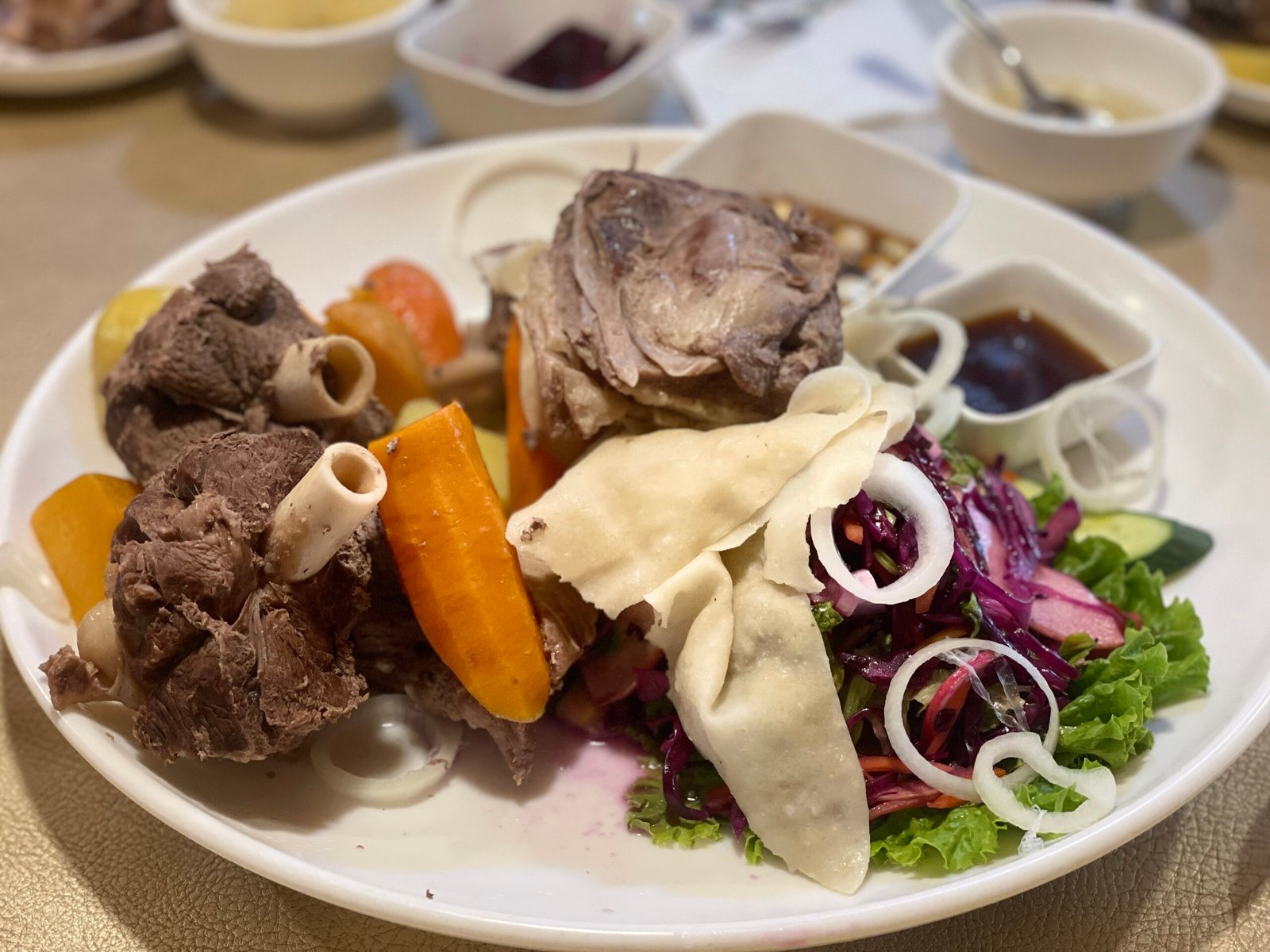
This is the dish that catches every traveler off guard — and the one most people can’t stop talking about afterward. Khorkhog is Mongolia’s real barbecue, and it’s nothing like what you’ve seen before.
Chunks of mutton or goat are layered in a large metal container with river stones that have been heated in a fire until they’re scorching hot. Water is added, the container is sealed, and the meat slow-cooks from both the fire below and the radiant heat of the stones inside. The result is tender, smoky meat that falls right off the bone.
Here’s the part that surprises people: after the meal, the hot stones are passed from hand to hand. Mongolians believe the heat from khorkhog stones has healing properties and brings good luck. You’ll see everyone — from children to grandparents — rubbing the warm stones between their palms.
Where to try it: Khorkhog is a countryside dish, rarely found in restaurants. The best way to experience it is during a Gobi Wonders Expedition or any multi-day tour where your group camps with local families. Your guide can often arrange a khorkhog feast.
5. Boodog (Бодог) — Whole Animal Roast
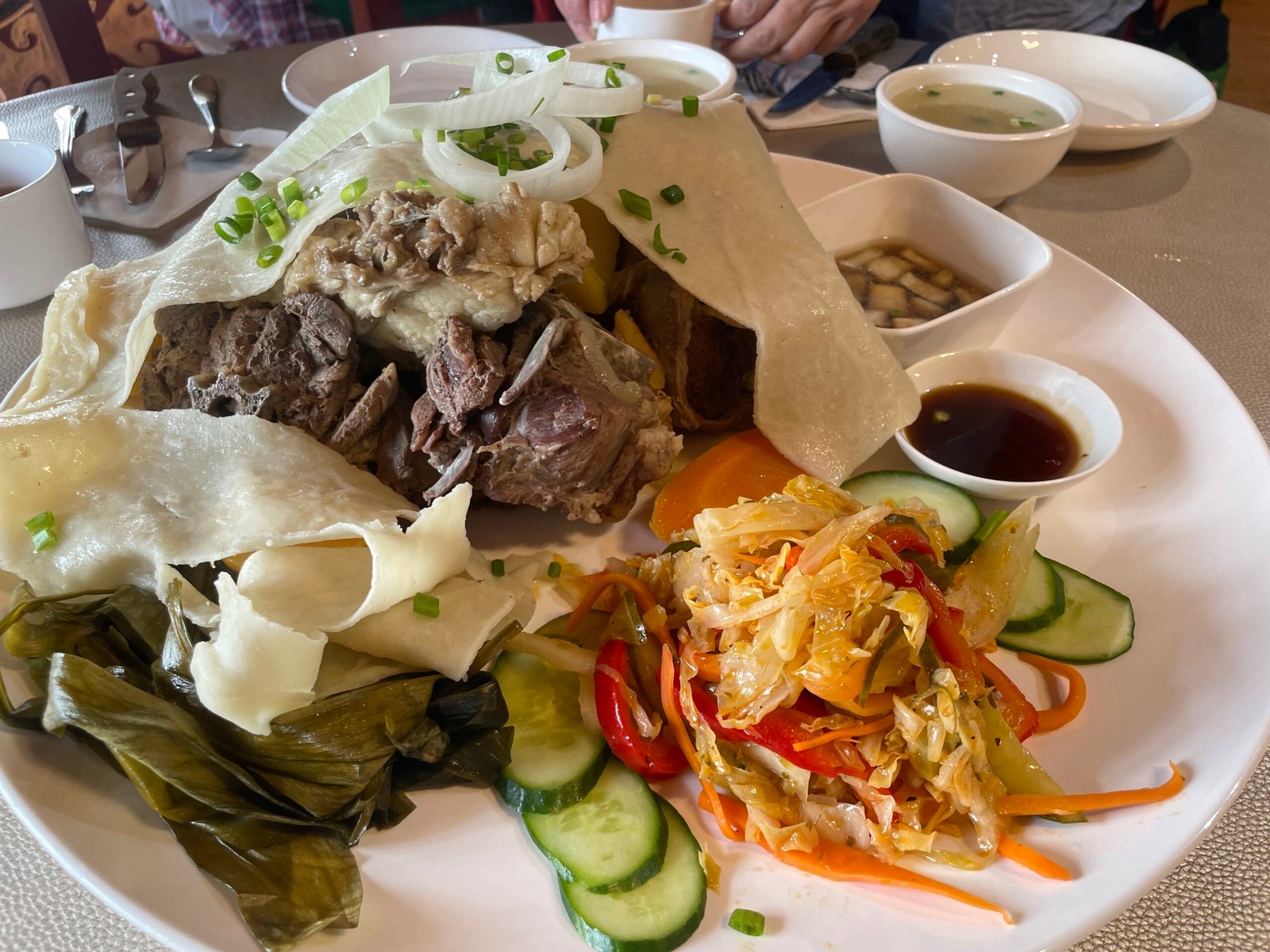
If khorkhog is Mongolia’s barbecue, boodog is its wilder, more primal ancestor. A whole marmot or goat is cleaned, stuffed with heated stones from the inside, and then blowtorched or roasted over open flame from the outside. The animal cooks itself from within while the exterior chars and crisps.
Boodog is not something you’ll find on any restaurant menu. It’s a countryside tradition, usually prepared for special gatherings. The flavor is intensely rich and smoky, and watching a boodog being prepared is an experience in itself. Marmot boodog is rarer these days due to concerns about plague transmission, but goat boodog remains a celebratory dish in rural areas.
Where to try it: Strictly a countryside experience. If you’re on a multi-day private tour through the steppe or Altai region, ask your guide if a boodog can be arranged. It depends on season, location, and the families you’re visiting.
6. Bansh (Банш) — Mini Dumplings
Bansh are smaller versions of buuz, and they’re surprisingly versatile. They can be boiled in soup, fried, or — most memorably — dropped into milk tea for a hearty breakfast called banshtai tsai (tea with dumplings). In winter, families make large batches and freeze them outside (Mongolia’s natural freezer), pulling out handfuls whenever needed.
Where to try it: Order banshtai tsai at any traditional restaurant in Ulaanbaatar for a warming winter breakfast. On guided tours, you’ll often encounter bansh as part of home-cooked meals with nomadic families.
7. Guriltai Shul (Гурилтай шөл) — Noodle Soup
This simple noodle soup is what Mongolians turn to when they need something warm and filling without any fuss. Hand-cut noodles float in a rich mutton broth alongside chunks of meat, potato, and onion. It’s not complicated, and that’s the point. Guriltai shul is everyday food — the kind of thing you eat at a guanz on a cold afternoon when you just want to warm up from the inside.
Where to try it: Any local cafeteria-style guanz in Ulaanbaatar or countryside towns. This is one of the cheapest and most satisfying meals you can find in Mongolia.
Dairy Foods: The White Treasury
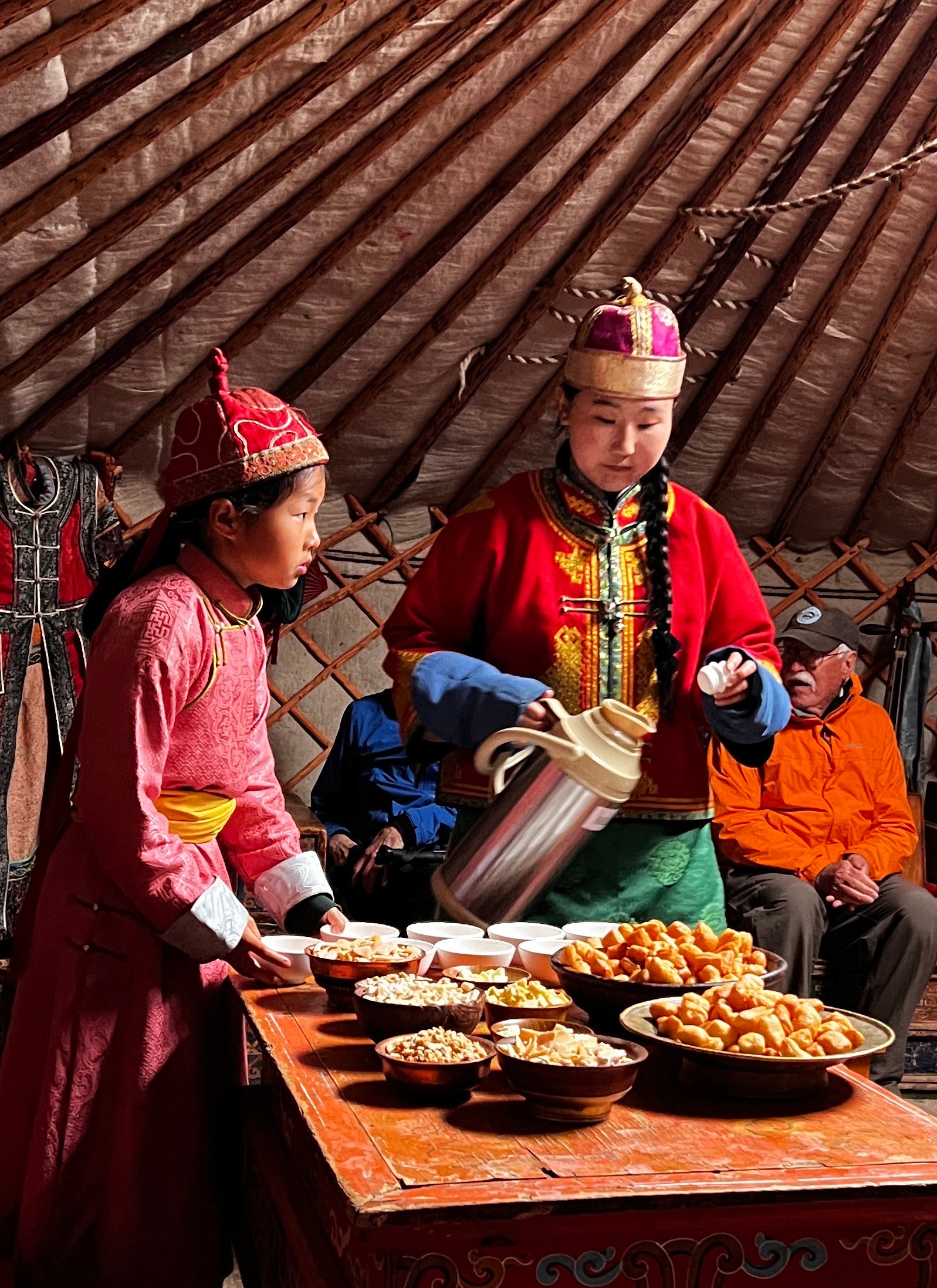
Mongolians call their dairy products tsagaan idee — literally “white foods” — and they symbolize purity, prosperity, and hospitality. In summer, when the herds are producing the most milk, nomadic families shift their entire diet toward dairy. Walk into any ger during the warm months and you’ll be offered something white within minutes of sitting down.
8. Suutei Tsai (Сүүтэй цай) — Salty Milk Tea
This is the first thing you’ll be offered when you enter any Mongolian home or ger — and you will drink a lot of it. Suutei tsai is green tea boiled with milk and salt (and sometimes a knob of butter). The taste surprises most visitors: it’s savory, not sweet, and has a rich, almost brothy quality.
Refusing suutei tsai is considered rude. Accept the bowl with your right hand (or both hands), take at least a sip, and set it down gently. You’ll be offered refills constantly. By the end of a day visiting nomadic families, you might have consumed a dozen bowls — and somehow, it never gets old.
Where to try it: Everywhere. Every ger camp, every restaurant, every home. It’s Mongolia’s national drink.
9. Airag (Айраг) — Fermented Mare’s Milk
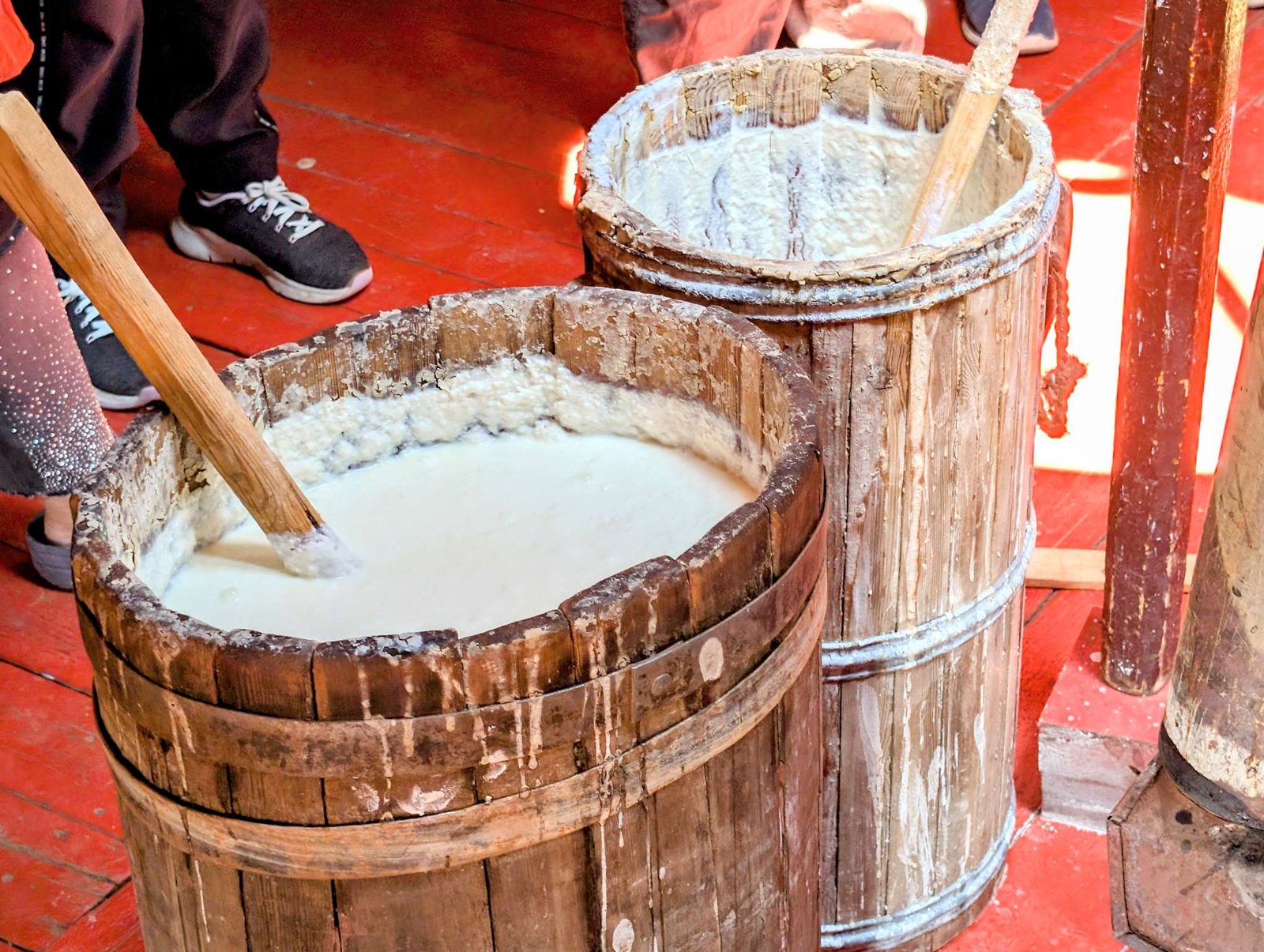
Airag is fermented horse milk, and it’s one of the most culturally significant drinks in Mongolia. The milk is poured into a large leather sack or wooden barrel and stirred repeatedly over several days with a wooden masher. The result is a slightly fizzy, tangy, mildly alcoholic drink (around 2-3% alcohol) that tastes like nothing you’ve had before.
Airag is a symbol of Mongolian hospitality and the abundance of summer. Mares produce milk from June through October, so airag season lines up perfectly with the peak travel months. Being offered airag by a nomadic family is an honor, and drinking it together is a gesture of shared trust.
The taste takes some getting used to. It’s sour, slightly effervescent, and has a horse-milk funk that’s either fascinating or challenging, depending on your palate. Most travelers come around to it by their second or third bowl.
Where to try it: Nomadic families across the countryside during summer. On any Atlas Mongolia Travel tour between June and September, your guide will almost certainly introduce you to a family making fresh airag.
10. Aaruul (Ааруул) — Dried Curds
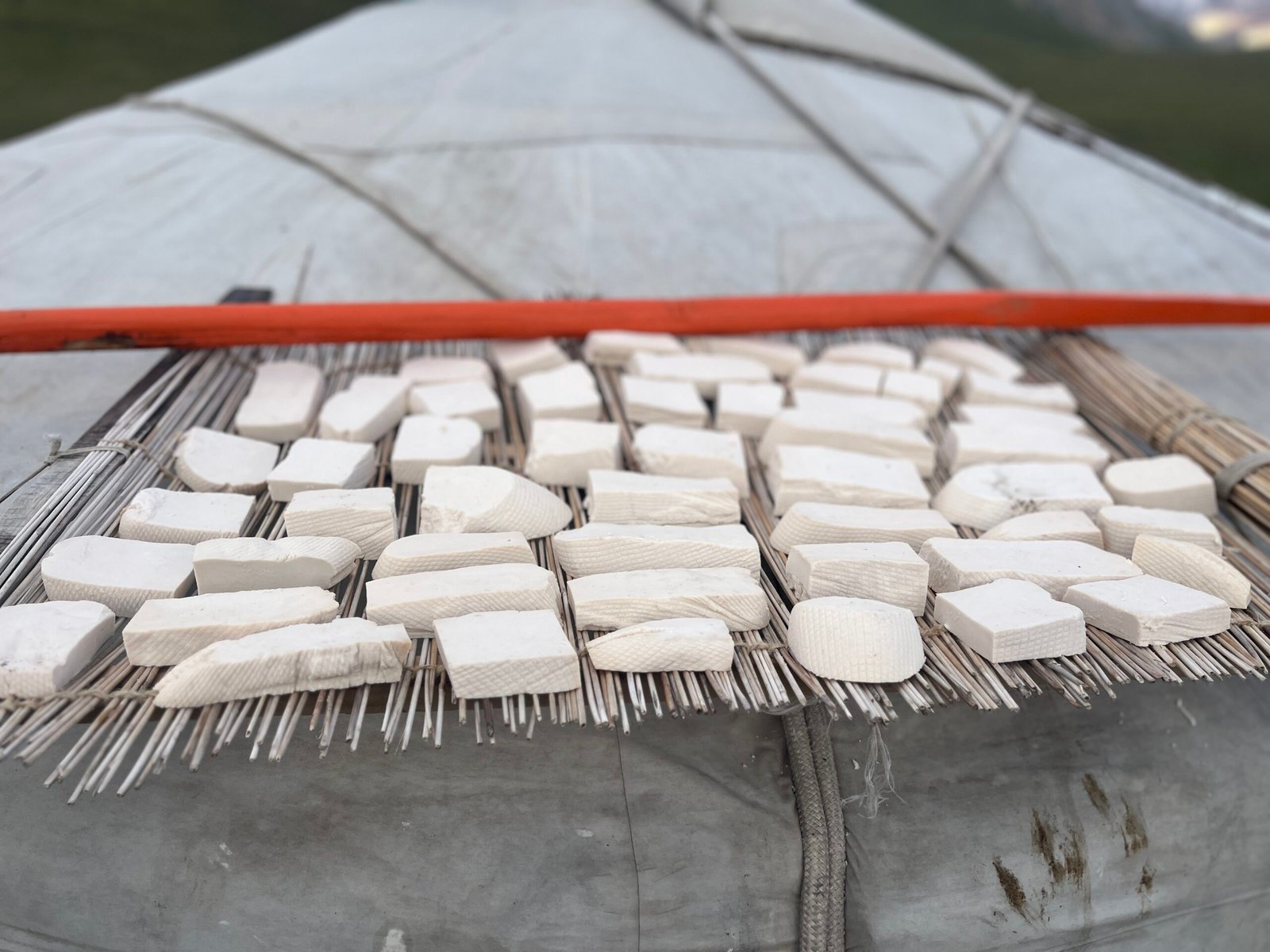
Aaruul is dried curd cheese — Mongolia’s original energy bar. Milk is curdled, shaped into small pieces, and left to dry in the sun, often on the roof of a ger. The result ranges from soft and tangy to rock-hard and tooth-breakingly dense, depending on how long it’s been drying.
You’ll see aaruul everywhere: in bowls on ger tables, in the pockets of herders, sold in bags at markets. The harder varieties can last for months without refrigeration, making them the perfect portable food for nomads traveling long distances. Softer aaruul has a pleasant sour-cream tang; the harder stuff is an acquired taste that rewards the persistent.
Where to try it: Markets in Ulaanbaatar (the Naran Tuul “Black Market” has huge selections), or directly from nomadic families during any countryside tour. Look for it drying on ger roofs — that’s when it’s freshest.
11. Boortsog (Боорцог) — Fried Bread
Boortsog are deep-fried pieces of dough — simple, golden, slightly crunchy on the outside and soft within. Think of them as Mongolia’s answer to doughnut holes, minus the sugar. They’re served alongside suutei tsai at virtually every Mongolian gathering, piled high in bowls on the table.
During Tsagaan Sar, families stack boortsog in elaborate towers — the number of layers depends on the family’s age and status. These towers sit at the center of the holiday table, surrounded by aaruul, candy, and other treats. Boortsog dipped in fresh urum (clotted cream) is one of those small pleasures that makes Mongolian food worth the trip alone.
Where to try it: Every ger camp, every nomadic home, every Tsagaan Sar celebration. In Ulaanbaatar, you’ll find them in traditional restaurants and bakeries.
Festive and Special Occasion Dishes
12. Uuts (Ууц) — Whole Steamed Sheep Back
Uuts is the most prestigious dish in Mongolian cuisine — an entire sheep’s back, including the prized tail fat, steamed until tender. It’s reserved for the most important occasions: Tsagaan Sar, weddings, and honoring distinguished guests. The host presents the uuts to the most respected elder at the table, who slices and distributes portions to each guest according to rank and relationship.
Where to try it: Rare to encounter as a traveler unless you’re invited to a Tsagaan Sar celebration or a wedding.
13. Khailmag (Хайлмаг) — Caramelized Cream
This is Mongolia’s closest thing to a dessert — thick urum (clotted cream) slowly heated with flour, sugar, and butter until it turns golden and nutty. Khailmag is rich, sweet, and served only to honored guests. If a nomadic family serves you khailmag, take it as a genuine compliment.
Where to try it: Nomadic homes during special occasions. Some upscale restaurants in Ulaanbaatar have started offering modern versions.
Drinks Beyond the Tea
14. Shimiin Arkhi (Шимийн архи) — Mongolian Milk Vodka
Shimiin arkhi is distilled from fermented dairy whey — a vodka made from milk. The alcohol content is lower than grain vodka (typically 10-15%), and the taste is smooth with a subtle dairy undertone. In the countryside, you might see a family’s still set up right inside the ger, quietly producing arkhi from their herd’s milk.
Where to try it: Nomadic families in the countryside, particularly in central Mongolia. It’s offered as a gesture of hospitality — accept at least a small sip.
15. Mongolian Vodka (Архи)
No guide to Mongolian food is complete without mentioning vodka. Mongolians take their vodka seriously — Chinggis-branded vodka is the country’s most famous label, and toasting is a ritual at every gathering. Before drinking, Mongolians traditionally dip their ring finger in the vodka and flick droplets to the sky (for the Eternal Blue Sky), to the ground (for the earth), and touch it to their forehead (for wisdom).
Where to try it: Offered at gatherings, celebrations, and dinners throughout Mongolia. In Ulaanbaatar, any restaurant or bar will have Chinggis Gold or Soyombo vodka.
What Travelers Need to Know About Eating in Mongolia
If you’re vegetarian or vegan: Ulaanbaatar has a growing number of vegetarian-friendly restaurants, including Loving Hut and several Korean and Indian spots. Outside the capital, options are extremely limited. Talk to your tour operator before departure so meals can be planned accordingly.
How meals work on tour: On multi-day tours across the countryside, meals are typically cooked by your guide or driver, or prepared by ger camp staff. Expect a rotation of tsuivan, khorkhog, soups, and rice dishes, with plenty of suutei tsai. Meals with nomadic families are the highlight — this is where you’ll encounter the most authentic food.
Table etiquette: Accept food and drink with your right hand or both hands. Don’t refuse food from a host. When offered suutei tsai, take at least a sip before setting the bowl down. If someone offers you a knife (for cutting meat), accept it by the blade, not the handle.
Ulaanbaatar restaurant scene: The capital has genuinely good restaurants these days, from traditional Mongolian to Korean, Japanese, and Western cuisine. For the best traditional food, try Modern Nomads, Mongolians, or Khaan Buuz. For tips on paying at restaurants, most places in UB accept card, but carry cash for countryside stops.
Frequently Asked Questions About Mongolian Food
Is Mongolian food spicy?
No. Mongolian food is not spicy at all. The traditional diet relies on salt, fat, and the natural flavor of the meat rather than chili or strong spices. You’ll rarely encounter heat in any dish. If you like spicy food, bring your own hot sauce — you won’t find it in the countryside.
Can vegetarians eat in Mongolia?
In Ulaanbaatar, yes — there are vegetarian-friendly restaurants including Korean, Indian, and dedicated vegetarian spots like Loving Hut. Outside the capital, it’s very difficult. Nearly every traditional dish centers on meat or dairy. Let your tour operator know ahead of time so your guide can plan meals and stock alternatives.
What is the national dish of Mongolia?
Buuz — steamed dumplings filled with minced mutton or beef — is widely considered Mongolia’s national dish. Families prepare thousands of buuz during Tsagaan Sar (Lunar New Year), and you’ll find them on the menu at every restaurant in the country. They’re eaten year-round, but Tsagaan Sar is when buuz reaches its full cultural significance.
Is Mongolian food safe to eat?
Generally, yes. Restaurants in Ulaanbaatar follow standard food safety practices. In the countryside, food is prepared fresh — meat is cooked thoroughly and dairy products are traditionally preserved. Drink bottled water outside of the capital, and ease into dairy products like airag gradually rather than drinking several bowls on day one.
What do Mongolians drink?
Suutei tsai (salty milk tea) is the everyday drink — Mongolians consume it morning, noon, and night. In summer, airag (fermented mare’s milk) is widely available across the countryside. Vodka plays a central role at celebrations and gatherings. Chinggis Gold is the most well-known Mongolian vodka brand.
What is airag?
Airag is fermented mare’s milk, produced by stirring fresh horse milk in wooden barrels or leather sacks over several days. It’s mildly alcoholic (2-3%), slightly sour, and fizzy. Airag season runs from June through October when mares are producing milk. It’s a symbol of Mongolian hospitality, and being offered airag by a nomadic family is considered an honor.
Written by the Atlas Mongolia Travel team — a locally operated tour company based in Ulaanbaatar.
Taste Mongolia for Yourself
Reading about buuz and khorkhog and airag can only take you so far. The real thing — eating fresh tsuivan in a ger while the wind howls across the steppe outside, or passing hot khorkhog stones between your hands with a nomadic family laughing around you — that’s something you have to experience firsthand.
At Atlas Mongolia Travel, food isn’t just fuel for the trip. It’s part of the journey. Our guides know which families make the best airag, where to find the crispiest khuushuur at Naadam, and how to arrange a khorkhog feast under the open sky. Whether you join a Gobi Wonders Expedition or design a custom private tour, every meal is a chance to taste Mongolia the way locals do.
Start planning your Mongolia trip — and come hungry.

Atlas Mongolia Travel
Atlas Mongolia Travel is a locally operated tour agency based in Ulaanbaatar, Mongolia, specializing in authentic private and group tours across Mongolia.

Leave a Reply