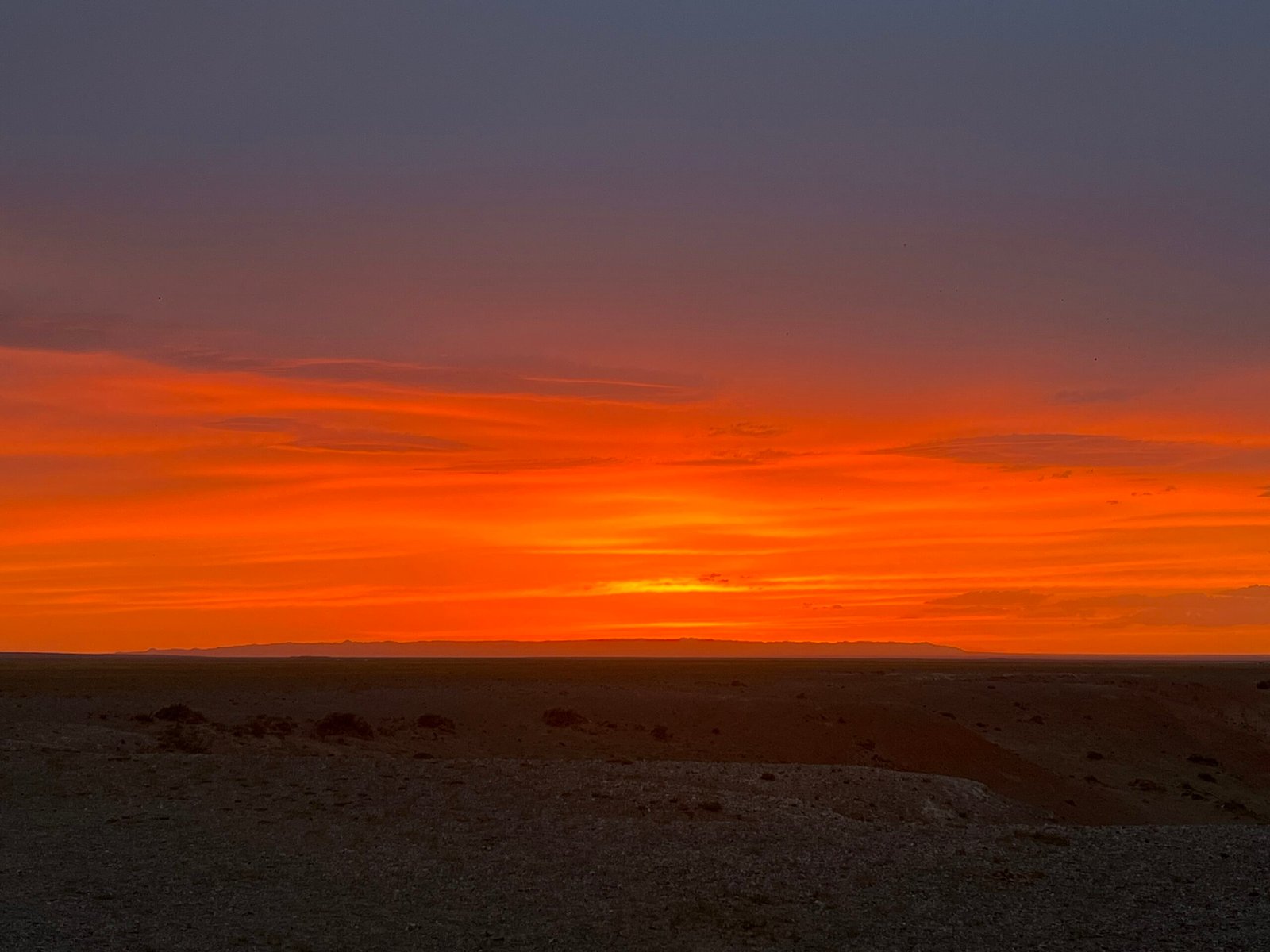
Gobi Desert Tours from Ulaanbaatar: Routes, Timing, and What You’ll Actually Experience
Yes, guided tours are the practical choice for reaching the Gobi from Ulaanbaatar — and for good reason. There are no marked roads across the desert, GPS tracks are inconsistently reliable, and a breakdown 500 kilometers from the nearest town is a serious problem without local knowledge. Most travelers who try it independently wish they hadn’t. The options for getting there range from a 1-hour domestic flight to a full 8-10 hour overland drive south through the steppe — and both approaches have real trade-offs worth understanding before you book.
For a deep dive into the Gobi’s individual sites, read our complete Gobi Desert travel guide. This post covers the tour logistics: how to get there, what options exist, what a real guided tour looks like day to day, and how to choose an operator you can trust.
- The Gobi is 550–600 km south of Ulaanbaatar — you can fly (1 hour) or drive (8–10 hours); the drive is worth it for the scenery if you have the time
- Self-driving is possible but genuinely difficult: no marked roads, no cell coverage, limited English-speaking help if something goes wrong
- Guided tours run 5–10 days for a proper circuit; shorter 3–4 day options exist but feel rushed
- Best seasons are May–June and September–October; July–August is peak season with more visitors and more heat
- A guided tour includes 4WD transport, English-speaking guide, meals, and ger camp accommodation
- Atlas Mongolia Travel’s Gobi Wonders Expedition covers all the key sites in 7 days with full private support
Table of Contents
– How Far Is the Gobi from Ulaanbaatar?
– Flying vs. Driving: Which Should You Choose?
– What Are the Main Sites You’ll Visit?
– Guided vs. Self-Drive: An Honest Comparison
– What Does a Typical Gobi Tour Include?
– How Long Should Your Gobi Tour Be?
– When Is the Best Time to Go?
– How to Choose the Right Operator
– Frequently Asked Questions
How Far Is the Gobi from Ulaanbaatar?
The South Gobi’s main hub — Dalanzadgad, the provincial capital of Ömnögovi aimag — sits roughly 550 kilometers south of Ulaanbaatar. On a map, that looks manageable. On the ground, it’s a different story.
Mongolia has almost no paved roads outside the capital and a few arterial routes. Once you leave the main highway, you’re navigating by track and by sight. The distance matters less than the terrain.
{{IMAGE: straight highway through steppe at sunset | landscapes}}
Most guided tours don’t go straight to Dalanzadgad anyway. They take a more meandering route through Central Mongolia, stopping at Baga Gazriin Chuluu, Tsagaan Suvarga (White Stupa), then working west to Khongoryn Els and Bayanzag before looping back. The full circuit covers 1,200–1,500 kilometers of off-road driving. This is why the vehicle and the driver matter enormously.
Flying vs. Driving: Which Should You Choose?
Both options work. The choice comes down to time and what kind of journey you want.
The flight takes around one hour from Chinggis Khaan International Airport in Ulaanbaatar to Dalanzadgad. MIAT Mongolian Airlines and Hunnu Air both operate this route, though schedules aren’t daily and can change depending on season. You’ll land at a small regional airport, meet your guide and vehicle, and head straight into the desert. Fast, efficient, no long drives.
The downside? You miss everything between Ulaanbaatar and the Gobi. And that stretch is genuinely worth seeing: the steppe transitions slowly from green grasslands to dry, rocky semi-desert over about four hours, and you pass nomadic family gers, vast open flats, and landscapes that would be highlights anywhere else in the world. Flying over all of that is a trade-off.
The overland drive takes 8–10 hours depending on the route and road conditions. It’s not comfortable in the way that a motorway drive is comfortable — the last few hours are mostly off-road, and a good 4WD vehicle absorbs most of the shock but not all of it. Bring a neck pillow and expect to nap.
What you get in return is a sense of place you can’t buy on the flight. You see the steppe give way to the desert. The sky changes. The vegetation thins. By the time you reach your first ger camp in the Gobi, you feel like you’ve actually traveled somewhere.
Our Gobi Wonders Expedition does the full overland drive in both directions, with planned stops that break up the journey. Many travelers tell us the drive south is one of their favorite parts of the trip.
A third option: drive one way and fly the other. This is popular for good reason — you get the experience of the overland journey without the fatigue of doing it twice.
What Are the Main Sites You’ll Visit?
The South Gobi has four landmarks that appear on essentially every serious tour itinerary. Here’s what each one actually is:
The Flaming Cliffs of Bayanzag
American paleontologist Roy Chapman Andrews found the first known dinosaur eggs here in 1922, and the site hasn’t lost its power since. The cliffs are red sandstone — deep rust-orange — and at dusk they look as though they’re lit from inside. The name comes from the color at that hour.
The site is open and walkable. You’ll likely have it mostly to yourself outside of peak July and August. What people don’t expect is how quiet it is. Just wind, rock, and the distant sound of saxaul trees.
{{IMAGE: panoramic red sandstone Flaming Cliffs Bayanzag Gobi Desert | landscapes}}
Khongoryn Els — the Singing Dunes
These are the sand dunes most people picture when they think of the Gobi. They rise up to 300 meters above the surrounding desert and stretch roughly 180 kilometers in length. The name comes from the sound the sand makes when it shifts — a low, resonant hum that gives you the impression the desert is alive, which in some sense it is.
Camel riding at the base of the dunes is one of those experiences that sounds like a tourist activity until you’re actually doing it on a Bactrian camel at golden hour with the dunes behind you and no one else in sight.
Climbing the dunes takes more effort than it looks. Every step up costs half a step back. Most people who make it to the ridge say it’s worth it for the view back across the desert floor.
{{IMAGE: Khongoryn Els golden light vast sand dunes Gobi | destinations}}
Yolyn Am — the Eagle Valley
This one surprises people. Yolyn Am is an ice canyon — a narrow gorge in the Gurvan Saikhan Mountains where ice persists well into summer, sometimes as late as July. The canyon walls close in as you walk, and the temperature drops noticeably. After days in the desert heat, it feels almost disorienting.
The gorge is about 40 kilometers from Dalanzadgad and accessible by 4WD to the trailhead, then on foot. It takes 1–2 hours to walk in and back. Horses are available at the entrance if you’d prefer.
Tsagaan Suvarga — the White Stupa
Less visited than Bayanzag but arguably more dramatic, Tsagaan Suvarga is a series of eroded sandstone cliffs in red, white, and ochre that stretch for several kilometers. The name means “white stupa” after the Buddhist tower-like formations carved by erosion. You park at the edge of the plateau and look down — the scale of the canyon only registers when you spot the vehicles at the base.
This is often a first-day stop on the overland route from Ulaanbaatar, which means you see something genuinely spectacular within hours of leaving the capital.
{{IMAGE: Bactrian camel herd in the Gobi Desert | animals}}
Guided vs. Self-Drive: An Honest Comparison
Self-driving the Gobi is technically possible. A number of travelers attempt it each year, usually with rented 4WD vehicles and downloaded GPS tracks. Some have a great time.
Most, however, run into at least one of these problems: getting lost on indistinguishable desert tracks (there are no road signs, and GPS tracks are based on routes that shift with the terrain), mechanical trouble with no English-speaking help nearby, and difficulty communicating with ger camp owners about accommodation and food. The Gobi has almost no cell coverage. If your vehicle breaks down between sites, you’re dependent on passing travelers or nomadic families — both of whom exist, but cannot be relied upon.
{{INFOGRAPHIC: “Guided Tour vs Self-Drive in the Gobi: At a Glance” | comparison_table | {“headers”: [“Factor”, “Guided Tour”, “Self-Drive”], “rows”: [[“Navigation”, “Driver knows every track”, “GPS tracks, often outdated”], [“Breakdown support”, “Operator handles it”, “On your own, no coverage”], [“Accommodation”, “Pre-arranged ger camps”, “Must negotiate in Mongolian”], [“Language”, “English guide throughout”, “Very limited English outside UB”], [“Cost (7 days)”, “$800–1,800 per person”, “$400–900+ (unpredictable)”], [“Cultural access”, “Family introductions, stories”, “Minimal without language”], [“Best for”, “Most travelers”, “Experienced overland drivers”]], “source”: “Atlas Mongolia Travel local operator knowledge”}}}
The honest case for self-drive: if you’re an experienced overlander, you have a mechanically sound vehicle, you have a Mongolian-speaking companion or a satellite communicator, and you genuinely want the freedom to stop anywhere for as long as you like — it can be a remarkable experience. The Gobi is enormous and mostly empty. That freedom is real.
For everyone else, a guided tour with a local operator removes every friction point and adds genuine value that money actually can’t replicate: the guide who knows the herder family at the oasis, who can read weather coming in from the west, who knows the dune ridge that isn’t on any map.
What Does a Typical Gobi Tour Include?
A properly organized Gobi tour from Ulaanbaatar handles the following:
Transport: A 4WD vehicle — typically a Toyota Land Cruiser or a Russian-made UAZ — with an experienced driver who knows the desert routes. The vehicle condition matters. Ask your operator directly what model they use and how recently it was serviced.
Guide: An English-speaking guide who accompanies you throughout. A good guide is the difference between a sightseeing trip and an actual understanding of what you’re seeing. The best guides know nomadic families by name, can identify Gobi flora and fauna, and carry the history of the sites in a way that no guidebook matches.
Accommodation: Ger camps — tourist-standard camps with traditional round felt tents, beds, and communal dining areas. Facilities vary from basic (pit toilet, no shower) to comfortable (flush toilets, solar-heated showers). Most Gobi camps are in the middle of that range. On better-organized tours, at least one or two nights will be with nomadic families rather than tourist camps — a completely different experience.
Meals: Three meals a day, mostly at the ger camp. Mongolian food in the Gobi leans heavily on mutton, rice, and noodles. Fresh vegetables become rare after day two. Come prepared for that, and it’s fine — after a long day in the desert, a bowl of tsuivan noodles with mutton is exactly what you want.
Entrance fees and permits: Good operators include these. Confirm before booking.
What’s typically not included: international flights, travel insurance (get this — read our Mongolia travel insurance guide), and personal expenses.
How Long Should Your Gobi Tour Be?
The minimum to see the main Gobi sites properly is 5 days. With 5 days you can cover Tsagaan Suvarga, Yolyn Am, Khongoryn Els, and Bayanzag, but the pace is brisk and travel days are long.
7 days is the sweet spot. Our Gobi Wonders Expedition is built around this length — it includes all four main sites plus Baga Gazriin Chuluu and a nomadic family visit, with enough breathing room that you’re not racing between stops. You’ll have an afternoon at the dunes rather than two hours. The difference is significant.
10 days opens up the possibility of including Central Mongolia on the return — Karakorum (the ancient Mongol Empire capital), Erdene Zuu Monastery, and the Övörkhangai region. This combination is one of the best itineraries available anywhere in Mongolia. Our 7-day Ulaanbaatar-Gobi-Kharkhorin itinerary gives a feel for how this combination works.
Three-day tours exist. They fly to Dalanzadgad and cover two or three sites. They’re better than nothing, but you don’t get the overland experience, and the pace is rushed enough that you rarely feel settled in any one place.
{{IMAGE: white 4WD van in Gobi desert sand | destinations}}
When Is the Best Time to Go?
The Gobi has two comfortable seasons.
May–June is excellent. Temperatures are warm but not yet punishing — daytime highs around 25–30°C, cool nights. The desert floor has scattered wildflowers in early May, which feels incongruous and is therefore memorable. Crowds are minimal. Accommodation is easier to arrange. This is arguably the best window for the Gobi.
September–October is the other strong option. Summer heat has broken, the light is golden, and the tourist camps are thinning out. Nights turn cold by October, so pack accordingly, but days remain clear and pleasant.
July and August are peak season. The Gobi is genuinely hot — temperatures above 40°C are not unusual in July. The sites are more crowded, prices are higher, and ger camp accommodation books out well in advance. That said, July also has the Naadam Festival in Ulaanbaatar (July 11–13), and some travelers combine the festival with a post-Naadam Gobi tour, which makes sense if you’re already there.
For full seasonal detail, our best time to visit Mongolia guide covers temperature ranges, rainfall, and what to expect at each time of year.
How to Choose the Right Operator
The Mongolia tour industry has a wide range of operators, from well-organized local companies to informal arrangements that fall apart once you’re in the desert. A few questions worth asking before you commit:
Who owns and drives the vehicle? Some operators subcontract to freelance drivers. That’s not necessarily a problem, but it’s worth knowing — and the vehicle condition should be confirmed.
What’s the guide-to-traveler ratio? One guide for 10+ people means the attention you get is diluted. Small-group and private tours give you a guide focused on your group.
Where do you actually stay? “Ger camp” can mean very different things. Ask whether any nights are with nomadic families, and what the toilet/shower situation is at each camp.
What happens if something breaks down? A good operator has a clear answer: backup vehicle, mechanic contact, communication protocol. If they look surprised by the question, that tells you something.
What’s included vs. charged extra? Entrance fees, camel riding, and sometimes even meals get charged on top of the tour price with some operators. Know what you’re paying for.
Atlas Mongolia Travel operates private and group Gobi tours with a locally owned fleet, English-speaking guides who grew up in Mongolia, and confirmed ger camp bookings before your trip begins. If you want to talk through what itinerary makes sense for your travel style and dates, get in touch directly — we’ll give you an honest read.
You can also build something fully custom around the Gobi through our custom tours service.
Frequently Asked Questions
How long does it take to get from Ulaanbaatar to the Gobi Desert?
By domestic flight, around 1 hour to Dalanzadgad. By 4WD overland, 8–10 hours depending on your route and road conditions. Most guided tours take the overland route south and either drive or fly back, giving you the full experience in one direction without doubling the travel time.
Is it safe to drive yourself in the Gobi Desert?
It’s possible but carries real risk. The Gobi has no marked roads, no cell coverage, and very limited English-speaking assistance if your vehicle breaks down. Most experienced travelers recommend guided tours unless you’re an experienced overlander with a satellite communicator, a mechanically sound vehicle, and some knowledge of Mongolian or a Mongolian-speaking companion.
What is typically included in a Gobi Desert guided tour?
A standard guided tour includes 4WD transport, an English-speaking guide, ger camp accommodation, three meals a day, and entrance fees to the main sites. International flights, travel insurance, and personal expenses are not included. Confirm the full inclusion list with your operator before booking.
How much does a Gobi Desert tour from Ulaanbaatar cost?
Costs vary by duration, group size, and operator quality. A 7-day guided tour runs approximately $800–$1,800 per person, depending on whether you travel privately or in a group and what level of accommodation is used. Private tours cost more per person but give you full flexibility on pace and routing.
What should I pack for a Gobi Desert tour?
Essentials: sun protection (hat, sunscreen, UV sunglasses), layers for cold desert nights, a headlamp, sturdy closed-toe shoes for walking on rocky terrain, and any personal medications. Camera batteries drain faster in heat — bring spares or a portable charger. For a full packing list, see our Mongolia summer packing guide.
Can I combine a Gobi tour with other parts of Mongolia?
Yes, and it’s one of the best combinations available. The most popular pairing is Gobi + Central Mongolia (Karakorum, Övörkhangai, the Orkhon Valley), which adds 3–4 days and requires a longer overland loop. Some travelers also combine the Gobi with Terelj National Park near Ulaanbaatar at the start or end of the trip.
Ready to Plan Your Gobi Trip?
The Gobi is one of those places where the research only takes you so far. At some point you have to get into a 4WD, point it south, and go.
If you’re trying to figure out the right length, the right timing, or whether to go private or group — that’s exactly the kind of question we help with every day. The Gobi Wonders Expedition is our 7-day circuit that covers everything worth seeing in the South Gobi with a locally operated team that knows the desert well. Or if you have something specific in mind, talk to us through our custom tours page and we’ll build it from scratch.
Get in touch with Atlas Mongolia Travel — we respond within 24 hours.
Written by the Atlas Mongolia Travel team — a locally operated tour company based in Ulaanbaatar.
Book a Gobi Desert Tour
Our 7-day Gobi Wonders Expedition runs June through September and covers the key Gobi sites from Ulaanbaatar in a complete loop: Baga Gazriin Chuluu, Bayanzag (Flaming Cliffs), Khongoryn Els, and Yol Valley. Starting from $1,850 per person. Want a different route or duration? We build custom Gobi tours too.

Atlas Mongolia Travel
Atlas Mongolia Travel is a locally operated tour agency based in Ulaanbaatar, Mongolia, specializing in authentic private and group tours across Mongolia.
Leave a Reply