Mongolia in 7 Days: A Day-by-Day Itinerary Through Ulaanbaatar, the Gobi Desert, and Kharkhorin
Seven days is enough to experience three of Mongolia’s most compelling destinations: Ulaanbaatar, the Gobi Desert, and the ancient capital of Kharkhorin. This itinerary covers roughly 1,400 kilometers of steppe, gravel track, and sand. It moves at pace. Plan for long days in the vehicle and let yourself be rewarded at each stop.
- This 7-day route links Ulaanbaatar, the Flaming Cliffs of Bayanzag, Khongoryn Els sand dunes, Yolyn Am canyon, and Erdene Zuu Monastery in Kharkhorin
- Expect 5 to 9 hours of driving on most days — Mongolia’s distances are vast and off-road sections slow things down
- You sleep in ger camps every night outside Ulaanbaatar — this is part of the experience, not a compromise
- Seven days is tight for this circuit; if you can extend to 10–12 days, do it — you will feel less rushed
- This route runs best June through September, when camps are open and roads are passable
Table of Contents
- Who This Itinerary Is For
- Day 1: Ulaanbaatar — Arrival and Orientation
- Day 2: Drive South to the Gobi
- Day 3: Flaming Cliffs of Bayanzag and Yolyn Am Canyon
- Day 4: Khongoryn Els — The Singing Sands
- Day 5: The Long Drive North Out of the Gobi
- Day 6: Kharkhorin and Erdene Zuu Monastery
- Day 7: Return to Ulaanbaatar
- Practical Notes for This Route
- Frequently Asked Questions
Who This Itinerary Is For
This is the right itinerary if you are visiting Mongolia for the first time and want to see both the Gobi Desert and the ancient capital of Kharkhorin in a single trip. It is not a relaxed sightseeing holiday — the driving is real and the days are long. But the payoff at each stop makes the vehicle time feel earned rather than wasted.
Travelers who have done this circuit often say they wished they had booked 10 to 12 days — not because 7 is not worth doing, but because the Gobi has a way of making you want to stop moving. If your schedule allows, extend it. If not, 7 days done well is genuinely enough to understand why Mongolia changes how people think about travel.
You can experience this route with Atlas Mongolia Travel through our Gobi Wonders Expedition — a fully guided 7-day tour with camp bookings, an English-speaking local guide, and 4×4 transport included.
Day 1: Ulaanbaatar — Arrival and Orientation
Most international flights arrive at Chinggis Khaan International Airport in the morning or early afternoon. The airport sits 55 kilometers west of the city center — allow 45 to 90 minutes depending on traffic. The drive in gives you your first read on the landscape: rolling hills, ger districts on the slopes, and then the concrete skyline of a city that grew fast.
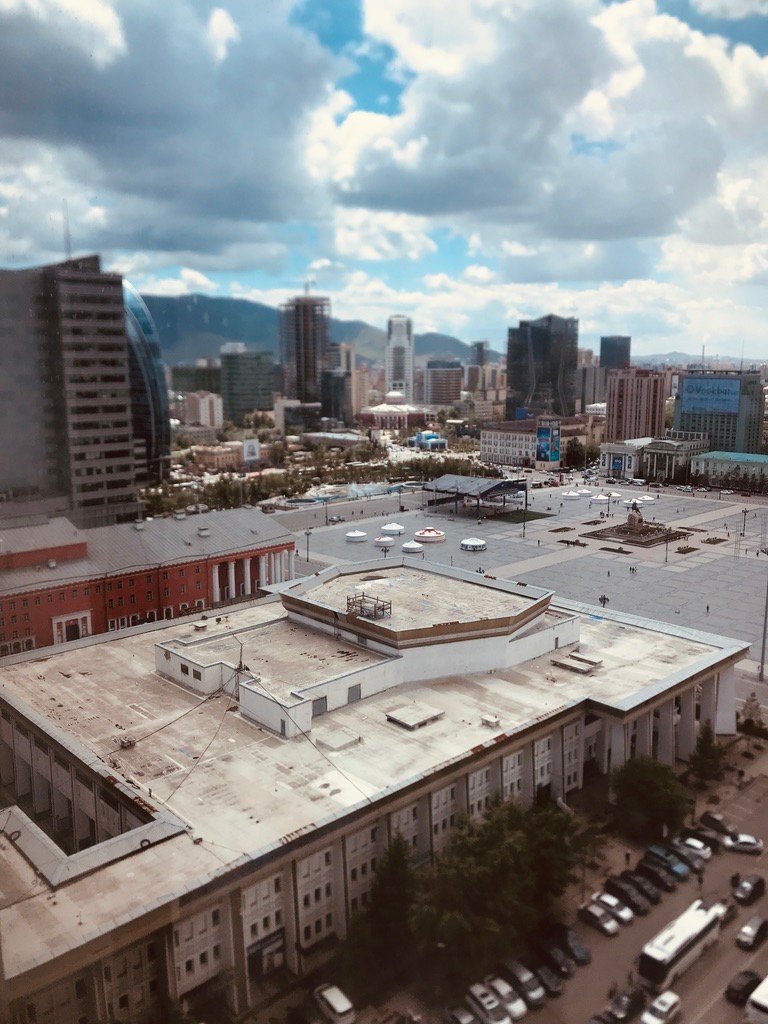
Sukhbaatar Square is five minutes on foot from most central hotels. Walk it, get oriented, and head west along Peace Avenue to the State Department Store — the basement food court does reliable buuz (steamed dumplings) for lunch. Dense, a little fatty, and exactly the right introduction to Mongolian food.
If your flight lands early enough, Gandan Monastery is worth an hour in the afternoon. The 26-meter gold statue of Migjid Janraisig fills the main hall in a way photographs do not capture. Monks are active in the mornings and early afternoons.
Eat well tonight. Modern Nomads restaurant near the city center serves traditional Mongolian dishes — khorkhog, tsuivan, and hot pot. Camp food is good but it is camp food.
Where to stay: Central Ulaanbaatar. Kempinski or Shangri-La for comfort; Bayangol Hotel for solid mid-range value.
Day 2: Drive South to the Gobi — First Views of the Desert
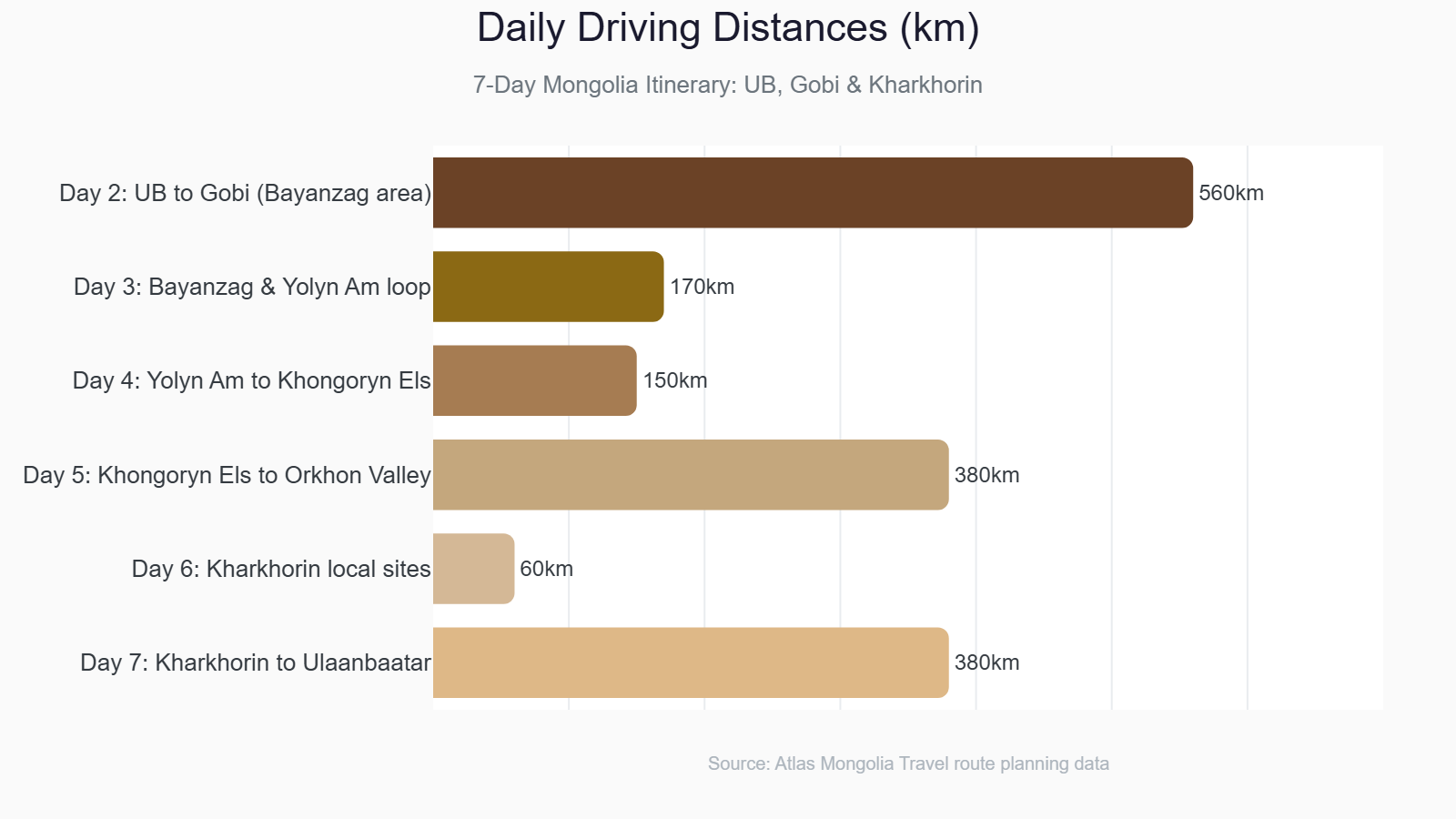
Leave Ulaanbaatar by 7:30 AM. The drive south covers approximately 560 kilometers — the first three hours on sealed highway, the remainder on gravel and packed dirt track. Allow 8 to 9 hours including stops.
South of Mandalgovi, the steppe transitions from green to brown to something closer to sand. Saxaul trees appear — low, twisted, leafless in summer but alive. The horizon flattens until there is nothing between you and it.
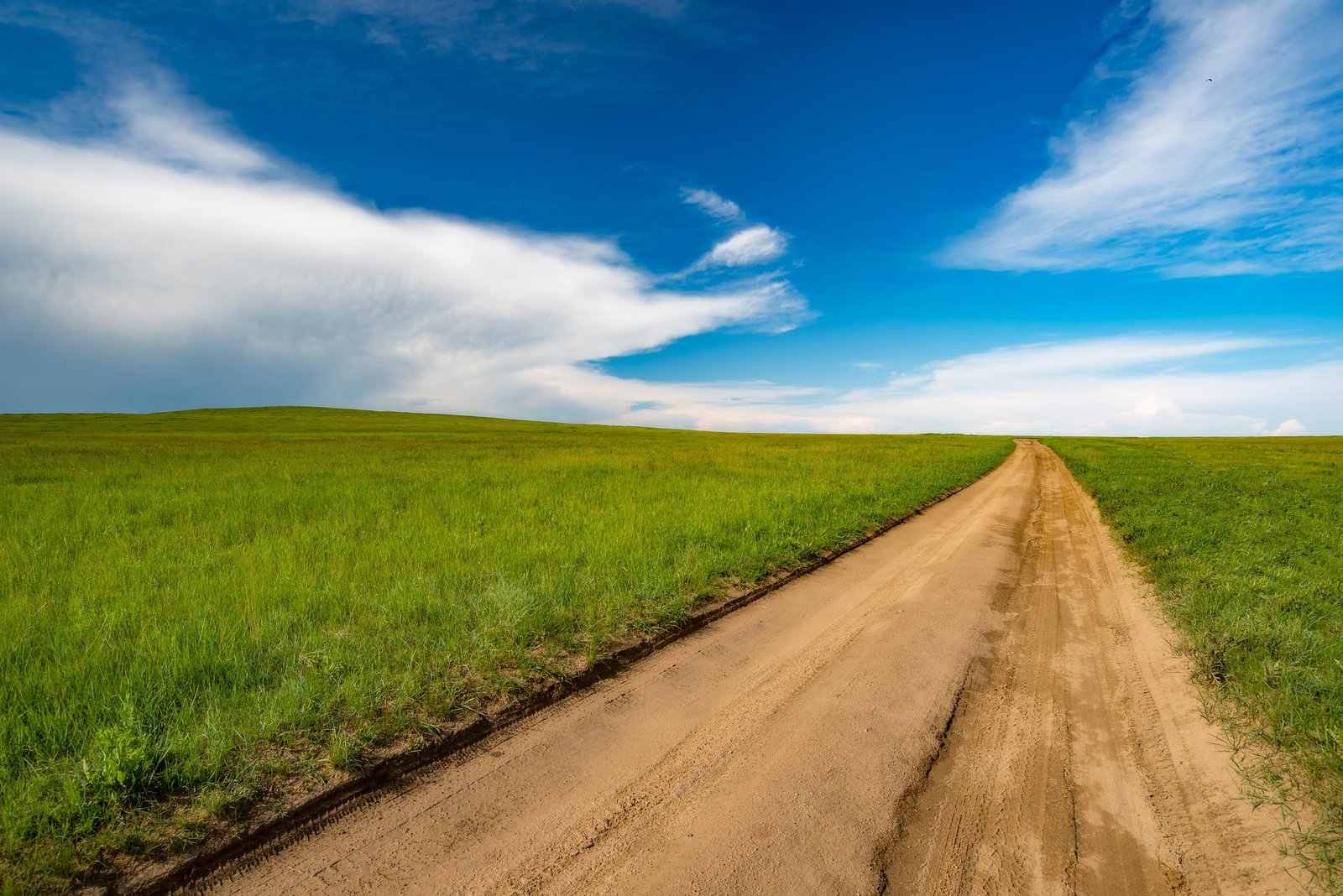
Most people expect sand dunes. What you get on Day 2 is gravel desert — flat, sparse, and immense. That is the Gobi. The dunes come on Day 4 and they hit harder for everything that preceded them. The contrast is part of what makes this route work.
You will stop for lunch at a roadside town or a ger. The tea will be salted. Try it.
Overnight: Ger camp near Dalanzadgad or the Bayanzag area.
Day 3: Flaming Cliffs of Bayanzag and Yolyn Am Canyon
Go to Bayanzag at dawn. The approach along a dirt track gives you a view of the mesa edge before you see the full drop — reddish-brown rock against pale sky, completely still. Then the track curves and the full cliff face opens up: 40 to 60 meters of red and orange sandstone above the desert floor.
Roy Chapman Andrews named this site in 1922, leading American Museum of Natural History expeditions that found the first scientifically documented dinosaur eggs here. That fact does not feel abstract when you are standing on the rim, looking at the soft rock layers that preserved those eggs for 70 million years.
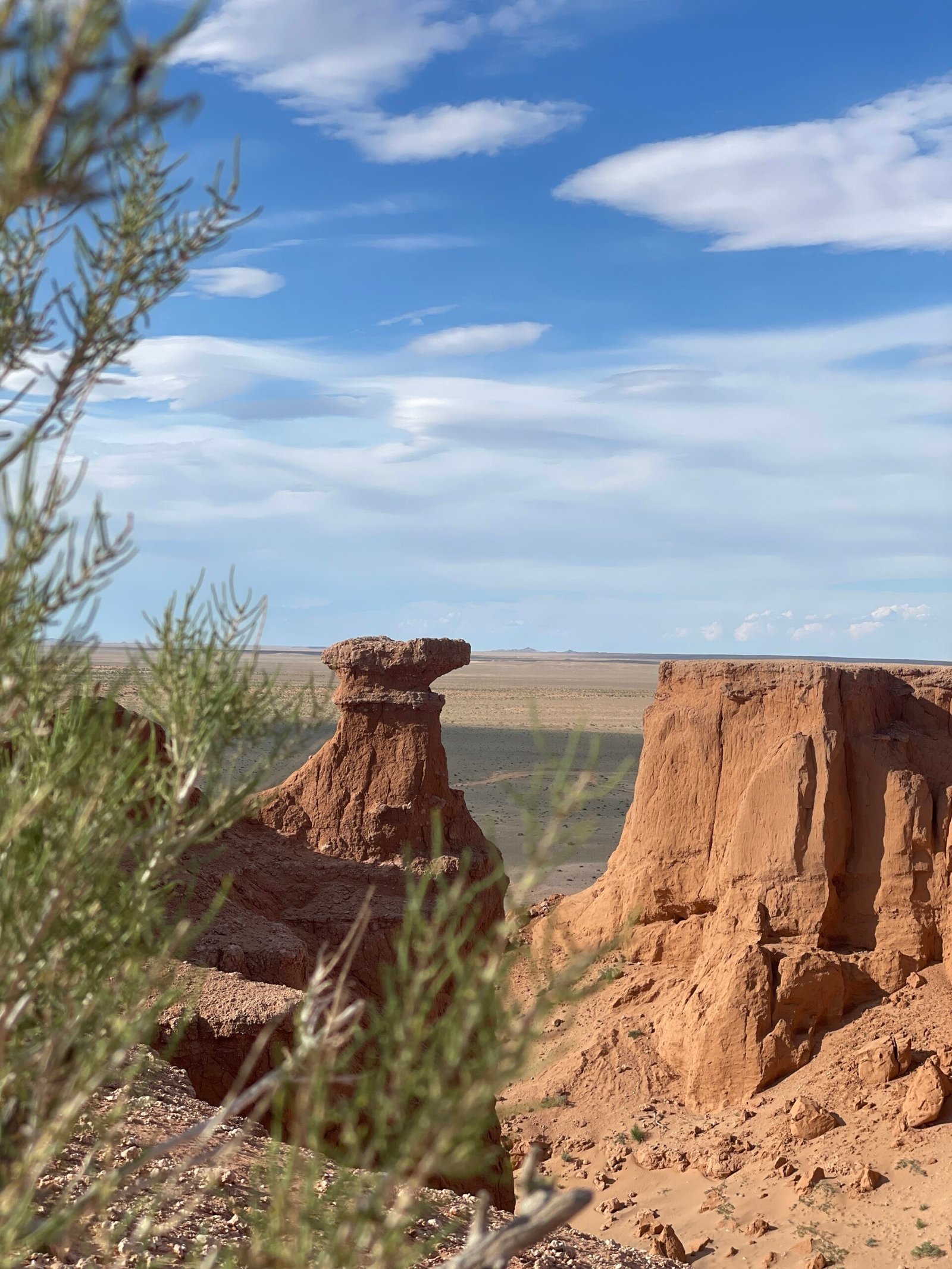
Walk the rim trail for an hour. The rock crumbles near the edge in places — watch your footing. Fossil fragments are still found here; removing them is illegal under Mongolian law.
Yolyn Am Canyon is 70 kilometers south inside Gurvan Saikhan National Park. The entrance is wide and sunny. Walk in for 20 minutes and the walls rise around you, the temperature drops, and in June and early July, ice still fills sections of the gorge floor. Meltwater from the Altai foothills that freezes through winter and holds deep into summer. The transition from Gobi heat to canyon cold happens over a hundred meters of walking.
Estimated driving across both sites: 3 to 4 hours
Overnight: Ger camp near Yolyn Am or Bayanzag
Day 4: Khongoryn Els — The Singing Sands
This is the day people describe when they tell someone about Mongolia.
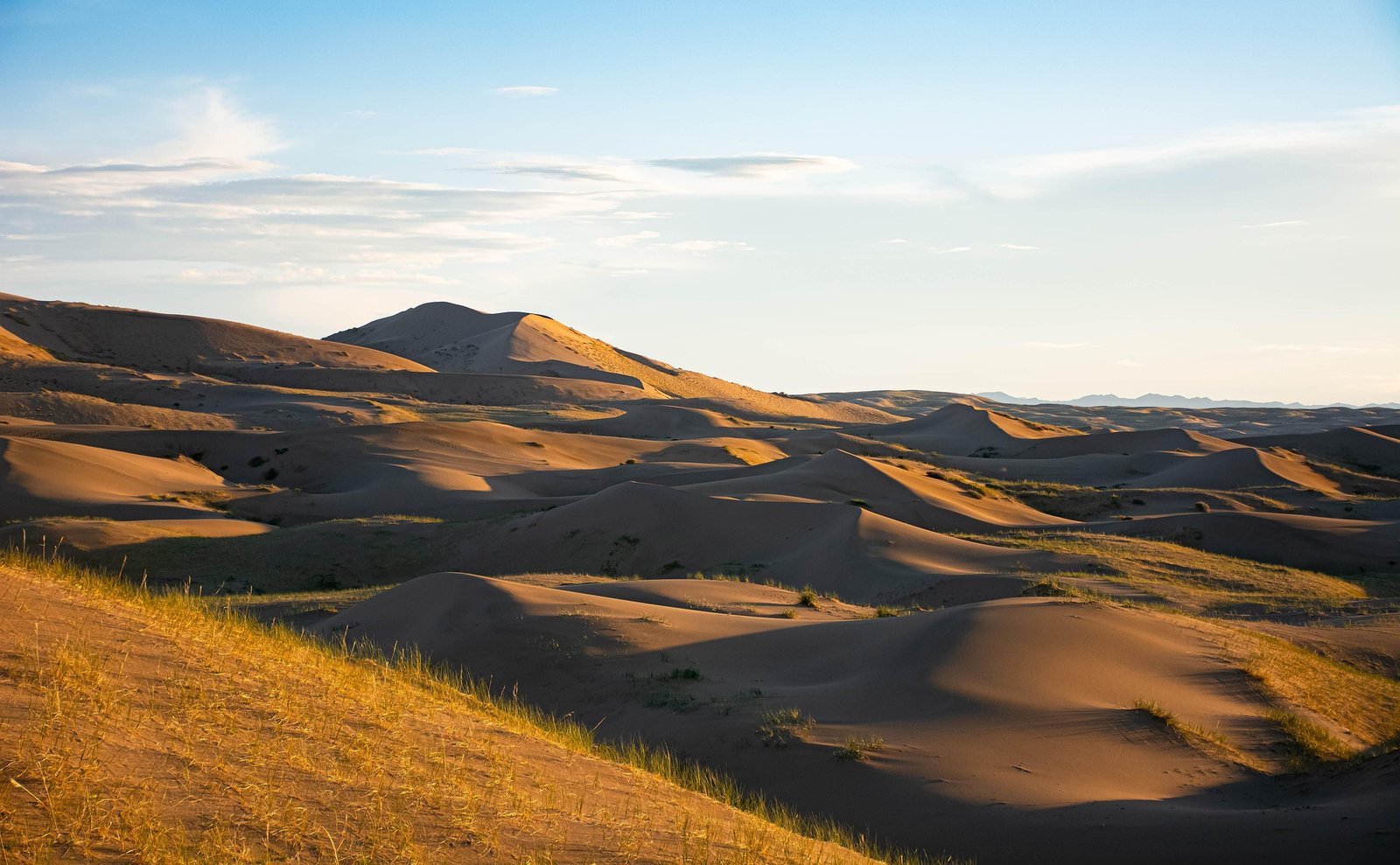
Khongoryn Els is Mongolia’s largest sand dune system — 180 kilometers long, up to 300 meters high at the main ridge. The dunes rise from the gravel desert without much warning. One moment you are on flat ground; the next, a wall of sand fills the windshield.
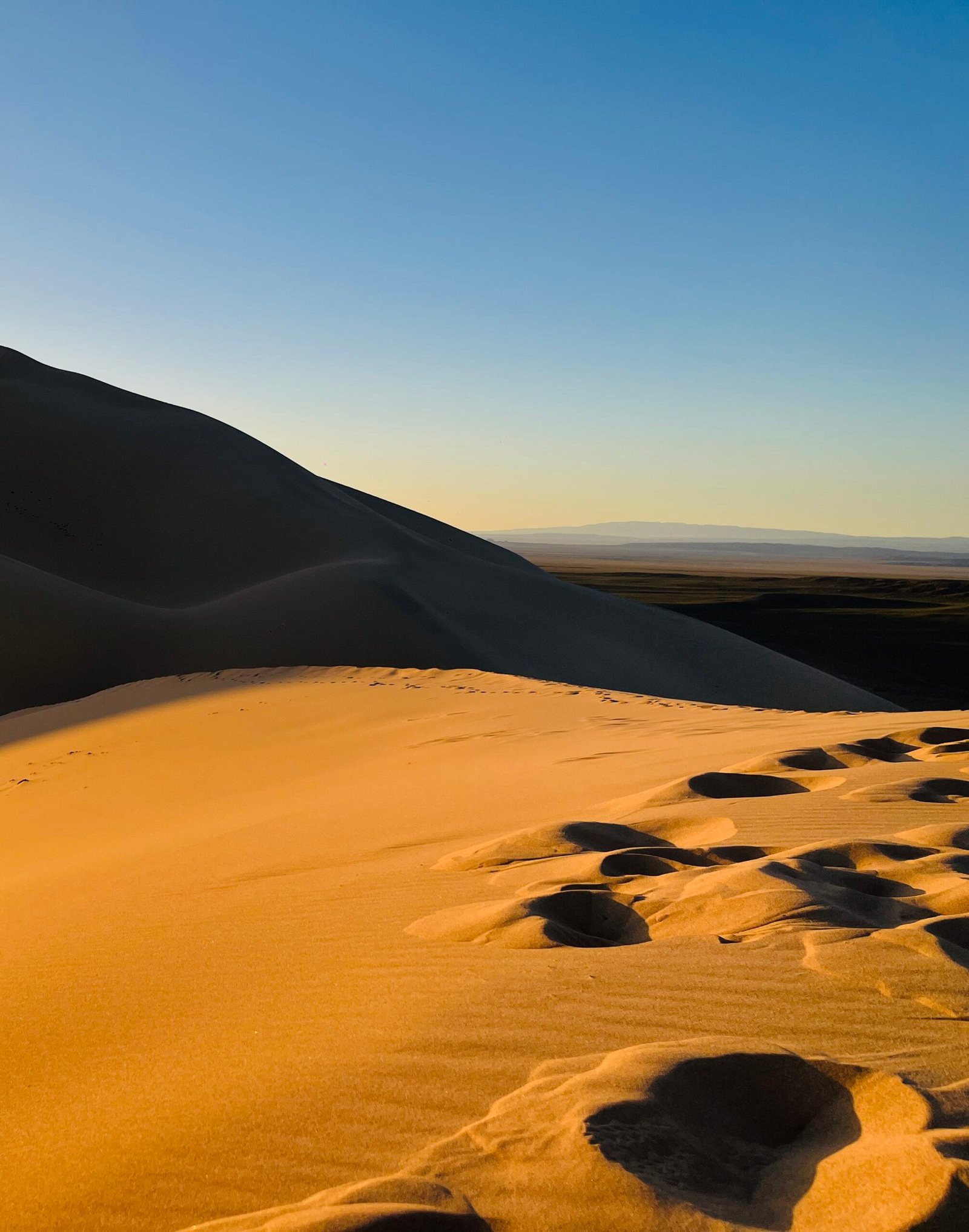
Drive from camp takes 3 to 4 hours. Arrive before midday heat builds.
Climbing the main ridge takes about 45 minutes. The slope is steep and the sand gives way underfoot — two steps up, one sliding back. At the top, the ridge is narrow and sharp. On one side: the gravel plain stretching south. On the other: the soft dune interior with rippled hollows.
The dunes are called Duut Mankhan — Singing Sands — because of the low moan that wind makes moving across dry sand at speed. You may hear it on the descent. It is unsettling in the best way.
Bactrian camels are available at camps near the dunes. One hour costs around USD 10 to 15 per person. The camels are enormous and calm. Mounting takes a moment — they drop to their knees, you get on, and they stand up front-first, pitching you backward before leveling out.
Tonight is the best night for stargazing on the entire circuit. No light pollution within 200 kilometers. The Milky Way is visible to the naked eye from around 9 PM in summer. Temperatures drop sharply after dark even in July — bring a jacket.
Read our Gobi Desert travel guide for a full breakdown of what the region covers and what to expect at each site.
Day 5: The Long Drive North Out of the Gobi
Day 5 is the longest driving day: approximately 380 kilometers from Khongoryn Els north toward the Orkhon Valley, mostly on unpaved track. Allow 8 to 9 hours in the vehicle.
The tracks through central Mongolia are unmarked and frequently split. GPS helps. Local knowledge matters more. Your driver will know which crossings are passable after rain, where fuel stops are reliable, and which families run camps worth stopping at.
Pay attention to the central steppe from mid-afternoon. The grass turns gold from around 4 PM. Nomadic family gers appear as white dots on the hills. If your driver stops at a family camp for tea, accept the offer. Suutei tsai — salted milk tea — is an acquired taste, but sharing it is part of Mongolian hospitality rather than a tourist performance. Our ger etiquette guide covers what to expect so these moments feel natural.
The landscape on this drive shifts from desert to semi-arid scrubland to proper steppe — the Khangai Mountains appearing on the northern horizon as you push toward the Orkhon Valley.
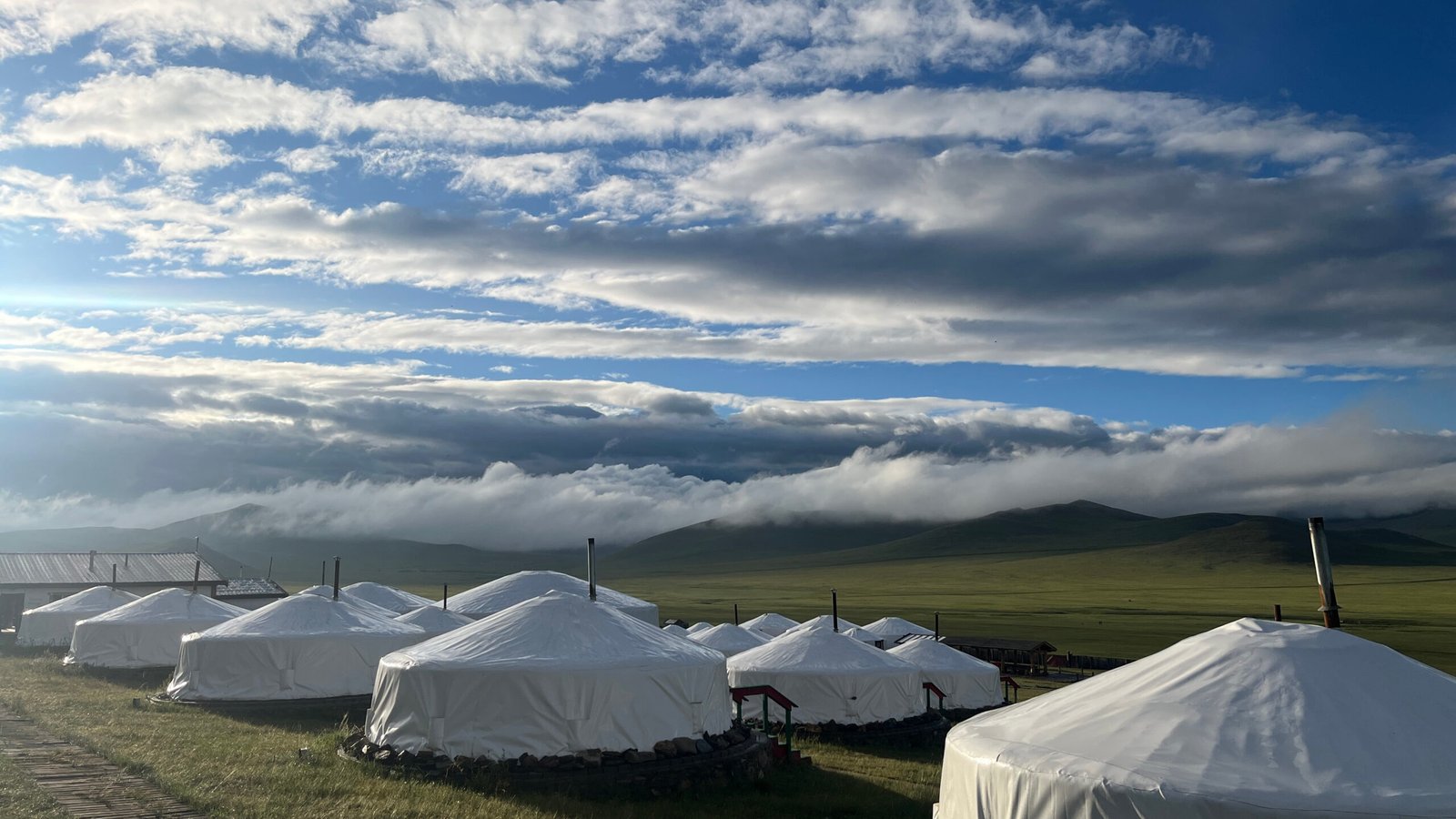
Overnight: Ger camp in the Orkhon Valley area, roughly 130 kilometers from Kharkhorin.
Day 6: Kharkhorin and Erdene Zuu Monastery
Kharkhorin sits in the Orkhon Valley, a UNESCO World Heritage Site and the heart of the ancient Mongol Empire. In the 13th century, when Karakorum was the imperial capital under Ogedei Khan, this was one of the most cosmopolitan cities in the known world — Persian traders, European missionaries, and Chinese artisans all passed through. The Dutch monk William of Rubruck, who visited in 1254, described a city with a Nestorian Christian church, a mosque, and twelve Buddhist temples.
What remains now is quiet. The town itself is small. But the scale of what was here is readable in the landscape — a broad flat valley, the Orkhon River cutting through it, the foothills of the Khangai range. Walk to the stone turtles that marked the boundaries of the ancient city and the original footprint becomes easier to imagine.
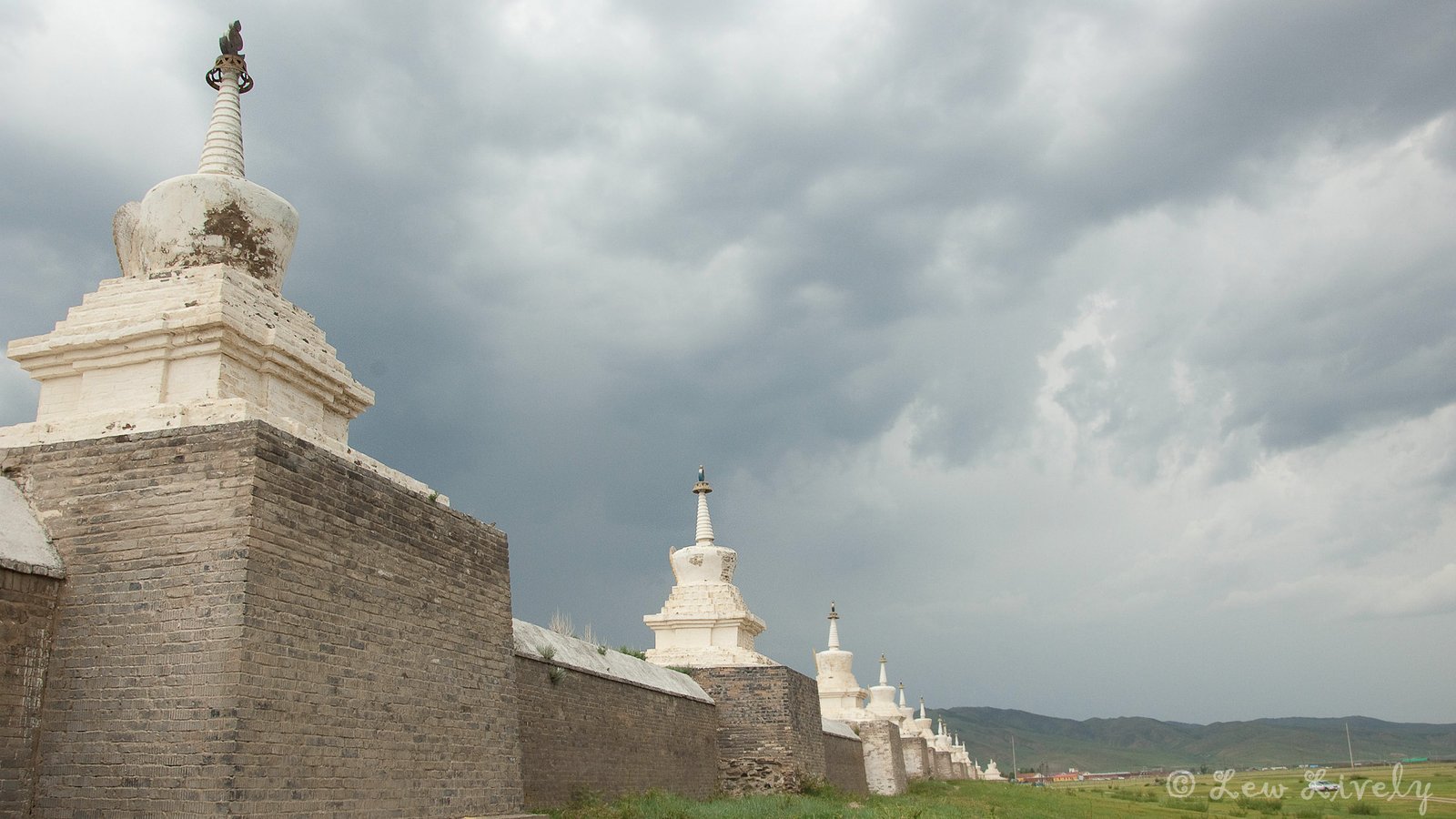
Erdene Zuu Monastery was built in 1586 directly from stones taken from the ruins of Karakorum. The white perimeter wall is studded with 108 stupas — 108 being sacred in Tibetan Buddhism. Three temples survive inside, containing frescoes and religious objects from different periods. The monastery was badly damaged in the Soviet purges of the 1930s — most of its monks were executed — and has been slowly restored since 1990.
Kharakhorum Museum is 10 minutes walk from the monastery. Budget an hour. The exhibits on the city’s trading network and imperial administration are well-presented.
The Orkhon Waterfall is 130 kilometers south of Kharkhorin on a rough track — about 3 hours each way. If the week has already been heavy on vehicle time, skip it and spend the afternoon walking along the river instead. The valley is worth unhurried time.
Overnight: Ger camp near Kharkhorin.
Day 7: Return to Ulaanbaatar
The 380-kilometer drive from Kharkhorin to Ulaanbaatar is mostly on paved road. Allow 5 to 6 hours including a lunch stop. The route follows the Orkhon River valley north before turning east toward the city.
If you have an evening flight, use the afternoon for the Chinggis Khaan Museum (opened 2022, covers the sweep of the Mongol Empire with serious production values) or the Bogd Khan Winter Palace for something quieter and older. The Narantuul market is good for cashmere — budget USD 60 to 120 for a quality scarf.
If this week has left you wanting more time in Mongolia, a 10 to 12 day version of this circuit changes the feel entirely. Check our custom tours page or get in touch and we will build the right itinerary for your schedule.
Practical Notes for This Route
Best time to go: June through September. July and August are peak season — camps fully staffed, tracks dry, steppe green. Late August and September offer fewer travelers and golden steppe colors. See our best time to visit Mongolia guide for a full seasonal breakdown.
Vehicles: A Russian UAZ 4×4 van or Toyota Land Cruiser is required. Ordinary vehicles are not viable south of Dalanzadgad.
Ger camps: Most tourist camps include three meals, solar-heated showers, and Wi-Fi in the main building. Private gers with a wood stove. Bring a fleece — Gobi nights drop sharply after dark even in July.
Packing: Light layers, good sun protection, and closed-toe shoes for dune climbing. Full packing list in our summer packing guide.
Visa: Most Western passport holders enter Mongolia visa-free for 30 days. Check our Mongolia visa guide 2026 for current requirements.
Travel insurance: Essential. Medical evacuation from the Gobi is expensive and complicated without coverage. See our Mongolia travel insurance guide.
Frequently Asked Questions
How many days do you really need for a Mongolia itinerary?
Seven days lets you complete the Ulaanbaatar-Gobi-Kharkhorin circuit on a tight but workable schedule. Most travelers who do this route recommend 10 to 12 days if the schedule allows — not because 7 is inadequate, but because the Gobi rewards slower travel and the driving hours are genuinely long. If 7 days is all you have, go. It is worth it.
Can you do this Mongolia itinerary independently without a guide?
It is possible but difficult for first-time visitors. Roads in the Gobi are unmarked, navigation requires local knowledge, and ger camp bookings need operator relationships established in advance. Travelers with prior Mongolia experience or Mongolian language skills manage it independently. For most first-time visitors, a guided tour removes significant logistical friction and lets you focus on the experience.
What is the best time of year for a 7-day Mongolia Gobi itinerary?
June through September. Ger camps on this route operate seasonally — most open mid-May and close in late September. July is the most popular month with reliably warm weather. Late August and September bring fewer travelers and dramatic steppe colors without a major drop in temperature.
How much does a 7-day guided Mongolia tour cost?
A fully guided 7-day tour covering Ulaanbaatar, the Gobi, and Kharkhorin typically costs between USD 1,800 and USD 3,200 per person, depending on group size and camp quality. Groups of four to six reduce the per-person cost substantially. International flights from Europe or North America add approximately USD 800 to 1,500 depending on routing.
What are the roads like in the Gobi Desert?
The Ulaanbaatar-to-Kharkhorin road is paved and good. Everything south of Dalanzadgad is unpaved — gravel track, packed sand, and loose sections near the dunes. Distances that look manageable on a map often take twice the expected time. A proper 4×4 vehicle is not optional for the Gobi sections.
What is it like sleeping in a ger camp in Mongolia?
Ger camps on the tourist circuit provide private gers — circular felt tents with a wood or coal stove in the center, two to four beds, and a small table. Bathrooms and showers are in a separate building. Meals are served in a communal dining ger. Camp quality varies; most on this route are clean and comfortable. Staff light the stove for you before bedtime.
Plan Your Mongolia Trip
Atlas Mongolia Travel runs this route as our Gobi Wonders Expedition — a 7-day guided tour with all logistics handled: camp bookings, an English-speaking local guide, 4×4 transport, and all meals included. Departures run June through September.
For something tailored to your schedule or travel style, we build custom tours for groups of any size. Get in touch and we will work out the right itinerary for you.
Written by the Atlas Mongolia Travel team — a locally operated tour company based in Ulaanbaatar.
Turn This Itinerary Into Your Trip
The 7-day route in this guide forms the backbone of several Atlas Mongolia Travel tours. Our Classic Mongolia Highlights covers the central steppe, Karakorum, and Orkhon Valley over 9 days with a professional guide, 4WD vehicle, and all accommodation included. Prefer the Gobi? See the Gobi Wonders Expedition. Or build a custom 7-day route with us.

Atlas Mongolia Travel
Atlas Mongolia Travel is a locally operated tour agency based in Ulaanbaatar, Mongolia, specializing in authentic private and group tours across Mongolia.

Leave a Reply