Ger Etiquette in Mongolia: Dos and Don’ts Every Visitor Should Know
The threshold of a Mongolian ger is considered its neck. Step on it, and you’re symbolically strangling someone’s home. That single detail tells you everything about ger etiquette in Mongolia — every object, every gesture, every seat in a ger carries meaning shaped by thousands of years of nomadic life. Knowing even the basics will change how nomadic families receive you.
Most travelers worry about making mistakes inside a ger. The truth is, Mongolian families are generous and forgiving — they understand you’re learning. But when a guest arrives who clearly took the time to understand their customs? The warmth shifts from polite to personal. Doors open wider. Stories get shared over a second bowl of airag. That’s the difference this guide gives you.
Whether you’re planning a nomadic family stay in the Mongolian countryside or stopping at ger camps along the way, these are the real rules — not from a textbook, but from growing up in a culture where the ger is home.
- Never step on the threshold — step over it with your right foot first
- Accept all food and drink offered, even if you only take a small sip or bite
- The fire in the center of the ger is sacred — never throw trash in it or point your feet toward it
- Always give and receive items with your right hand (left hand supporting your right elbow)
- Move clockwise inside the ger and never walk between the two center support poles
Table of Contents
- What Is a Ger and Why Does Etiquette Matter?
- How Should You Enter a Mongolian Ger?
- Where Do You Sit Inside a Ger?
- What Happens When You’re Offered Food and Drink?
- Why Is the Fire So Important?
- What About the Snuff Bottle Exchange?
- What Gifts Should You Bring?
- Can You Take Photos Inside a Ger?
- Other Customs That Catch Visitors Off Guard
What Is a Ger and Why Does Etiquette Matter?
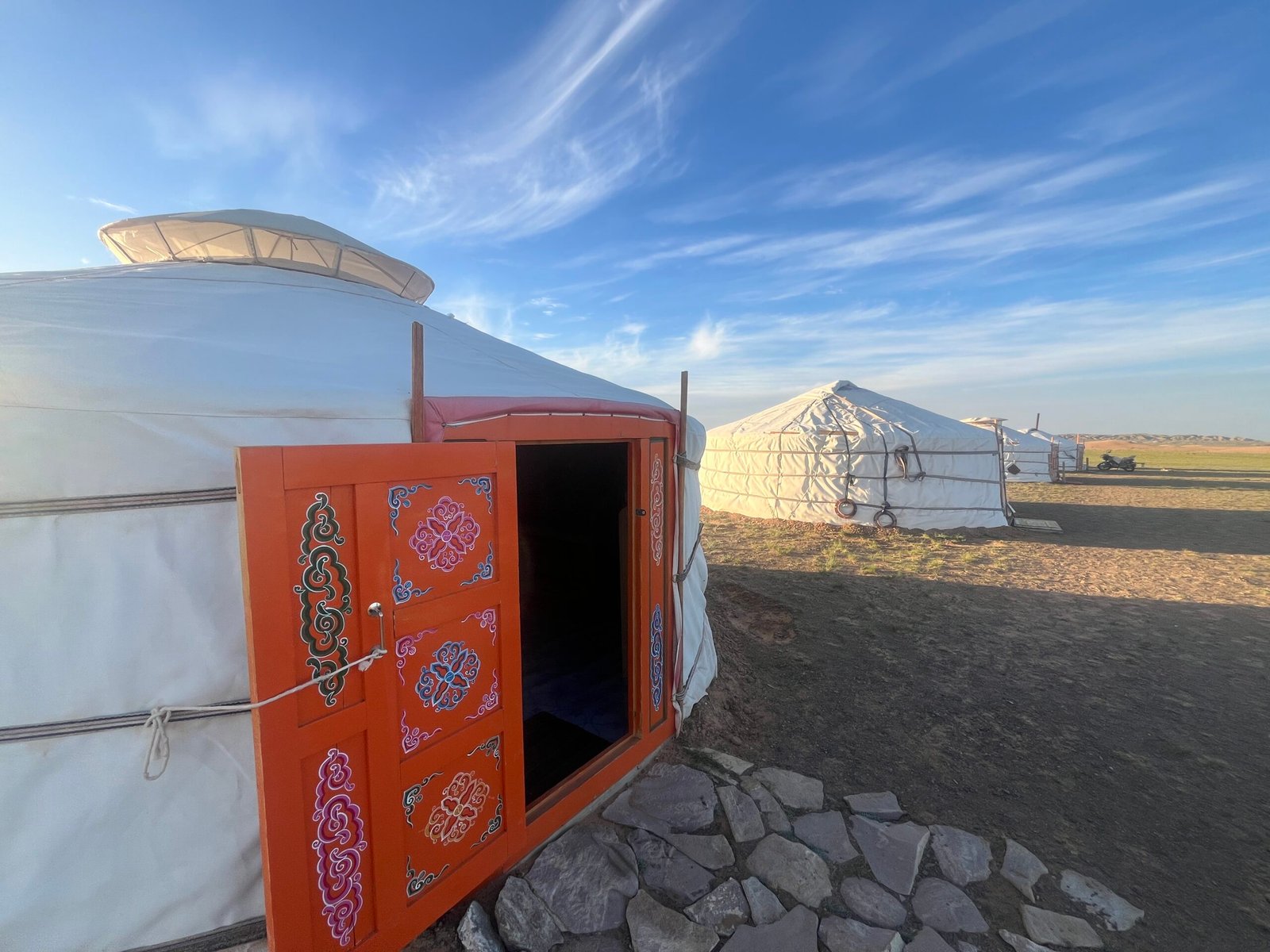
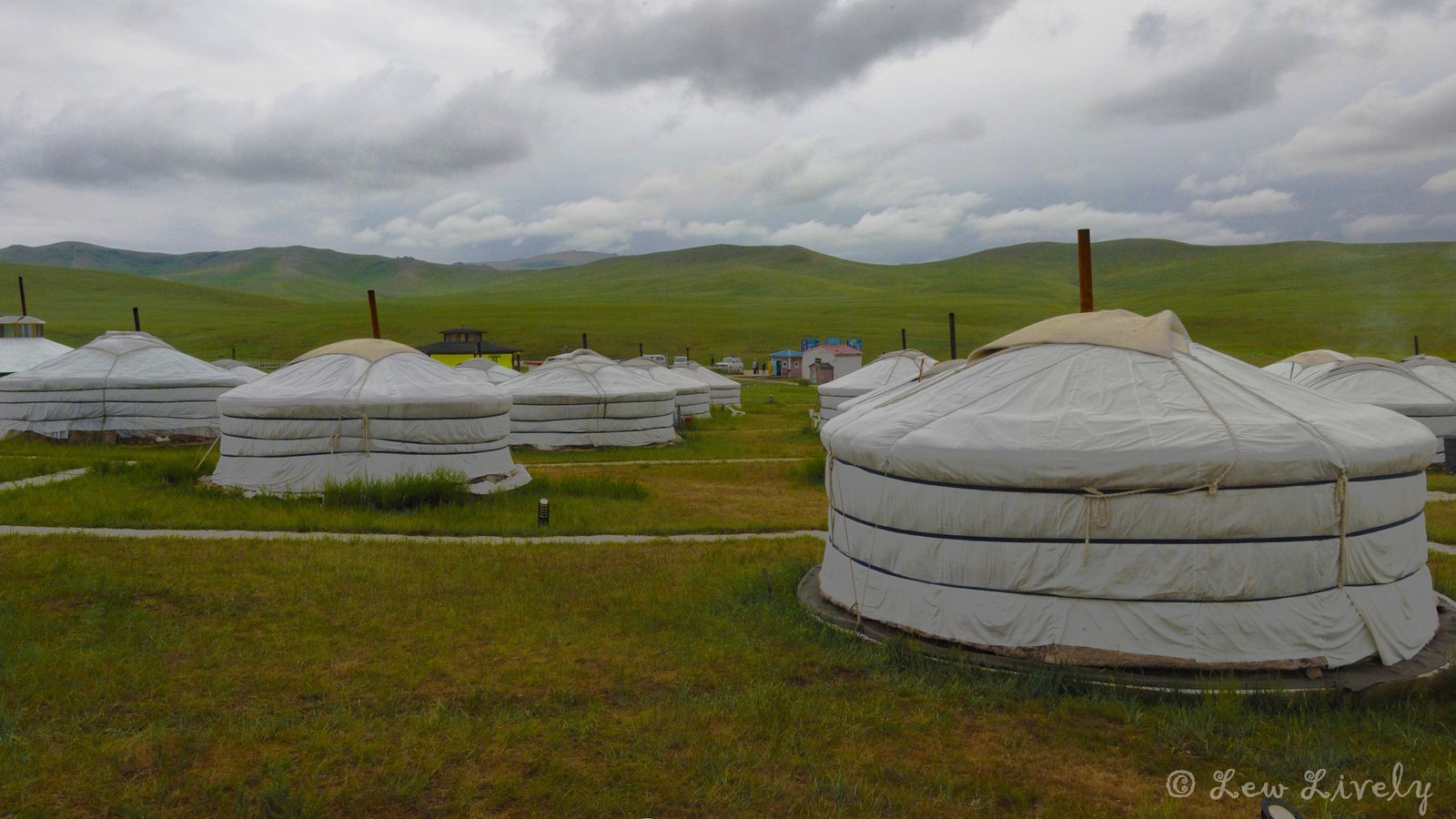
A ger is a round, felt-covered dwelling that has been the home of Mongolian nomads for centuries. Over 60% of Mongolia’s population still lives in gers today, including many families in the capital Ulaanbaatar. In the countryside, that number rises to around 90%. This is not a museum piece. It’s where people eat, sleep, raise children, and welcome guests.
First thing: it’s called a ger in Mongolia, never a yurt. The word “ger” means “home” in Mongolian. Call it a yurt and someone will politely correct you — it’s a small thing that signals you’ve done your homework.
Every ger follows the same layout. The door always faces south to catch light and warmth. The north end, opposite the door, is the most sacred space — reserved for the family altar, Buddhist icons, and family photographs. The west side (left as you enter) belongs to guests. The east side (right) is the family’s domain, where cooking tools and personal belongings are stored.
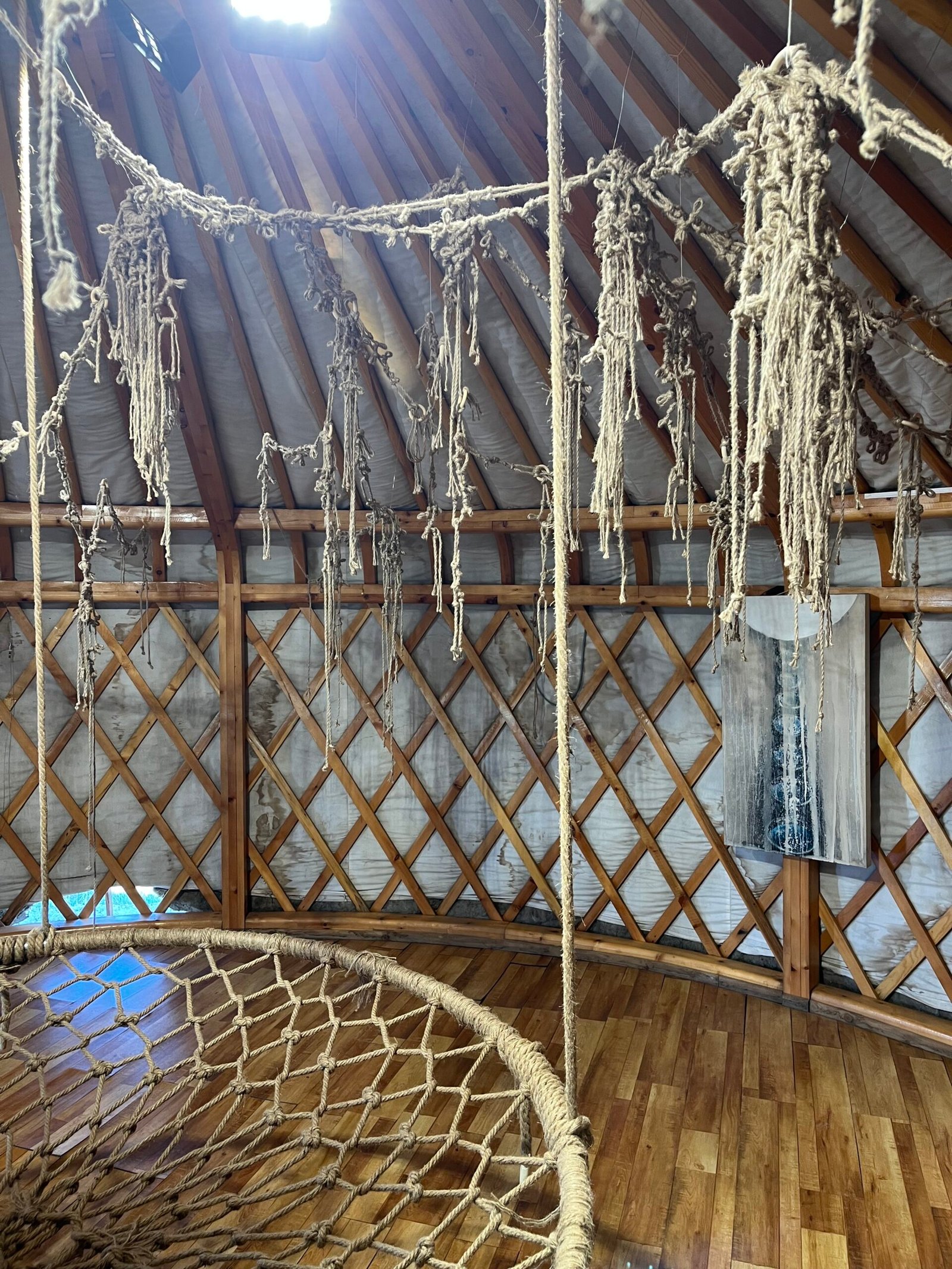
This layout isn’t random. It mirrors how Mongolian nomads read the sky, the seasons, and their place in the natural world. The roof opening, called the toono, represents the sun and a connection to the sky above. The hearth in the center symbolizes the five elements. When you understand this, ger etiquette stops being a list of rules and starts making sense.
How Should You Enter a Mongolian Ger?
Step over the threshold with your right foot, duck slightly, and walk in. Three simple actions, but each one matters.
When you approach a ger in the countryside, call out “Nokhoi khor!” — which means “Hold the dog.” Even if you don’t see a dog, say it. Nomadic families often have guard dogs, and this phrase alerts everyone inside that a visitor is arriving. It’s the Mongolian equivalent of ringing the doorbell.
Never knock on a ger door. That’s considered rude. And never stand in the doorway chatting — step fully inside or stay fully outside.
The threshold is called the bosgo, and Mongolians consider it the neck of the ger. Stepping on it is like stepping on the home itself. In older traditions, stepping on the threshold of a khan’s ger was punishable by death — the guards would execute the offender on the spot. Nobody will react that strongly today, but the symbolism still carries weight. Step over it cleanly.
Once inside, greet your hosts with “Sain bainuu?” (pronounced “Say-ban-oo”), which means “How do you do?” If you’ve already greeted them once today, a simple “Sain uu” works for subsequent visits.
Where Do You Sit Inside a Ger?
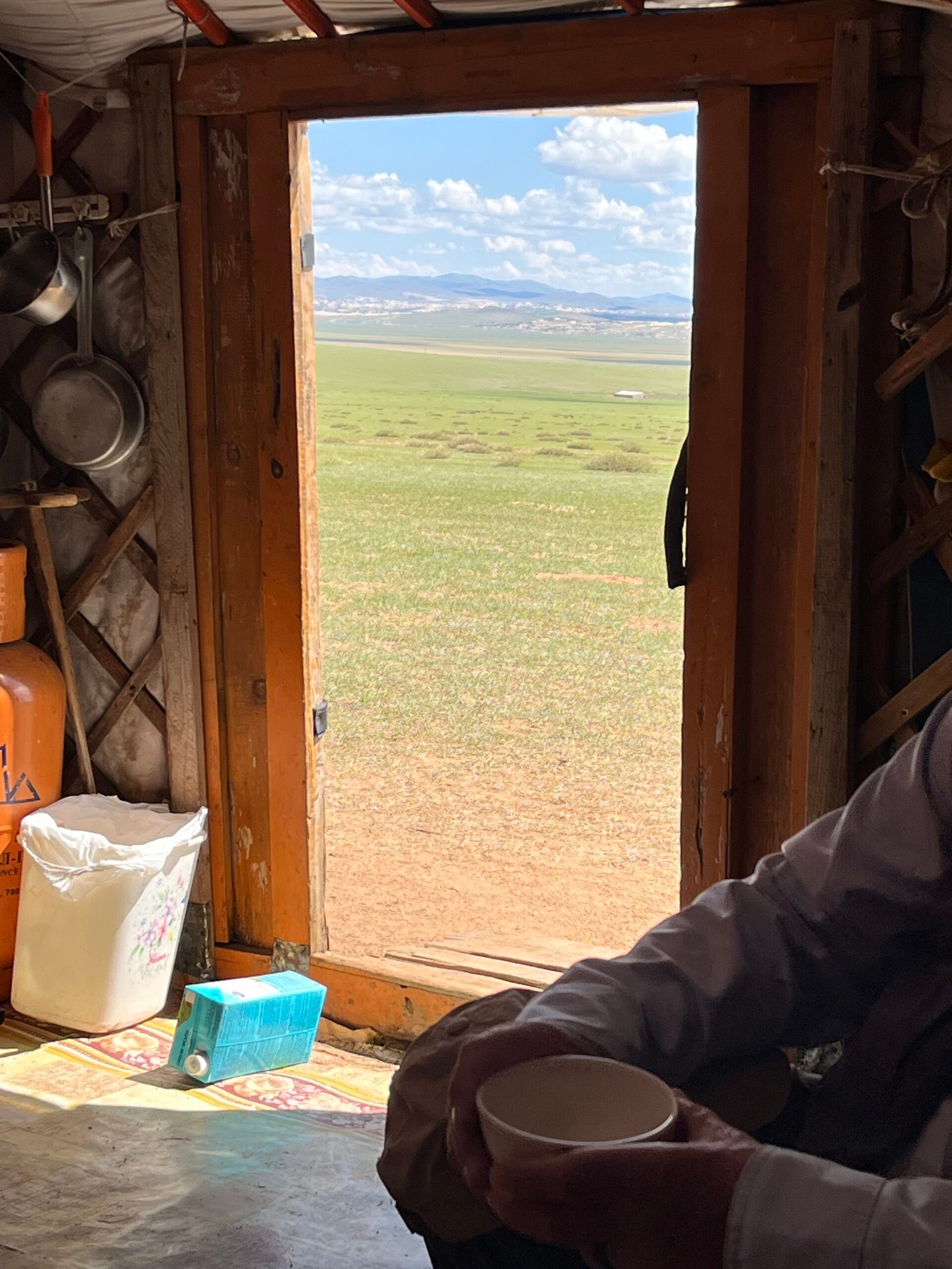
Walk to the left side of the ger — that’s the guest side. Sit on whatever’s there: a stool, the edge of a bed, or the floor. Don’t wait to be invited to sit down. Standing while others sit is actually the awkward move.
The right side belongs to the family. Only sit there if they invite you. The north end, directly opposite the door, is reserved for the eldest or most honored person in the family. As a visitor, you never sit there unless specifically asked.
Here’s what catches people: the two wooden poles in the center of the ger that hold up the roof. Never walk between them. Walk around. It doesn’t matter if the long way around is inconvenient — walking between the poles is considered bad luck. On a practical level, those poles hold the entire structure together. Lean on one and the whole ger shifts. Mongolians learn this as toddlers.
Don’t lean against the ger walls or furniture. Don’t squat. And if you’re wondering about crossing your legs — it’s fine on the guest side, just don’t point the soles of your feet toward the altar at the north end or toward the fire in the center.
What Happens When You’re Offered Food and Drink?
You will be offered suutei tsai (salty milk tea) within minutes of sitting down. Accept it. This is non-negotiable in Mongolian hospitality — refusing food or drink from a host is one of the most direct ways to cause offense.
The good news: you don’t have to finish everything. The gesture of accepting matters more than consumption. Take the bowl, sip the tea, and set it down when you’re done. Nobody will pressure you to empty it. Same goes for the plate of boortsog (fried bread), aaruul (dried curd), or sweets that will appear on the table. Take at least one piece, try it, and you can quietly set it down.
When receiving anything — a bowl, a plate, a cup — take it with your right hand, or with both hands. If using one hand, your left hand should rest under your right elbow. This receiving gesture shows respect across all of Mongolia. Keep your sleeves rolled down during the exchange. Showing your wrists while giving or receiving is considered impolite.
If the host family offers you airag (fermented mare’s milk), take it the same way. Airag has a sour, slightly fizzy taste that surprises most first-timers. It’s the national drink and refusing it would be like turning down tea in England.
For vodka, there’s a whole ritual. The host pours from one shared glass and passes it to you. Before drinking, dip the ring finger of your right hand into the vodka and flick it off your thumb four times — once for each of the four cardinal directions. This is an offering to the sky, the earth, and your ancestors. Touch your ring finger to your forehead, then drink. Pass the glass back to the host, not to the next person. They’ll refill it and pass it on.
If you don’t drink alcohol, that’s completely fine. Touch the glass to your lips and hand it back. The host refills it and moves on. No judgment. For more on Mongolian food and drink traditions, we’ve written a full guide.
Why Is the Fire So Important?
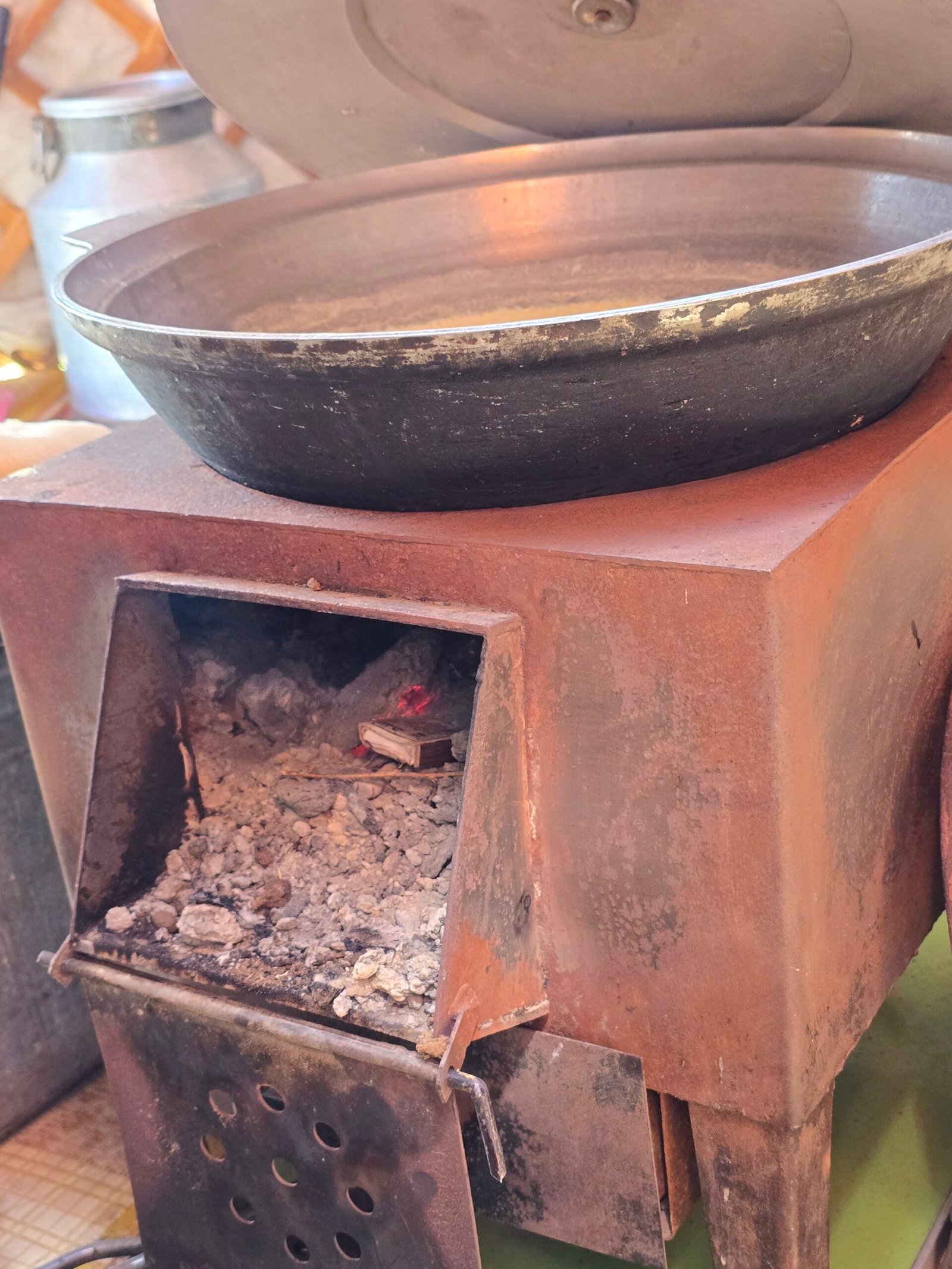
The central stove in a ger is sacred. In Mongolian tradition — rooted in both Shamanism and Buddhism — protective spirits live within the flames. The fire represents the five elements and connects the world above to the world below.
What this means in practice: never throw trash into the fire. There’s usually a bucket near the stove for waste. Never pour water on the fire. Never stick a knife or sharp object into the flames. And never point your feet toward the stove — feet are considered the lowest, dirtiest part of the body, and aiming them at something sacred is a direct insult.
When you sleep overnight in a ger, position yourself so your feet point toward the door (south) and your head points north, toward the altar. Never sleep with your feet aimed at the fire or the family shrine.
If the stove goes out on a cold night and you want to relight it, that’s fine — just treat the fire with the same respect you’d show any living thing in the home. Because in Mongolian belief, it is alive.
What About the Snuff Bottle Exchange?
This one surprises most visitors. In rural Mongolia, especially among older herders, you may be offered a snuff bottle as a greeting. It’s a small decorative bottle, often beautifully crafted from jade, agate, or coral, and it’s one of the oldest social rituals in the country.
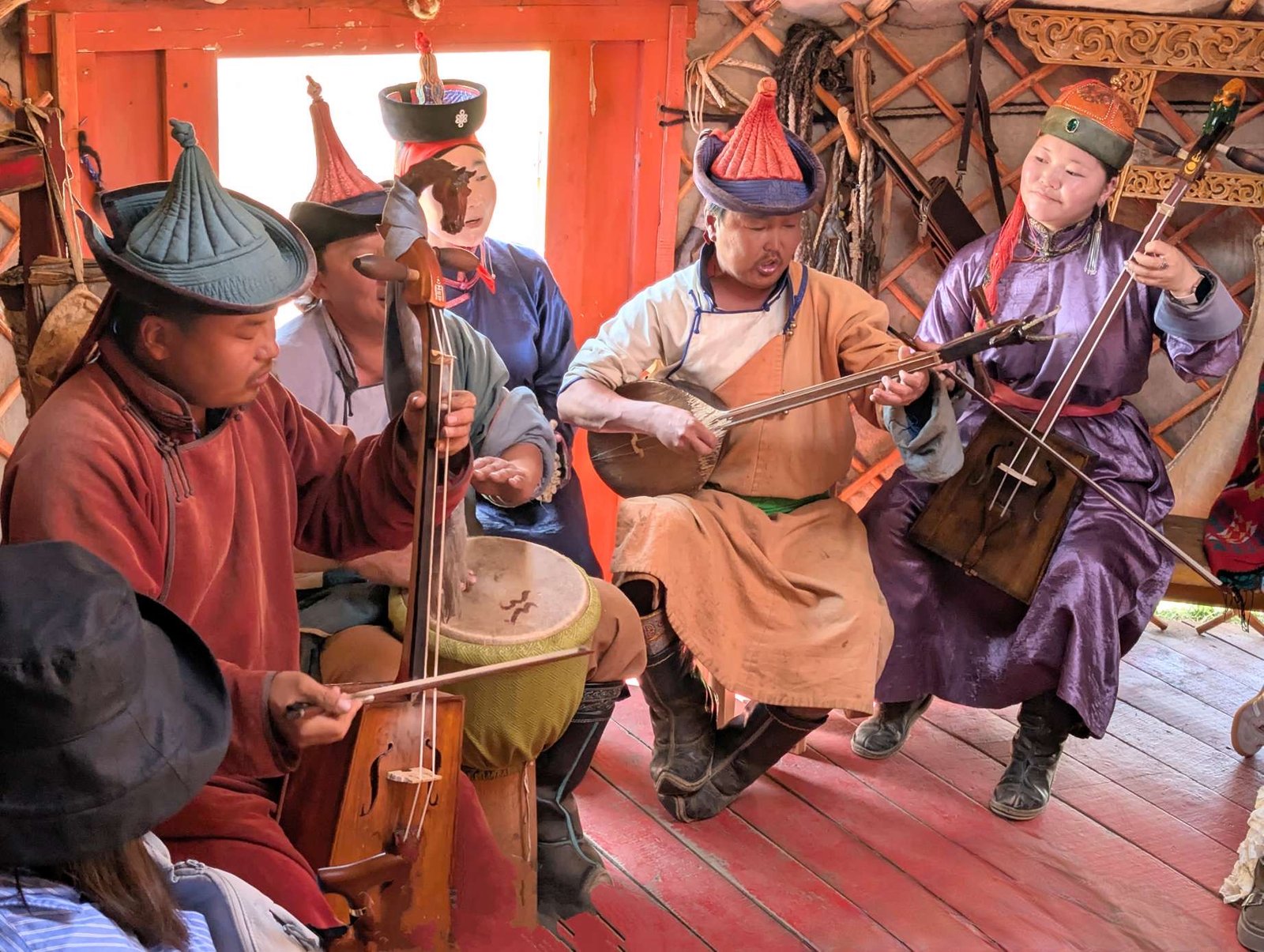
Here’s what you do: accept the bottle with your right hand (left hand under the elbow, as always). Gently loosen the top without fully removing it. Bring it to your nose and sniff — or pretend to sniff. Admire the bottle briefly. Hand it back. The owner sniffs it again before putting it away or passing it to the next person.
If you carry your own snuff bottle (a thoughtful souvenir purchase in Ulaanbaatar), offer it the same way. Sniff yours first before handing it to your host.
The exchange isn’t really about the snuff. It’s a gesture of mutual respect and trust — the Mongolian equivalent of a handshake that also says “I welcome you.”
What Gifts Should You Bring?
If you’re visiting a nomadic family’s ger — whether as part of an Atlas Mongolia Travel tour or independently — bring a gift. Vodka, sweets, cookies, or candy for the children are the most appreciated. A bottle of vodka and a box of sweets per family is the standard.
Your guide will usually arrange a stop at a shop before you reach the countryside, so you don’t need to pack gifts from home (though small items from your country are also well received).
Present your gift when you first enter the ger, before sitting down. Use both hands or your right hand with the left supporting the elbow.
One detail many guides skip: before settling into your own ger at a camp, visit the owner’s family ger first. This brief visit to say hello, offer a gift, and share a cup of tea acknowledges that you’re a guest on their land. It transforms the dynamic from transactional to personal.
Can You Take Photos Inside a Ger?
Always ask first. A simple gesture toward your camera with a questioning look works across any language barrier. Most families are happy to say yes — many are proud to show their home. But asking shows you see them as people, not a photo opportunity.
A few tips from experience: photograph the ger interior, the details, the patterns on the door. If children are around, showing them photos on your camera screen is a guaranteed way to earn smiles. If a family says no, respect it without question. And never photograph the family altar without explicit permission.
For wider photography tips during your trip, our packing guide for Mongolia covers camera gear recommendations.
Other Customs That Catch Visitors Off Guard
Whistling inside a ger. Don’t. Mongolians believe whistling indoors summons the wind. When your entire home is held together by felt and wooden poles, that’s a real concern — not just superstition.
Touching someone’s hat. Hats hold deep significance in Mongolian culture. Never touch, move, or try on someone else’s hat. When you take off your own, place it brim-down (opening facing down) and never on the floor.
Touching someone’s head. The head is sacred. Don’t touch it, even a child’s, no matter how cute they are.
Accidentally stepping on someone’s foot. This happens in tight quarters. When it does, immediately offer a handshake. Mongolians do this instinctively — it neutralizes the disrespect of foot contact. You’ll see locals lunge for a handshake after the slightest brush of feet, almost like a reflex.
Pointing. Never point at someone with a single finger. Use your whole open palm to gesture instead.
Moving clockwise. Always walk clockwise inside a ger. This follows the direction of the sun across the Mongolian sky and aligns with Buddhist tradition.
The fist twist. Never hold up your fist and twist it side-to-side. It’s an obscene gesture in Mongolia — the equivalent of a strong profanity in English. Travelers have learned this one the embarrassing way.
For more on preparing for countryside travel in Mongolia, check our guide on vaccines and health precautions and the best time to visit Mongolia.
The Bottom Line: Relax and Show Respect
Mongolians have roughly 3,000 customs and superstitions related to ger life. Nobody expects you to know them all. The families who welcome Atlas Mongolia Travel guests into their gers understand that visitors are learning. They’ve seen every possible mistake, and they’ll gently guide you through it.
What matters is the effort. When you step over the threshold correctly, accept the milk tea with both hands, and sit on the proper side — families notice. They appreciate it. And that’s when a polite visit becomes a real connection: the kind where the grandmother brings out the photo album, the kids try to teach you a card game in Mongolian, and nobody wants the evening to end.
That’s what ger etiquette gives you. Not perfection. Access.
Frequently Asked Questions
Do I need to remove my shoes when entering a Mongolian ger?
No. Unlike many Asian cultures, Mongolians generally do not require you to remove shoes when entering a ger. You can keep them on. If the floor has nice rugs and you see the family has removed theirs, follow their lead — but this is uncommon in countryside gers.
What happens if I accidentally break a ger etiquette rule?
Mongolian nomadic families are understanding with visitors. If you step on the threshold or sit in the wrong spot, someone will gently redirect you. If you accidentally touch someone’s foot, offer an immediate handshake. The key is showing willingness to learn — families respond warmly to effort, not perfection.
Is it rude to refuse airag (fermented mare’s milk) in Mongolia?
Refusing any offered food or drink is considered impolite. However, you don’t need to drink the entire bowl. Accept it with your right hand, take a small sip, and set it down. Your host will understand. The act of accepting matters more than finishing it.
Can I bring children into a Mongolian ger?
Children are welcome and celebrated in Mongolian ger culture. Nomadic families typically have children of their own, and your kids will likely be invited to play. Just teach them the basics: step over the threshold, don’t touch the stove, and accept food politely.
How long should I stay when visiting a family’s ger?
A typical courtesy visit lasts 30 to 60 minutes — enough time for tea, snacks, and conversation through your guide. If the family invites you to stay longer or share a meal, that’s a genuine invitation worth accepting. Let the pace of the visit unfold naturally rather than watching the clock.
Should I tip a nomadic family after visiting their ger?
Tipping is not part of traditional Mongolian ger hospitality. Bringing a gift (vodka, sweets, or candy for children) is the appropriate gesture. Cash can feel transactional and may make the family uncomfortable. Your gift and genuine interest in their life are the most valued currencies.
Written by the Atlas Mongolia Travel team — a locally operated tour company based in Ulaanbaatar. We’ve grown up in ger culture, guided hundreds of travelers through nomadic family visits, and still learn new customs from the families we work with every season.
Ready to experience ger culture for yourself? Plan your Mongolia journey with us — we’ll make sure you arrive prepared and leave with stories worth telling.
Planning a Mongolia trip and want to experience ger life firsthand? Browse our Mongolia tours — all of them include multiple nights in traditional ger camps with local families. Our Horseback Riding and Nomadic Steppe Trek offers the most immersive ger experience of any of our tours.

Atlas Mongolia Travel
Atlas Mongolia Travel is a locally operated tour agency based in Ulaanbaatar, Mongolia, specializing in authentic private and group tours across Mongolia.

Leave a Reply