Mongolia Horseback Riding Tours: Ride With Nomads Across the Open Steppe
Mongolia is one of the world’s great destinations for horseback riding — not as a novelty, but as the most natural way to cross a country where horses have been central to daily life for over 3,000 years. Whether you ride for a single afternoon or spend two weeks in the saddle traversing the Khangai Mountains, this guide covers everything you need: the best regions, honest expectations, what to wear, and how to plan your trip.
- Mongolia horseback riding tours suit all experience levels — from first-timers on half-day rides to experienced riders covering 25–35km per day across remote terrain
- The best regions are the Orkhon Valley (UNESCO World Heritage), the Khangai Mountains, and the central steppe — each offering a different landscape and pace
- July and August are peak season; June and September offer good conditions with fewer crowds
- Mongolian saddles are wooden and hard — bring padded shorts or a fleece seat pad, and expect soreness after day two
- Your guide is the most important part of the experience — they know the terrain, the families, and when to push and when to rest
Table of Contents
- Why Mongolia for Horseback Riding?
- The Best Regions for Horse Trekking
- What Experience Level Do You Need?
- What to Expect in the Saddle
- When Is the Best Time to Go?
- What to Wear and Pack
- Frequently Asked Questions
Why Mongolia for Horseback Riding?
Mongolia has more horses than people. There are roughly 4.2 million horses in the country, compared to a human population of around 3.4 million — and that ratio tells you something important about the relationship between Mongolians and their animals.
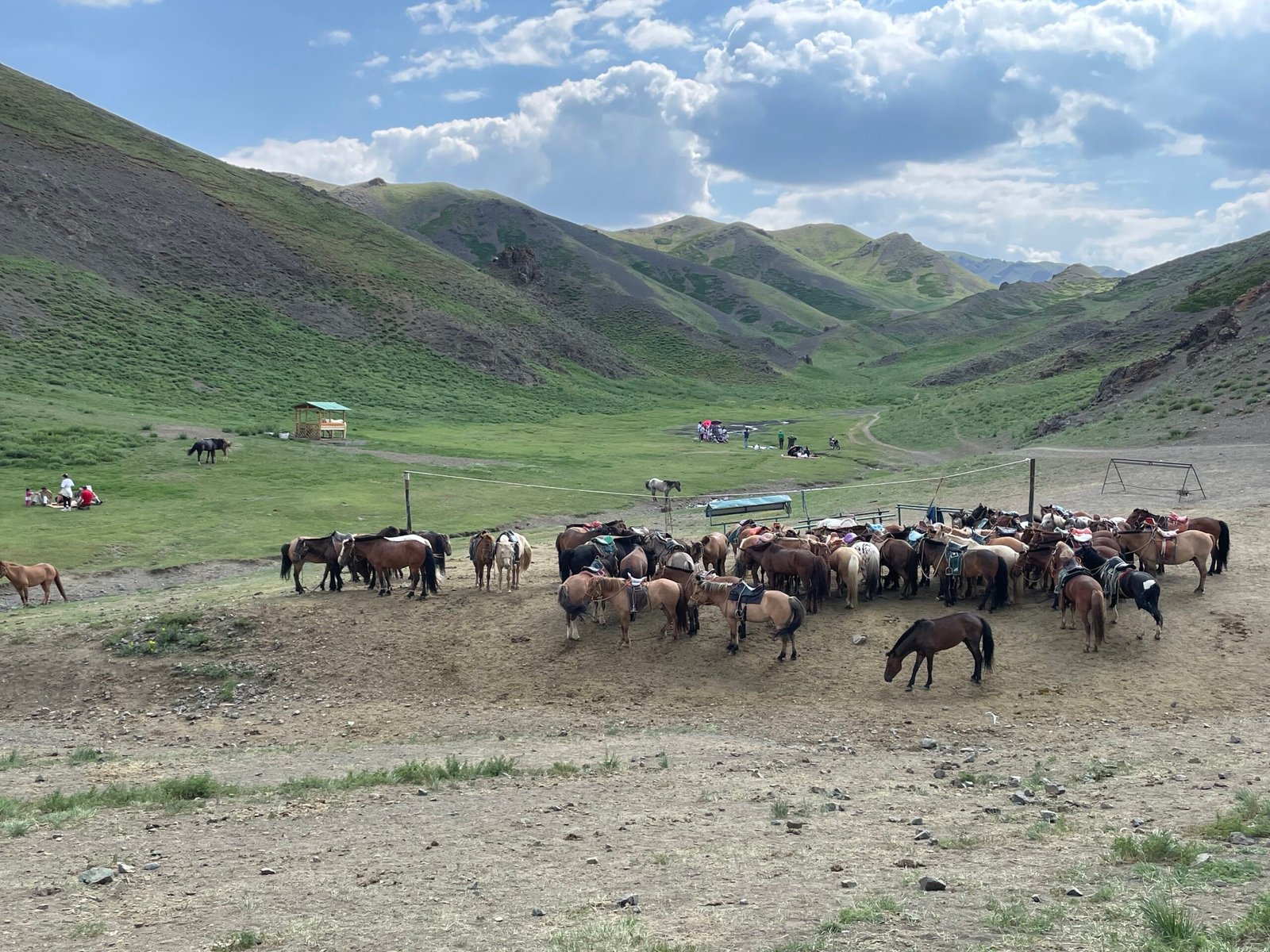
Here, horses aren’t a tourist experience bolted onto an itinerary. They are how families move their herds between summer and winter pastures. They are what nomadic children learn to ride before they learn to read. The Mongol Empire was built on horseback — Chinggis Khan’s armies covered ground at speeds European armies couldn’t match, largely because their horses were bred for exactly this landscape: wide open, demanding, and relentless.
Riding in Mongolia means joining something that is still very much alive. Your guide has probably been in the saddle since age four. The families you’ll camp near will size up your horse before they size up you. This context matters — and it makes for a completely different experience than a riding holiday elsewhere.
The landscape is the other factor. Mongolia’s steppe is one of the largest grassland ecosystems on earth. There are no fences. Trails are often unmarked — your guide navigates by landmarks and memory. You ride across a country that still feels, in places, like it did centuries ago.
If you’re planning your first trip, check out our best time to visit Mongolia guide to align your dates with the riding season.
What Are the Best Regions for Horse Trekking in Mongolia?
The short answer: the Orkhon Valley and Khangai Mountains for a classic multi-day trek, the central steppe for open riding, and the Khuvsgul Lake area for something more remote. Each region has a distinct character.
Orkhon Valley and Khangai Mountains
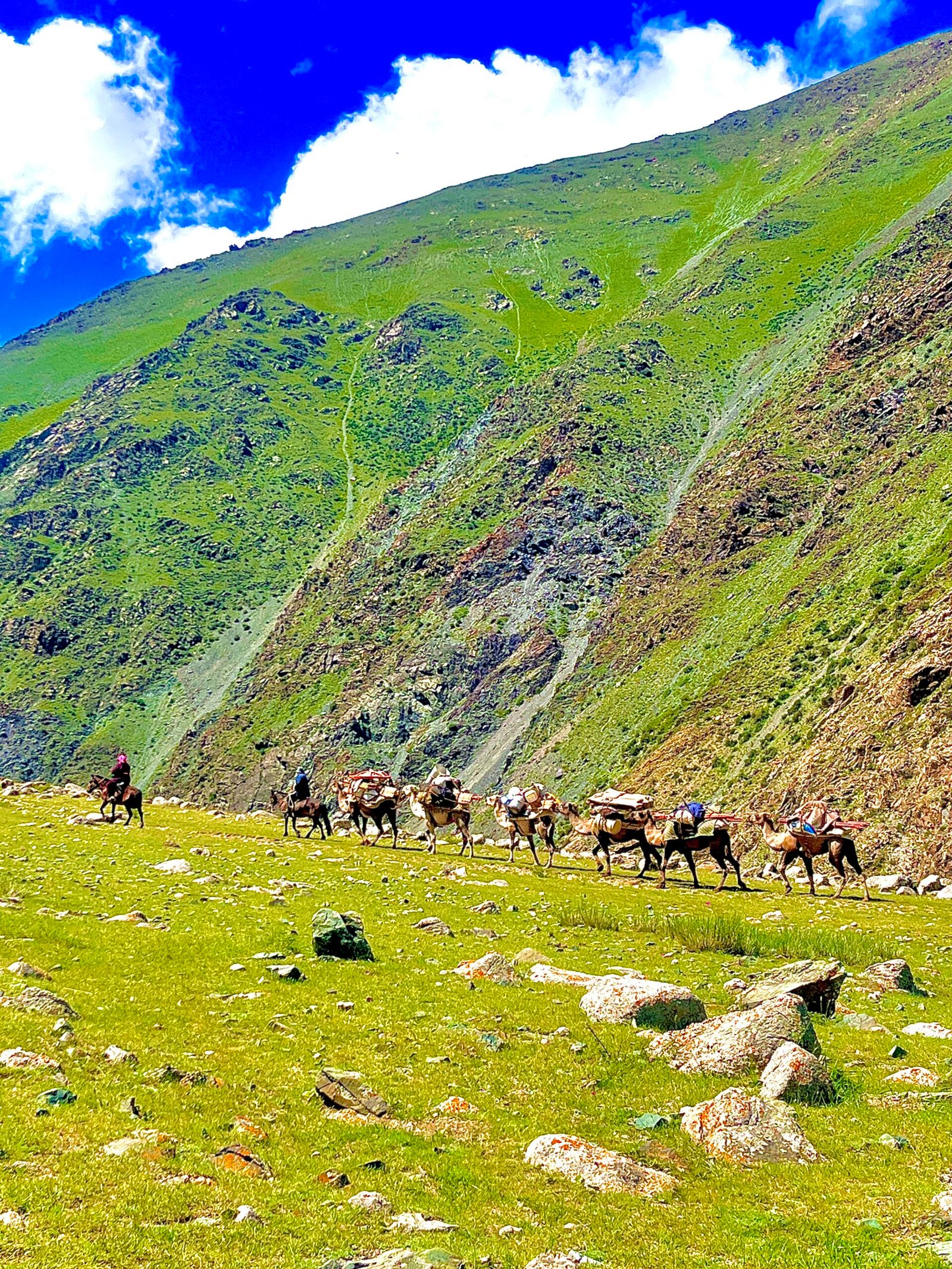
This is the most established horse trekking region in Mongolia, and for good reason. The Orkhon Valley is a UNESCO World Heritage Site — a wide river valley flanked by rolling hills, ancient ruins, and some of the richest nomadic culture in the country.
From the valley, riders push up into the Khangai Mountains (Khangai Nuruu National Park), where the terrain shifts to forested slopes and high passes. A typical multi-day route covers 25–35km per day, passing the Orkhon Waterfall (Ulaan Tsutgalan — Mongolia’s largest waterfall by volume), the Tövkhön Monastery perched on a rocky summit where Zanabazar created the Soyombo alphabet in the 17th century, and the Shiveet Ulaan ruins at the confluence of the Hanuy and Hünüy rivers.
Camps here sit near nomadic families who’ve hosted riders for generations. In the evenings, if you’re lucky, someone will bring out a morin khuur and play.
Central Steppe
If what you want is the feeling of riding forever with nothing but grass and sky ahead, the central steppe is where you find it. This is the Mongolia of imagination — no trees, no towns, just the occasional ovoo (sacred stone cairn) on a hilltop and herds of horses running loose in the distance.
Riding here is faster and less technical than the mountain routes. There are stretches where you can canter for twenty minutes without any reason to slow down. The tradeoff is that the landscape, while stunning, is more uniform. This is riding for the experience of riding, not for dramatic scenery changes every hour.
Khuvsgul Lake Area
Northern Mongolia’s Khuvsgul province offers something different. The lake — one of the largest freshwater lakes in Asia — sits at 1,645 metres elevation surrounded by taiga forest. Riding here moves through pine-covered valleys and open meadows, and routes can connect with areas where Tsaatan (reindeer herder) communities follow seasonal migrations.
It’s more remote and logistically complex, but the landscape rewards the effort. If you’re experienced in the saddle and want something genuinely off the well-traveled routes, this is worth considering.
Terelj National Park
Just 55 kilometres east of Ulaanbaatar, Terelj is the most accessible entry point for riders. Day rides and short overnight treks operate here, making it ideal if your time in Mongolia is limited or if you want to test your saddle comfort before committing to a longer route.
What Experience Level Do You Need for Mongolia Horseback Riding Tours?
Honestly, it depends on what you want to do.
For a half-day or single-day ride in Terelj, no prior riding experience is needed. Your guide will cover the basics and match you to a suitable horse.
For a multi-day trek — anything from three days upward — some riding experience is strongly recommended. Not because the horses are difficult (they aren’t; Mongolian horses are forgiving and self-sufficient on terrain they know), but because spending six hours a day in the saddle when your body isn’t used to it is physically hard. Your hips, inner thighs, and lower back will make themselves known by day two.
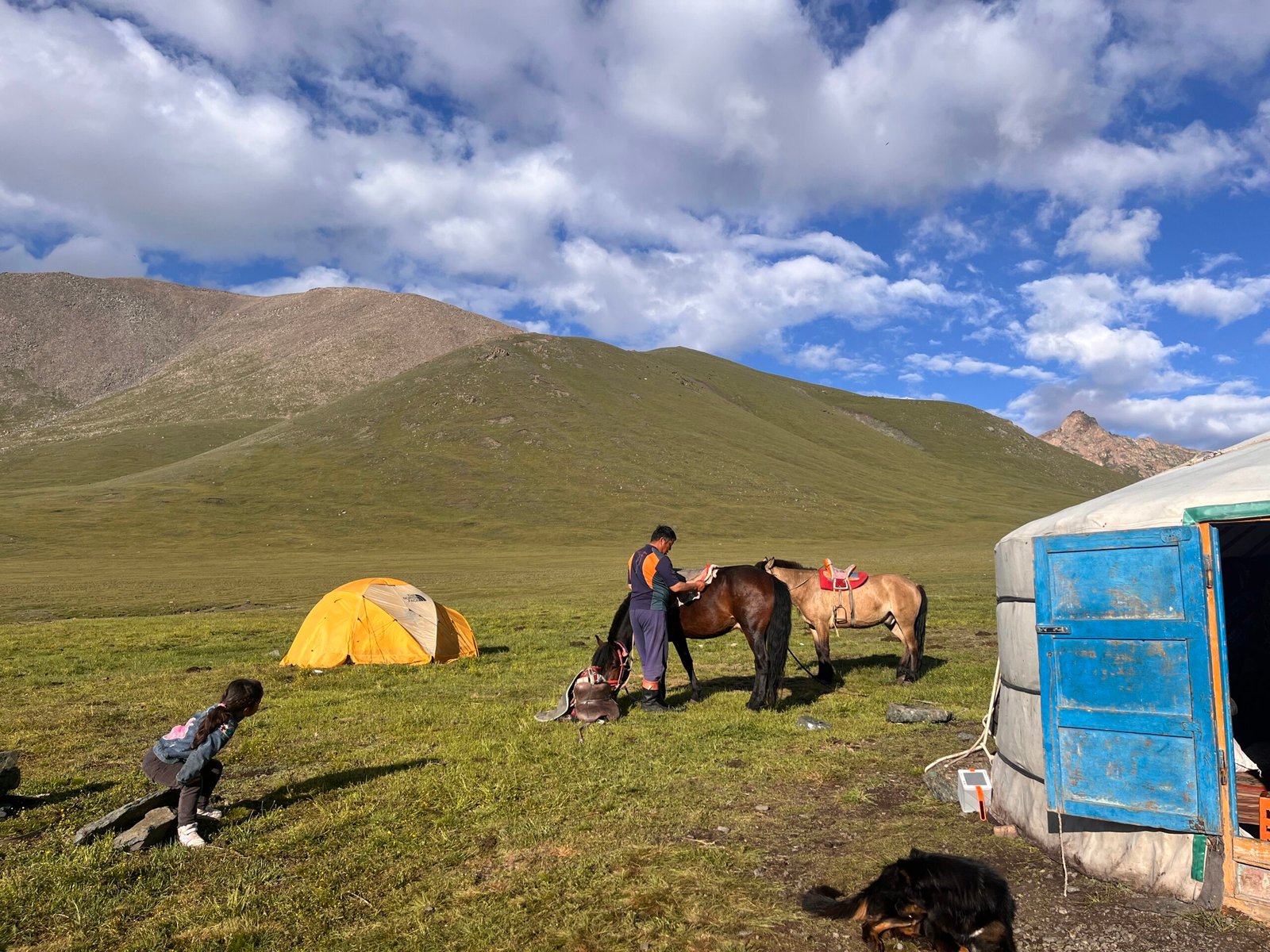
For routes in the Khangai Mountains that involve steep passes and uneven terrain, confident riding at walk, trot, and canter matters. A horse that needs constant correction becomes exhausting on a long day’s ride — for you and the horse.
Be honest with your guide about your level. A good guide will match the route and pace to what you can handle, and that makes for a better trip than one where you’re gripping the reins through terrain you weren’t ready for.
What Should You Expect in the Saddle?
Let’s be direct about a few things.
The saddles are wooden. Traditional Mongolian saddles (эмээл, emeelt) are built from wood with leather over the top. They are not the padded Western or English saddles most travelers have used. Some operators offer modified saddles for international guests, but on many trips — especially those run by local nomadic guides — you’ll be on the traditional style. Bring padded cycling shorts or a sheepskin seat pad. This is not optional advice.
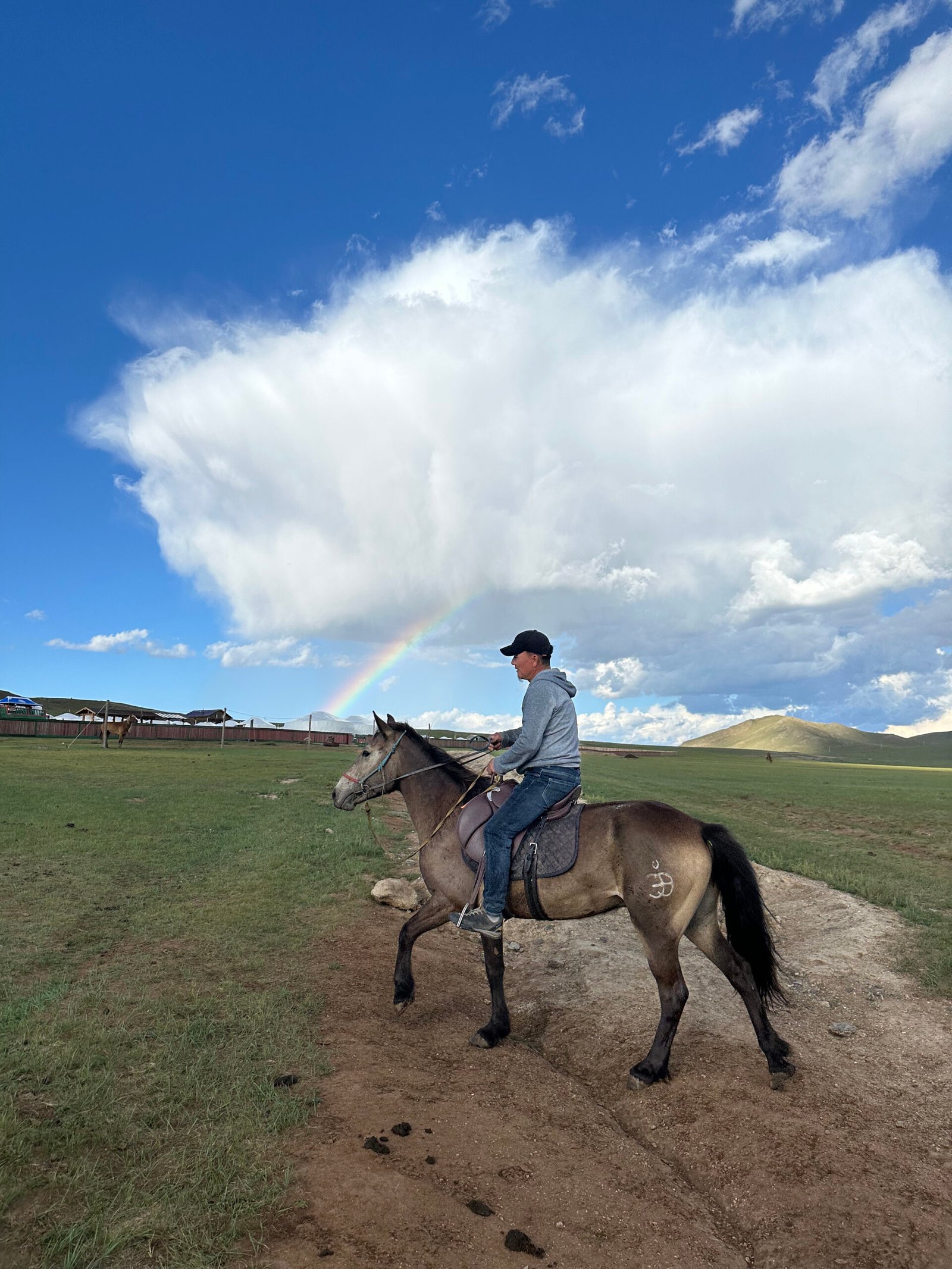
The horses are smaller than you expect. Mongolian horses typically stand between 12 and 14 hands — noticeably smaller than most Western breeds. Don’t mistake their size for weakness. These animals carry riders across mountain passes and river crossings in conditions that would exhaust larger horses. They are bred for this landscape and they know it better than you do. Follow their lead on tricky ground.
Daily distances are real. A standard multi-day trek covers 25–35 kilometres per day, roughly six hours in the saddle with breaks. That’s not a gentle amble. By the afternoon of day two, most riders are tired in ways they didn’t anticipate.
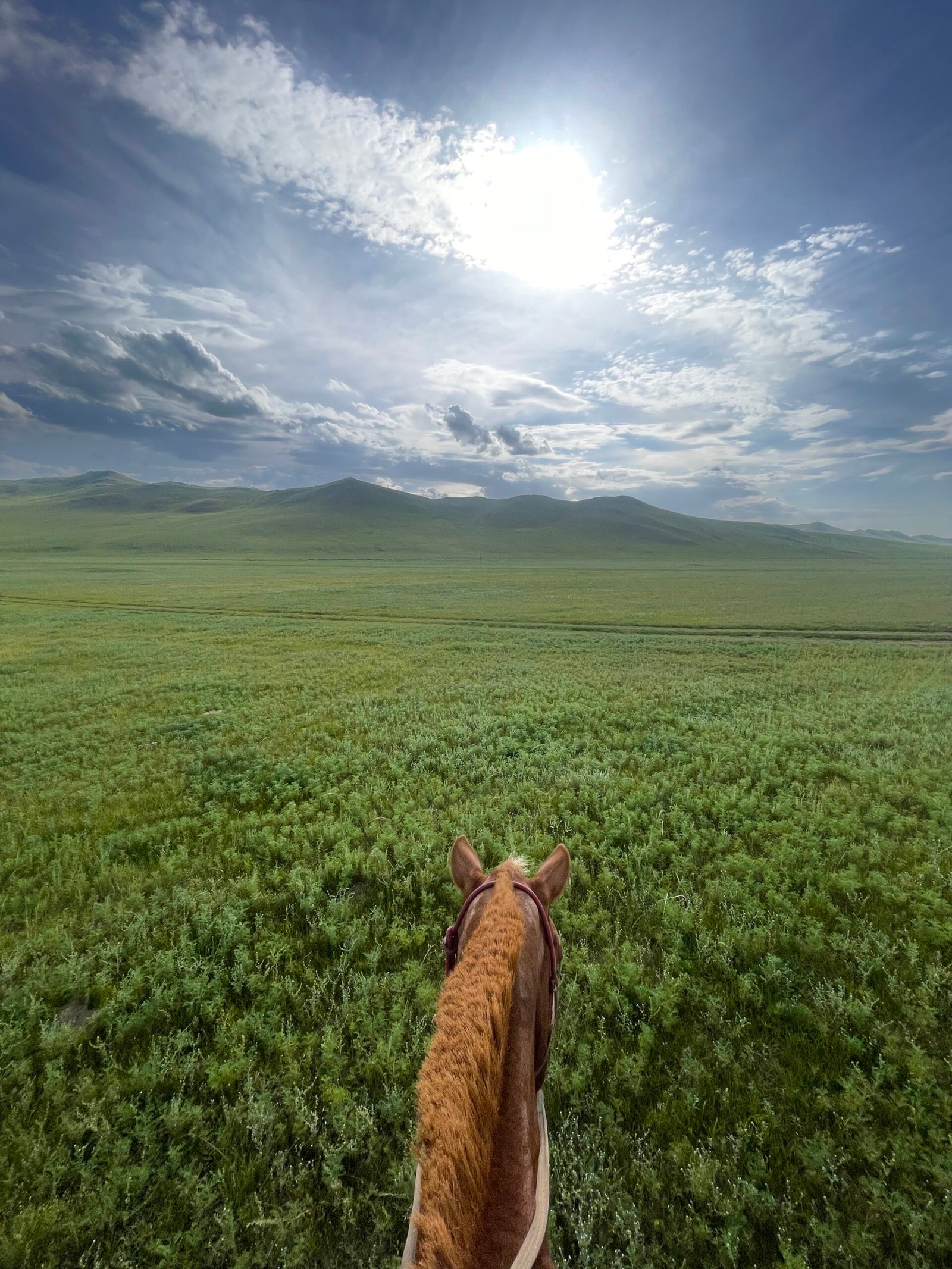
The pace varies. Most riding is at walk or slow trot, with canters across open ground when conditions allow. Your guide sets the pace based on the horses’ condition, terrain, and the group’s ability. Don’t expect constant galloping — expect a rhythm that builds naturally over the day.
River crossings happen. In summer, the Orkhon and its tributaries run fast. You’ll cross rivers. Your boots will get wet. Pack accordingly and embrace it — the horses handle water crossings with complete indifference.
Weather is unpredictable. Mongolia’s steppe can shift from warm sunshine to a cold rain in an hour. July and August are warm, but evenings at elevation drop sharply. Come prepared.
Despite all of this — the wooden saddles, the soreness, the unpredictable rain — most riders who complete a multi-day trek say it’s the part of their Mongolia trip they talk about for years afterward. There is something specific about moving through this landscape at a horse’s pace, stopping when a herder invites you into their ger, watching your guide navigate by distant hilltops, that no vehicle can replicate.
Atlas Mongolia Travel’s Steppe Exploration Tour includes horse trekking options with experienced local guides who’ve ridden these routes their whole lives. We also build custom riding itineraries tailored to your experience level and time.
When Is the Best Time for Mongolia Horseback Riding?
July and August are the strongest months — warm temperatures (15–25°C / 59–77°F on the steppe), long days, and the grass at its fullest green. The horses are in good condition and rivers, while present, are manageable.
July also brings Naadam, Mongolia’s national festival. If your riding trip falls in early July, ask about timing your return to catch the horse racing events — watching Mongolian children race horses across the steppe is something else entirely.
June is excellent. The steppe is green, the days are warming, and there are noticeably fewer tour groups in the mountains. The occasional early summer rain and rivers running higher from snowmelt are the main variables to factor in.
September works well for experienced riders. Crowds thin dramatically, the light turns golden, and the landscape takes on autumn tones. Temperatures drop faster — cold nights are a certainty — but riding conditions are often ideal and the steppe feels more like itself without July’s peak traffic.
Avoid May and early June for high-mountain routes. Spring snowmelt keeps mountain passes soft, which makes for harder going on the horses and less reliable conditions.
What Should You Wear and Pack for Horse Trekking in Mongolia?
Riding gear:
- Padded cycling shorts or riding tights — the single most impactful thing you can bring
- A fleece seat pad or sheepskin cover if you have one
- Ankle-high boots with a small heel (this keeps your foot from sliding through the stirrup)
- Helmet — most operators provide these, but verify in advance
- Gloves for cold mornings and mountain passes
Layering is the strategy:
- Lightweight moisture-wicking base layer
- Fleece or down mid-layer (mornings and evenings drop fast, even in summer)
- Waterproof outer layer — summer storms on the steppe arrive without warning
- Sun protection: hat, sunscreen, sunglasses (UV at elevation is significant)
Practical items:
- A day pack that sits securely on your back (shoulder bags shift while riding)
- 2 litres of water capacity minimum — refill at river camps and ger stops
- High-energy snacks for mid-ride breaks
- Basic blister and muscle kit — your inner thighs and ankles will feel it
- Camera or phone secured in an inner chest pocket, not a loose bag
Leave behind: hard-sided cases (they don’t travel well on pack horses) and heavy boots — if you can’t flex your ankle, stirrup work becomes painful over a long day.
For a complete Mongolia packing reference, see our summer packing guide.
Frequently Asked Questions
Do I need riding experience for a Mongolia horseback riding tour?
For short day rides, no experience is required — your guide covers the basics before you set off. For multi-day treks covering 25–35km per day, some prior riding experience makes the trip significantly more comfortable. The horses are manageable for intermediate riders, but six hours a day in the saddle is physically demanding if your body isn’t used to it.
Are Mongolian horses suitable for larger or heavier riders?
Yes. Despite their smaller size (typically 12–14 hands), Mongolian horses are remarkably strong and sure-footed, built for terrain and endurance over long distances. Most reputable operators accommodate riders up to around 100–110kg. Discuss your build with your operator when booking — they will match you to the right horse.
What are Mongolian saddles like? Are they comfortable?
Traditional Mongolian saddles are built from wood with leather covering. They are harder than the padded Western or English saddles most travelers have used. Padded cycling shorts or a sheepskin seat pad make a significant difference, especially from day two onward. Some operators catering to international guests now offer modified saddles — ask when you book.
Is it safe to go horseback riding in Mongolia?
Horse trekking in Mongolia carries the inherent risks of any riding activity, and mountain terrain adds complexity. That said, Mongolian horses are calm and experienced on the land they know, and local guides understand both the animals and the routes. Choose an operator with experienced local guides, wear a helmet, follow your guide’s instructions, and communicate clearly about your riding level. The risks are manageable with proper preparation and honest communication.
What regions are best for Mongolia horseback riding tours?
The Orkhon Valley and Khangai Mountains offer the most established multi-day routes with nomadic culture and dramatic scenery. The central steppe is ideal for open, faster riding across wide grasslands. Khuvsgul Lake in the north offers taiga forest and more remote terrain. Terelj National Park, 55 kilometres from Ulaanbaatar, is the most accessible starting point for shorter rides and first-timers.
Can I combine horseback riding with other activities on a Mongolia tour?
Absolutely. Many travelers combine a 3–5 day horse trek with 4WD travel to other regions — the Gobi Desert, Erdene Zuu Monastery at Karakorum, or a nomadic family stay. Atlas Mongolia Travel builds custom itineraries that weave riding into a broader trip based on your interests, time, and experience level. Visit our custom tours page to start the conversation.
Riding Mongolia
The steppe doesn’t care whether you’ve ridden before. It’s indifferent in the best possible way — vast, open, and completely itself.
What changes is what you bring to it. A rider who communicates clearly with their guide, respects the pace the horses set, and shows up physically prepared for a few hard days will have an experience that stays with them. The soreness fades. The memory of riding through the Khangai at dusk, with the Orkhon River below and a herder’s fire visible in the distance, does not.
Our Steppe Exploration Tour includes horse trekking options with experienced local guides who’ve ridden these routes their whole lives. For something fully tailored to your experience level and interests, see our custom tours page.
Questions? Contact us at bookings@atlasmongoliatravel.com — we’re based in Ulaanbaatar and respond within 24 hours.
Written by the Atlas Mongolia Travel team — a locally operated tour company based in Ulaanbaatar.
Ready to Ride?
Our 8-day Horseback Riding and Nomadic Steppe Trek runs June through September in the Khangai Mountains. No prior riding experience required. The tour includes ger camp stays with herding families and full support from our Mongolian guides. Starting from $2,400 per person.

Atlas Mongolia Travel
Atlas Mongolia Travel is a locally operated tour agency based in Ulaanbaatar, Mongolia, specializing in authentic private and group tours across Mongolia.
Leave a Reply