Mongolian Horse Racing at Naadam: How the Steppe’s Oldest Race Really Works
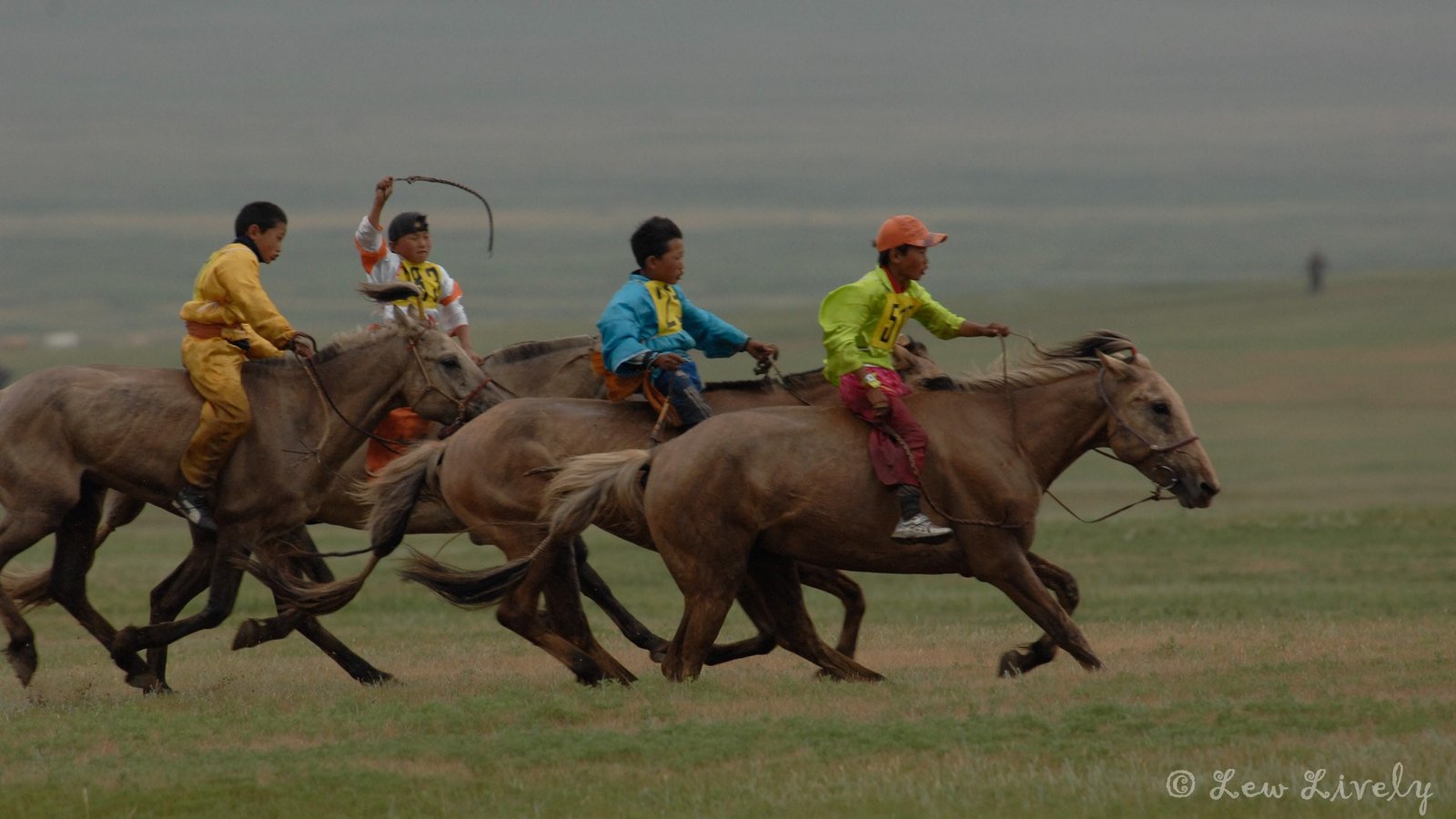
Mongolian horse racing at Naadam is a cross-country event run over open steppe, not a track. Horses are graded into six classes by their age, racing roughly 12 to 30 kilometers depending on the class. The jockeys are children, usually five to thirteen, chosen because they are light. Mongolians race the horse, not the rider.
That last line is the whole key to understanding what you are watching. In Western racing, the spotlight falls on the jockey and the trainer. Here, the horse is the athlete, the hero, and the name people remember. Once you see it that way, everything else on this page starts to make sense.
- Naadam horse races are run cross-country across open country, 12-30 km long, not on a loop or oval.
- Races are graded by the *horse’s* age, not the rider’s, across six categories.
- Jockeys are children (roughly ages 5-13), often riding bareback; both girls and boys compete.
- Before the start, jockeys sing the *giingoo*, a long high call that steadies the horses.
- The winning horse earns the title *tümnii ekh*, “leader of ten thousand”; the last horse gets its own affectionate blessing.
A Race Run Across the Open Steppe
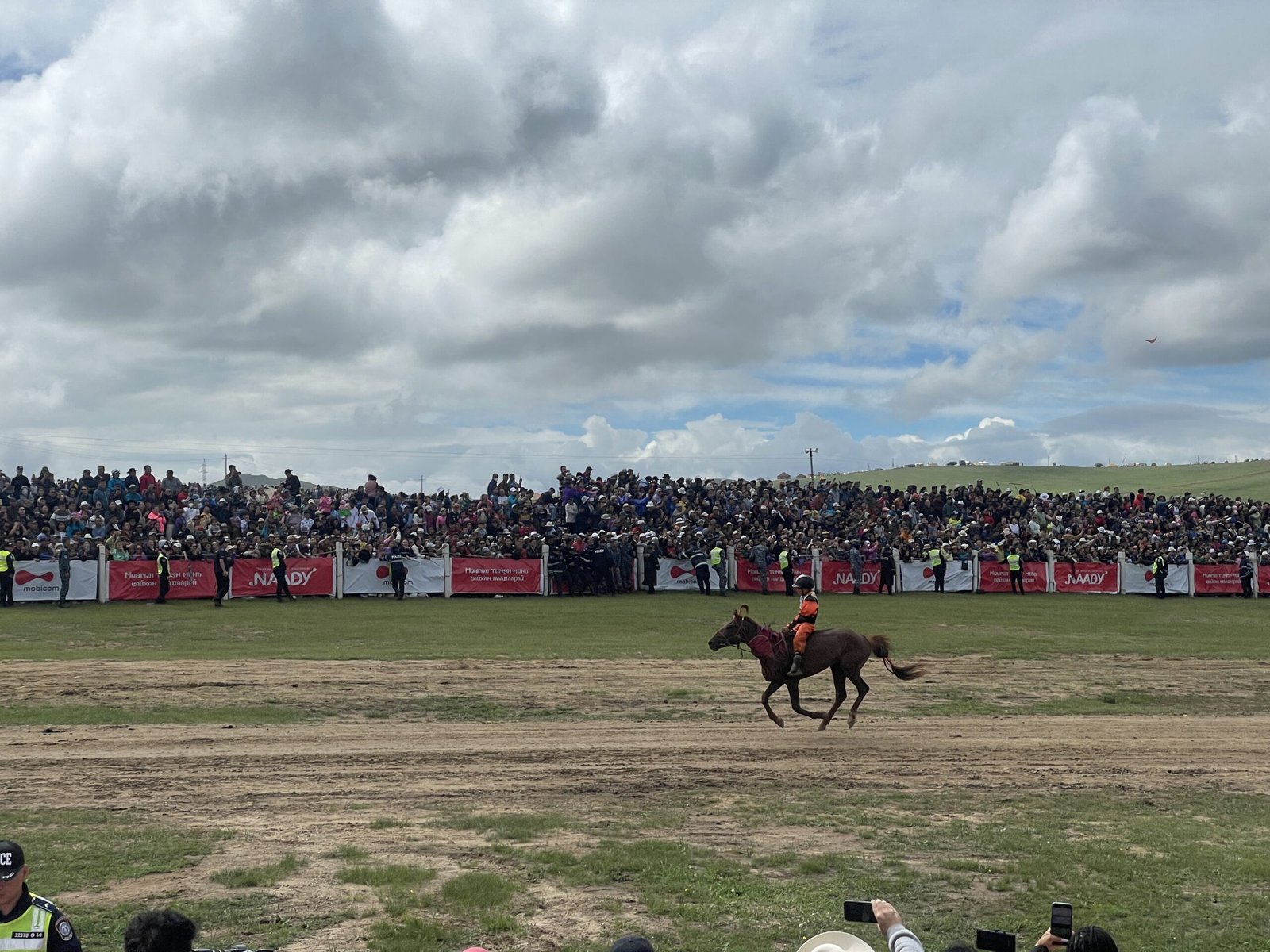
Forget the grandstand and the painted rail. A Naadam horse race has no track and no laps. The horses line up at a distant point out on the grassland, and they run in a straight cross-country dash back toward the finish, across the same open country their ancestors crossed for centuries.
The distance is long by any racing standard. While a Western thoroughbred sprint rarely runs much past two kilometers, a Naadam race covers somewhere between 12 and 30 kilometers, set by the horses’ age class. Up to a thousand horses can be entered from across the country for the big summer Naadam, and they come not from stables but from the herds of nomadic families, conditioned for weeks on open pasture.
What you experience as a spectator is different too. For most of the race the horses are out of sight, somewhere beyond the horizon. Then a low rumble builds, dust rises, and the field thunders in together. The crowd surges toward the finish line, everyone straining to spot the leader. It is loud, dusty, and genuinely thrilling, the kind of moment that stays with you. If you want the full picture of how this fits alongside the other contests, our guide to the three games of Naadam sets the whole festival in context.
Six Classes, Graded by the Horse’s Age
This is the part that surprises most first-time visitors. The races are organized entirely around how old the horses are, because a two-year-old and a six-year-old are simply not the same athlete. Each class runs its own distance.
- Daaga — two-year-olds, the shortest course (commonly cited around 10-16 km).
- Shudlen — three-year-olds (roughly 14-18 km).
- Khyazaalan — four-year-olds (roughly 18-22 km).
- Soyolon — five-year-olds (roughly 22-26 km).
- Ikh nas — full-grown horses, six years and older, the longest course (roughly 25-30 km).
- Azarga — stallions, who run their own separate race.
Exact distances shift a little from year to year and from one Naadam to another, so treat these as the working ranges rather than fixed numbers. The principle is what matters: younger horses run shorter, older horses run longer, and a champion daaga is judged against other two-year-olds, never against a seasoned six-year-old.
The Children Who Ride Them
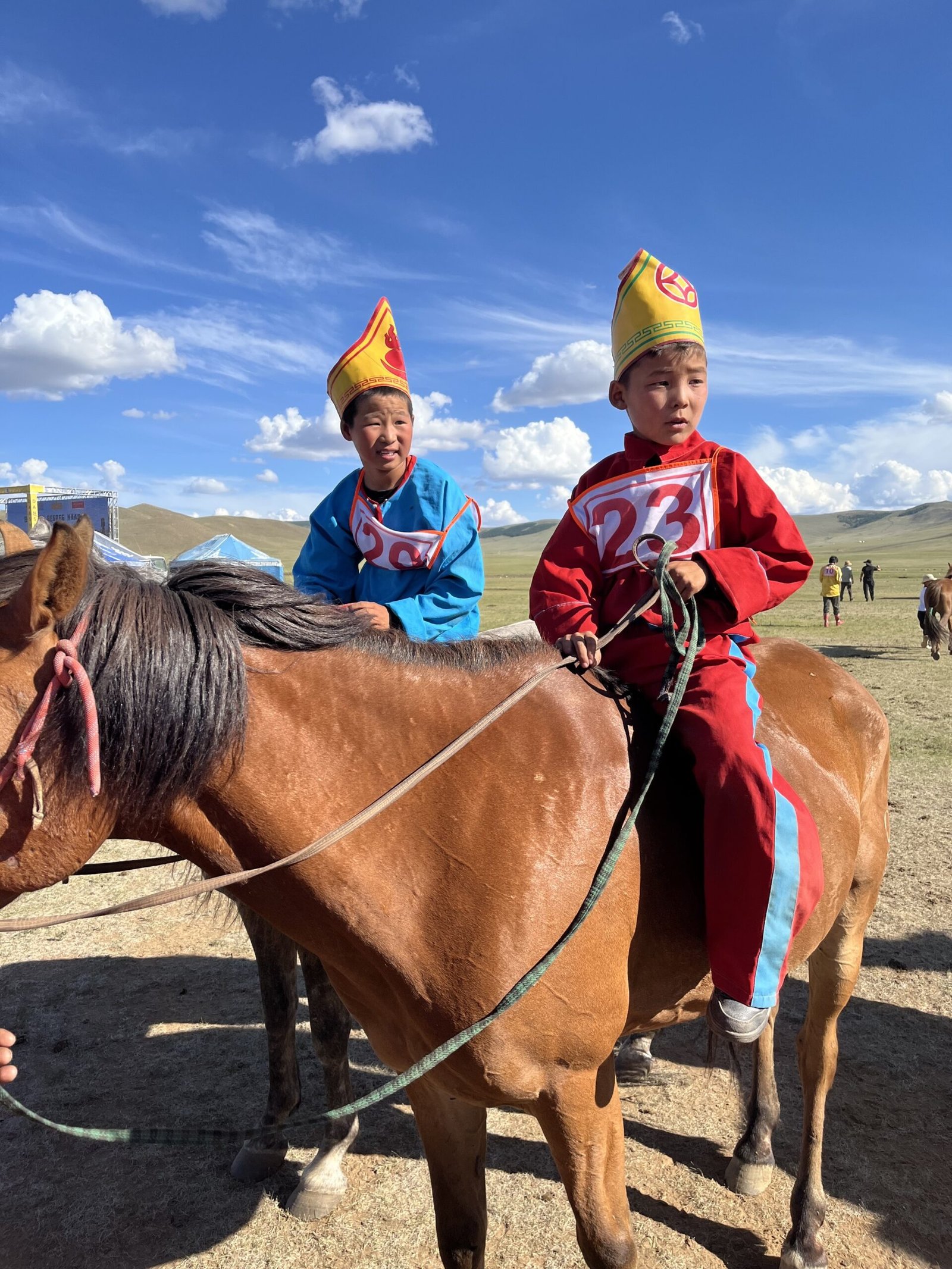
The jockeys are children, usually between five and thirteen. Both girls and boys ride, and many ride bareback or with the lightest of saddles, because the lighter the rider, the better the horse can run over a long cross-country course. A child who has grown up on a herding camp can often ride before they can confidently walk a city street.
Their job is not to win on cleverness. It is to stay balanced, keep the horse calm at the start, and let the animal do what it was bred and trained to do. When a horse crosses first, the praise belongs to the horse and to the family who raised it. The young rider shares in the honor, but the horse is the star.
We will be honest about the harder side of this tradition further down the page, because you deserve the full picture, not a postcard.
The Giingoo: A Song to Steady the Horses
Just before the start, you will hear something you do not expect at a race: singing. The young jockeys lift their voices in a long, high, drawn-out call known as the giingoo. It rises and holds, almost mournful, carrying out across the line of horses.
The song is not decoration. It settles the animals, steadies their nerves, and focuses them before the long run ahead. A nervous horse burns energy it will need over 20-plus kilometers, so calming the field is a practical act dressed in something beautiful. The crowd often sings traditional songs of their own as the horses gather. For a few minutes the whole start line hums, and then the field breaks and the singing turns to a roar.
How the Winners Are Honored
When the leaders come in, the top five horses in each class earn a place of honor, known as the airgiyn tav, with the first three taking gold, silver, and bronze. The single winning horse is praised with the title tümnii ekh, the “leader of ten thousand,” and verses of blessing are spoken over it. People crowd in to touch the sweat of the champion, which is considered lucky.
It is a celebration of the animal first. The trainer is respected, the child is congratulated, but the horse’s name is the one that travels home and gets repeated around the stove all winter.
The Last Horse Gets a Song Too
Here is the detail that tells you most about how Mongolians see this race. The horse that finishes last in the daaga race is not laughed at. It is given an affectionate, teasing name, bayan khodood, which means roughly “full stomach.” Then a blessing song is sung to the slowest horse, wishing it the speed to come first next year.
Think about that. The crowd turns to honor the horse that came dead last and sings it good fortune for the future. It is gentle, funny, and kind all at once, and it captures something real about a culture built around horses: every horse has its day coming, and none is shamed for being slow today. If you only remember one thing from a Naadam race, let it be the song for the last horse.
The Trainers Behind Every Champion
Long before the race, there is the uyaach, the horse trainer, and this is a craft Mongolians take seriously. For weeks beforehand the uyaach conditions each racehorse, managing its diet, its water, and its exercise to build stamina and sweat off excess weight, so the animal peaks on race day. A respected uyaach reads a horse’s body and temperament the way a coach reads an athlete.
This is one thread in a much wider horse culture. Mongolia is a place where mare’s milk is fermented into airag, the tangy national drink poured freely at Naadam, and where a child learns to ride almost before anything else. The race is the public, festive tip of an everyday relationship with horses that runs through ordinary life on the steppe.
Child Jockeys: An Honest Word on Safety
The role of child jockeys has drawn international attention, and it is fair to give you straight, balanced context rather than either a romanticized version or a scolding one.
Mongolia has put real regulations in place. Recent rules set a minimum age for jockeys and require helmets and protective clothing during races. The government introduced biometric registration of young jockeys to verify their ages, and rules now require insurance for riders. Authorities have also moved to ban racing during the cold season, roughly November through April, when frozen ground and harsh weather make racing most dangerous, and a 2019 framework tightened these protections further.
Enforcement is not perfect, and rights groups continue to push for stronger compliance, which is part of an honest picture. At the same time, peer-reviewed research has tracked the introduction of these safety measures and the injuries they aim to reduce. The summer Naadam you would attend as a visitor takes place under these rules, in good weather, and the tradition itself, children riding the horses their families raise, is centuries old and deeply held. We share this so you can watch with open eyes and an informed mind.
Frequently Asked Questions
How long is a Naadam horse race?
Between roughly 12 and 30 kilometers, depending on the horses’ age class. Younger horses run shorter courses; the oldest horses run the longest.
Why are the jockeys children?
Because lighter riders let the horse run faster and longer over a cross-country distance. The contest is meant to test the horse, so a small, light, capable rider is ideal. Both girls and boys ride.
Are the races on a track?
No. They are run cross-country over open steppe, in a straight dash toward the finish, not on a loop or oval.
What is the giingoo?
A long, high song the young jockeys sing before the start to calm and steady the horses for the long run ahead.
What happens to the horse that finishes last?
It is honored, not mocked. It is affectionately called bayan khodood, “full stomach,” and a blessing song wishes it victory next year.
When can I see the horse races?
The main races run during the national Naadam in July. For exact timing and how to plan around them, see our Naadam Festival 2026 dates and insider guide.
By Atlas Mongolia Travel
See the Race, Then Ride the Horses Yourself
Watching a thousand horses come over the horizon is unforgettable. Climbing onto one and riding out across that same grassland is something else again. The sturdy, sure-footed horses you cheer at Naadam are the same breed nomadic families ride every day, and you can too. Our Mongolia horseback riding tours put you in the saddle on real working horses, with local herders alongside you, on the open steppe where these races were born. When you are ready to plan a trip around Naadam, our team would be glad to help you build it.
Cultural details in this article draw in part on Ts. Oyungerel’s book “Монголоо таниулъя” (“Let Me Introduce Mongolia”), alongside our team’s own experience and reputable published sources.

Atlas Mongolia Travel
Atlas Mongolia Travel is a locally operated tour agency based in Ulaanbaatar, Mongolia, specializing in authentic private and group tours across Mongolia.
Leave a Reply