Naadam Festival 2026: Dates, Where to Watch, and an Insider Guide from Ulaanbaatar
Naadam Festival 2026 runs July 11–13 at the National Central Stadium in Ulaanbaatar, with the grand opening ceremony beginning at 11:00 AM on July 11. Mongolia’s biggest national celebration, Naadam marks the country’s 1921 independence and showcases the three traditional sports — wrestling, archery, and horse racing — that Mongolians have practiced since the era of Chinggis Khan. UNESCO added Naadam to its Intangible Cultural Heritage list in 2010.
Planning to time your trip around the best season to visit Mongolia? For many travelers, Naadam is the answer.
- Naadam 2026 officially runs July 11–13 in Ulaanbaatar; smaller regional festivals happen before and after
- The three games — wrestling, archery, and horse racing — each have their own venue, schedule, and entry rules
- Stadium tickets for the opening ceremony start from $25 and sell out months in advance; archery and horse racing are free
- A countryside Naadam often gives a richer experience than the main UB event — but you need a local operator to find one
- Khuushuur (fried meat pastry) is the festival food — you will smell it before you see it; there is a right way to eat it
Table of Contents
- What Is Naadam and Why Does It Matter?
- Naadam Festival 2026 Dates and Schedule
- The Three Games: What You Will Actually See
- Ulaanbaatar Naadam vs. Countryside Naadam: Which Is Better?
- Tickets, Crowds, and Practical Logistics
- What to Eat at Naadam
- What to Wear and Cultural Etiquette
- How to Get to Mongolia for Naadam
- Frequently Asked Questions
What Is Naadam and Why Does It Matter?
Naadam — pronounced NAH-dam — translates literally as “the three games.” But calling it a sports festival the way you would call Wimbledon a tennis tournament misses the point.
This is the day Mongolia exhales.
Every July 11, the country observes its national independence day — the anniversary of the 1921 revolution that ended Chinese rule. Naadam is the celebration, and for three days the entire country participates: from the 60,000-seat stadium in Ulaanbaatar to small summer camps on the steppe where a few dozen wrestlers compete on a patch of open grass.
UNESCO recognized Naadam as part of the Intangible Cultural Heritage of Humanity in 2010, citing its role in transmitting Mongolian identity, values, and history across generations. The three games — Mongolian wrestling (bokh), archery (surharban), and horse racing (uraldag) — date back to the military training exercises of the Mongol Empire in the 12th and 13th centuries. Chinggis Khan used these contests to keep his army sharp. The skills that built the largest contiguous land empire in history are still being tested every July.
What makes Naadam worth traveling for is that it is not a performance staged for tourists. Mongolians compete with genuine intensity. The wrestlers study each other with the patience of chess players. The archers perform ritual chants before each release. The child jockeys — some as young as five — have been riding since before they could read. These are skills that matter to people. You feel that weight in the air.
Atlas Mongolia Travel is based in Ulaanbaatar, and our team has attended more Naadams than we can count. The guide below is written from that experience.
Naadam Festival 2026 Dates and Schedule
Naadam 2026 dates: July 11–13, 2026. Here is how the days break down.
July 11 — Opening Day (National Holiday)
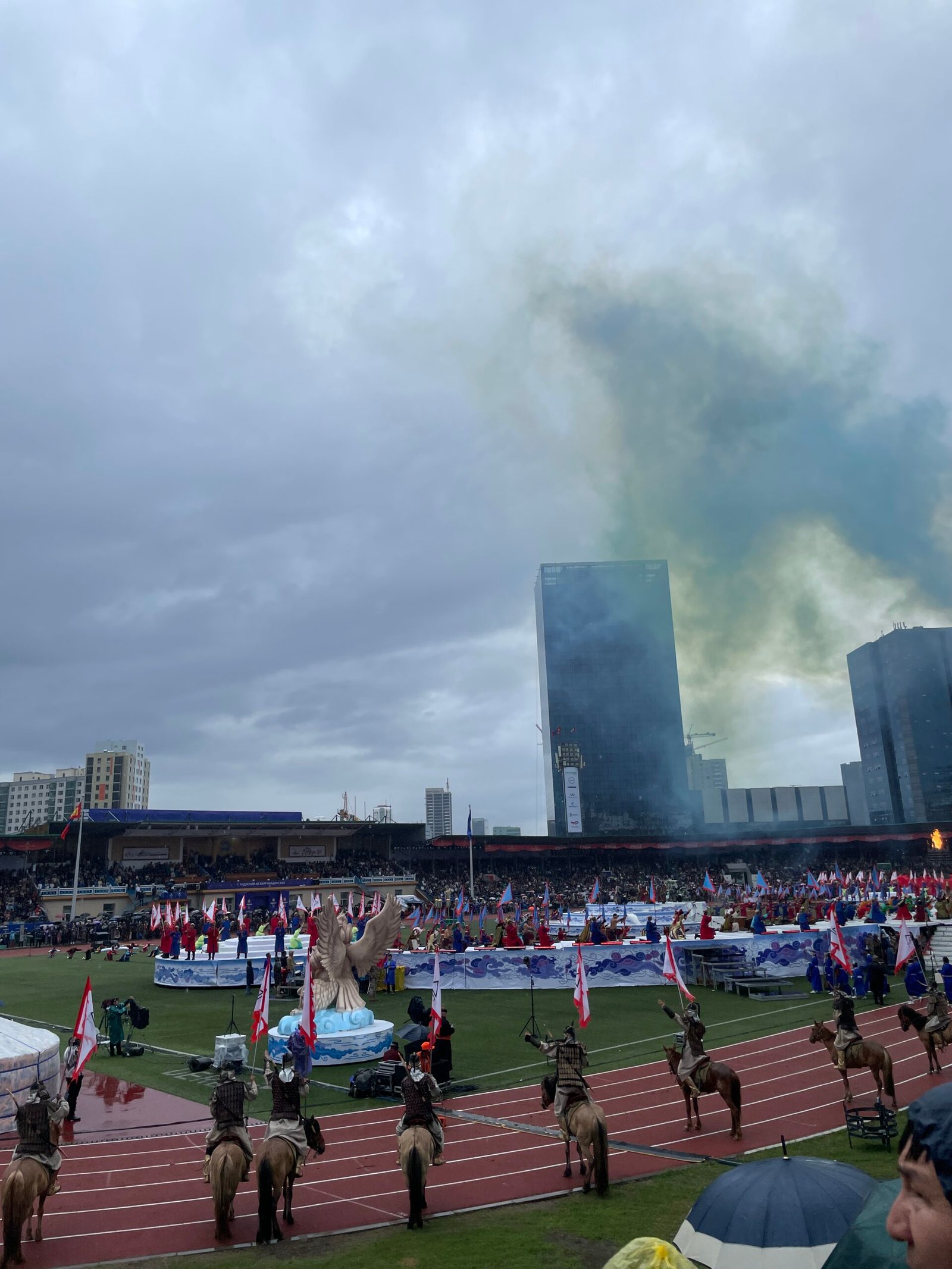
The opening ceremony begins at 11:00 AM at the National Central Stadium in Ulaanbaatar. Military processions, a mounted cavalry display, traditional music, monks in ceremonial robes, and the formal presentation of the nine white horse-tail banners (tug) — the symbol of Mongolian sovereignty — mark the start. Wrestling begins immediately after the ceremony. This is the day the city is at maximum energy, and the day you need a ticket for the stadium.
July 12 — Competition Day
Wrestling continues through semifinals and finals. Horse racing finishes for most age categories at the field outside the city. Archery finals take place at the National Archery Field adjacent to the main stadium. The atmosphere outside the stadium reaches its most festive — street vendors, anklebone shooting (shagai), live music across the grounds.
July 13 — Closing Day
Final wrestling bouts. Closing ceremony. The city starts to empty by evening.
Regional and countryside Naadams happen in the weeks surrounding the main event, in soums (districts) and aimags (provinces) across Mongolia. Their dates are not reliably published in advance. The Mongolia Tourism Board posts the official national schedule at mongoliatourism.gov.mn in the first week of July.
If you are planning around the main UB Naadam, build in arrival by July 9 at the latest. Hotels fill up, traffic locks the city down on opening day, and restaurants run shorter menus than usual.
The Three Games: What You Will Actually See
Wrestling (Bokh)
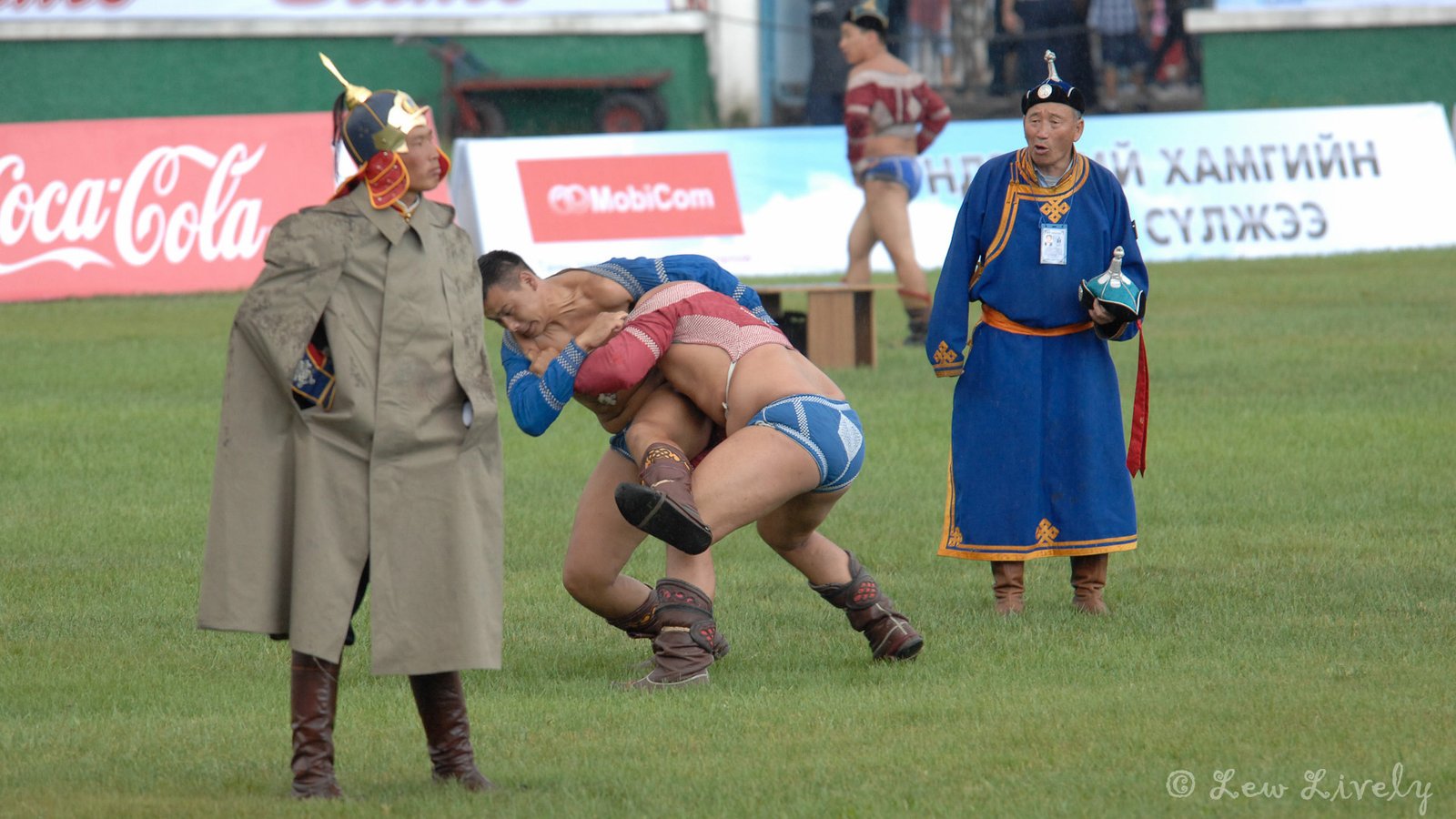
Mongolian wrestling is unlike any combat sport you have seen. There are no weight classes. No time limits. No rounds. Two wrestlers enter the field, perform the devekh — a wide-armed, strutting eagle dance — and then grapple until one of them touches the ground with anything other than hands and feet.
A match can end in thirty seconds or run forty minutes. The longer bouts are mesmerizing: two powerful men locked together in stillness, each reading the other’s weight and breath.
Winners collect titles as they advance: falcon, elephant, lion, giant (arslan), and finally titan (avarga) for the grand champion. An avarga who wins multiple tournaments earns the right to walk under the banner of the national champions — a title that follows a wrestler for life.
At the UB stadium, opening rounds feature 512 wrestlers competing simultaneously across the infield. The crowd noise from 60,000 people hits you in the chest.
Archery (Surharban)
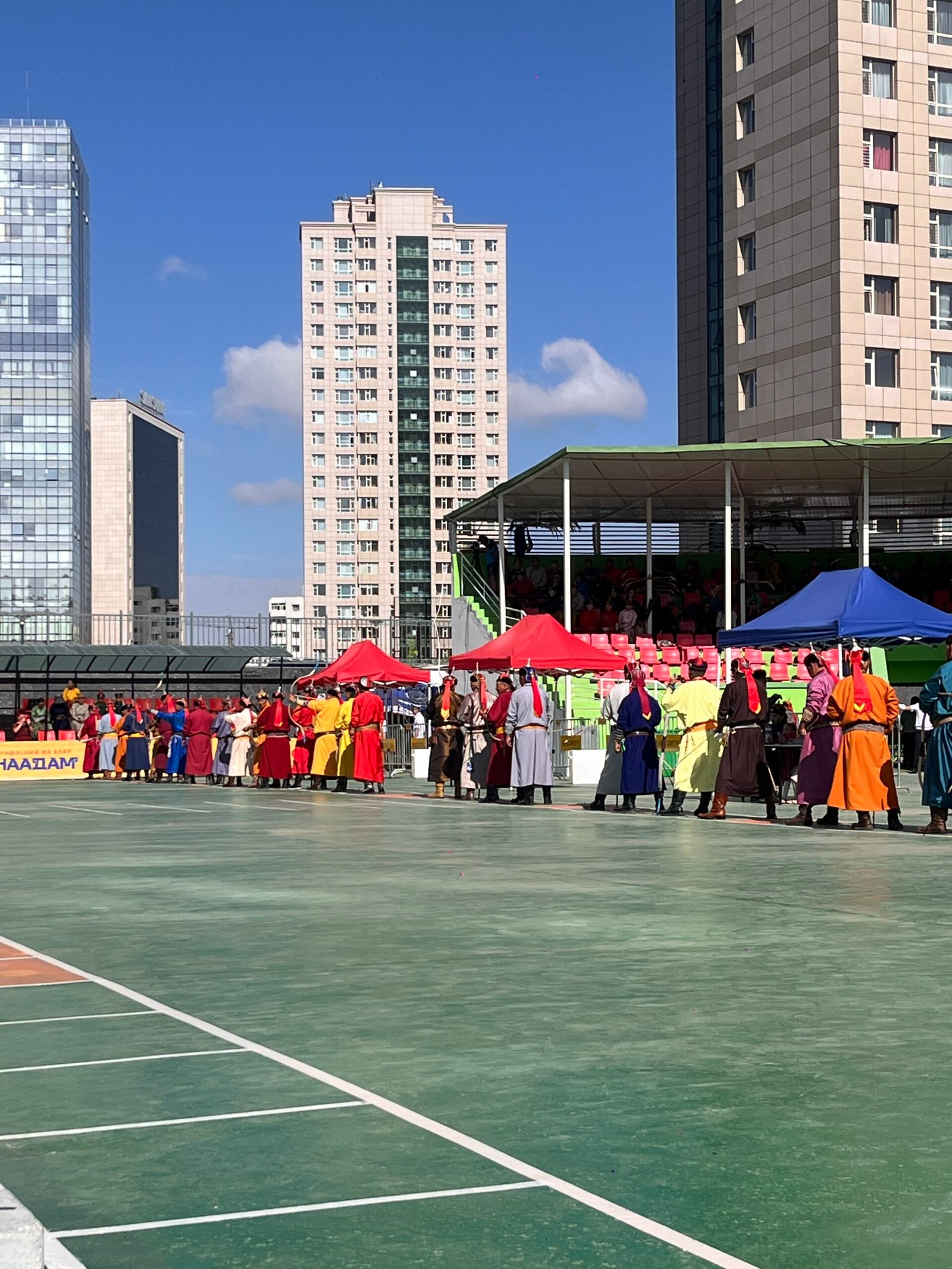
The archery competition takes place at the National Archery Field next to the main stadium — and unlike wrestling, it is free to watch. Men and women compete in separate categories, shooting at rows of small cylindrical targets called surs (made from compressed leather) arranged on the ground at 75 meters for men and 60 meters for women.
What stops you is the ceremony around each shot. Before releasing, archers and their teammates perform the uukhai — a ritual chant — raising their hands toward the target. After a successful hit, the judge performs the chant back. The field carries this call-and-response all day.
Traditional Mongolian bows are composite: wood, horn, and sinew. Shorter and more curved than the longbows you might picture. Drawing one properly takes years of technique to develop.
Horse Racing (Uraldag)
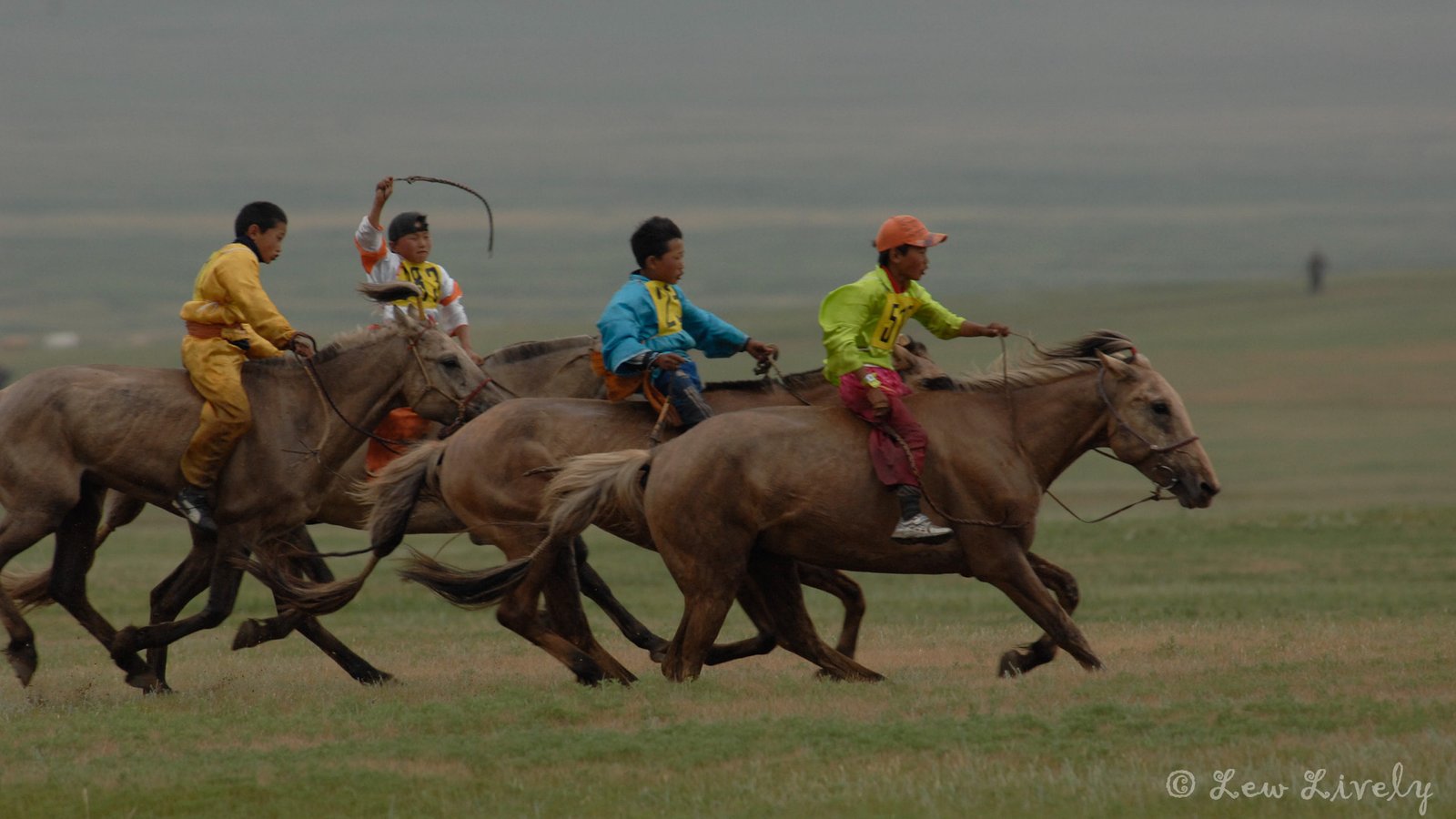
The horse racing happens outside the city — about 28 kilometers from the stadium center. This is where the festival opens into something vast. The finish line area holds thousands of spectators, and the horses arrive in a wave of dust and noise you can feel building before you can see them.
Jockeys are children. Boys and girls between 5 and 13 years old, riding bareback. They have been riding before they walked properly. The horse wins the race, not the jockey — the skill being tested is the trainer’s ability to prepare the animal across months of conditioning. The winning horse in the longest race receives the first ceremonial cup of fermented mare’s milk (airag).
Bring a face mask. It is extraordinarily dusty at the finish line.
The horse racing area is also where you will find the best food vendors, the most airag, and the most genuinely festive atmosphere of the entire three days.
Ulaanbaatar Naadam vs. Countryside Naadam: Which Is Better?
Here is what most Naadam guides will not tell you: the main UB Naadam is a grand spectacle, but a countryside Naadam is often a richer experience.
The national festival in Ulaanbaatar is genuinely impressive. The opening ceremony is moving. The scale is undeniable. But you watch from a seat, surrounded by tens of thousands of other people, at a distance from the action. The city is crowded, transport is chaotic, and hotel prices spike significantly.
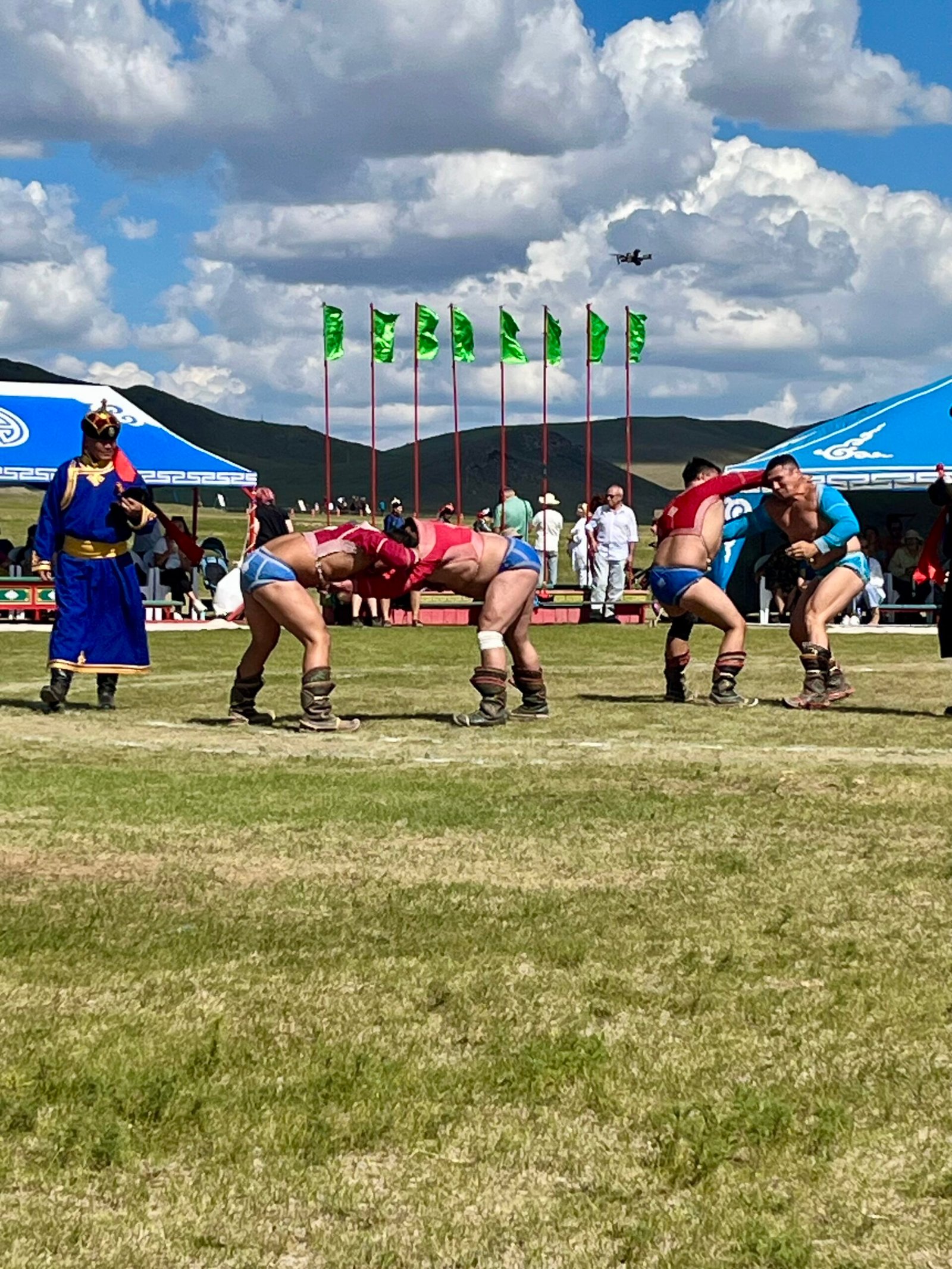
A regional Naadam — held in a soum or aimag center — is a different proposition. Picture a few hundred people gathered on an open field. The wrestlers compete on grass, not in a stadium, and you can stand close enough to hear the impact when someone hits the ground. Archery judges perform the uukhai chant five meters from where you are standing. After the horse race, riders walk their animals right past you, and the families who trained those horses are standing in the crowd beside you.
No ticketed section. No formal seating. Children weave through the crowd with trays of khuushuur. An elder in a silk deel gestures for you to try his airag from a shared bowl. You accept with both hands.
That exchange is what the UB stadium cannot give you.
The challenge: rural Naadam dates are not reliably published in advance. You need a local operator who knows which soums hold events and when, and who can build the logistics around it. Atlas Mongolia Travel incorporates regional Naadams into private itineraries for travelers who want the intimate version. Get in touch early — these arrangements take more lead time than the main UB event.
If this is your first trip to Mongolia, the UB Naadam is still worth attending. Just know what it is: a grand national celebration. You can read our full guide to the best time to visit Mongolia for season-by-season context.
Tickets, Crowds, and Practical Logistics
Stadium tickets: You need a ticket for the opening ceremony, wrestling inside the stadium, and the closing ceremony. Tickets go on sale roughly one month before the festival. Opening ceremony seats start from around $25 USD and sell out fast. Your best option: book through a tour operator who secures tickets as part of the package. The queue situation when tickets release is difficult to navigate independently.
What is free: The archery competition at the National Archery Field is free. The horse racing finish line outside the city is free. You can build a full Naadam experience without a stadium ticket — and many experienced visitors prefer exactly this approach.
Crowds and transport: Ulaanbaatar during Naadam is chaotic in the best way and genuinely difficult in others. Traffic around the stadium shuts down the central city on July 11. Hotels have doubled in price since January. Restaurants run shorter menus. The government operates free festival buses, but they are overcrowded and unreliable. A private vehicle and guide during Naadam is not a luxury — it is the difference between actually seeing things and spending the day in gridlock.
Book now: It is April 2026. If you want to attend Naadam, book flights and accommodation immediately. Hotels that have rooms today may not have them in May. Tour packages including Naadam with secured stadium tickets often sell out before June.
Photography: Professional photographers can obtain a photography permit allowing closer access within the stadium. Your tour operator can arrange this. For general photography: always ask before pointing a camera at someone, especially during ceremonial moments. A gesture toward your camera is usually understood and welcomed — but the ask matters.
What to Eat at Naadam
You will smell the khuushuur before you find the vendor.
Khuushuur is Mongolia’s festival food: wheat dough folded around minced mutton — sometimes beef — and deep-fried until golden. At Naadam, vendors set up throughout the festival grounds. The smell of hot oil and meat frying drifts across the whole area. The Naadam version is a giant, disc-shaped khuushuur you rarely encounter outside of festival time.
How to eat one properly: let it cool for a few minutes first. There is hot broth inside, and biting in too soon is how you burn your chin. Roll it slightly — like a soft taco — to make it easier to hold. Find a spot to stand and eat rather than walking while you eat. In Mongolia, eating on the move is considered poor manners even at a public festival. Two khuushuur is a reasonable amount. Three is ambitious.
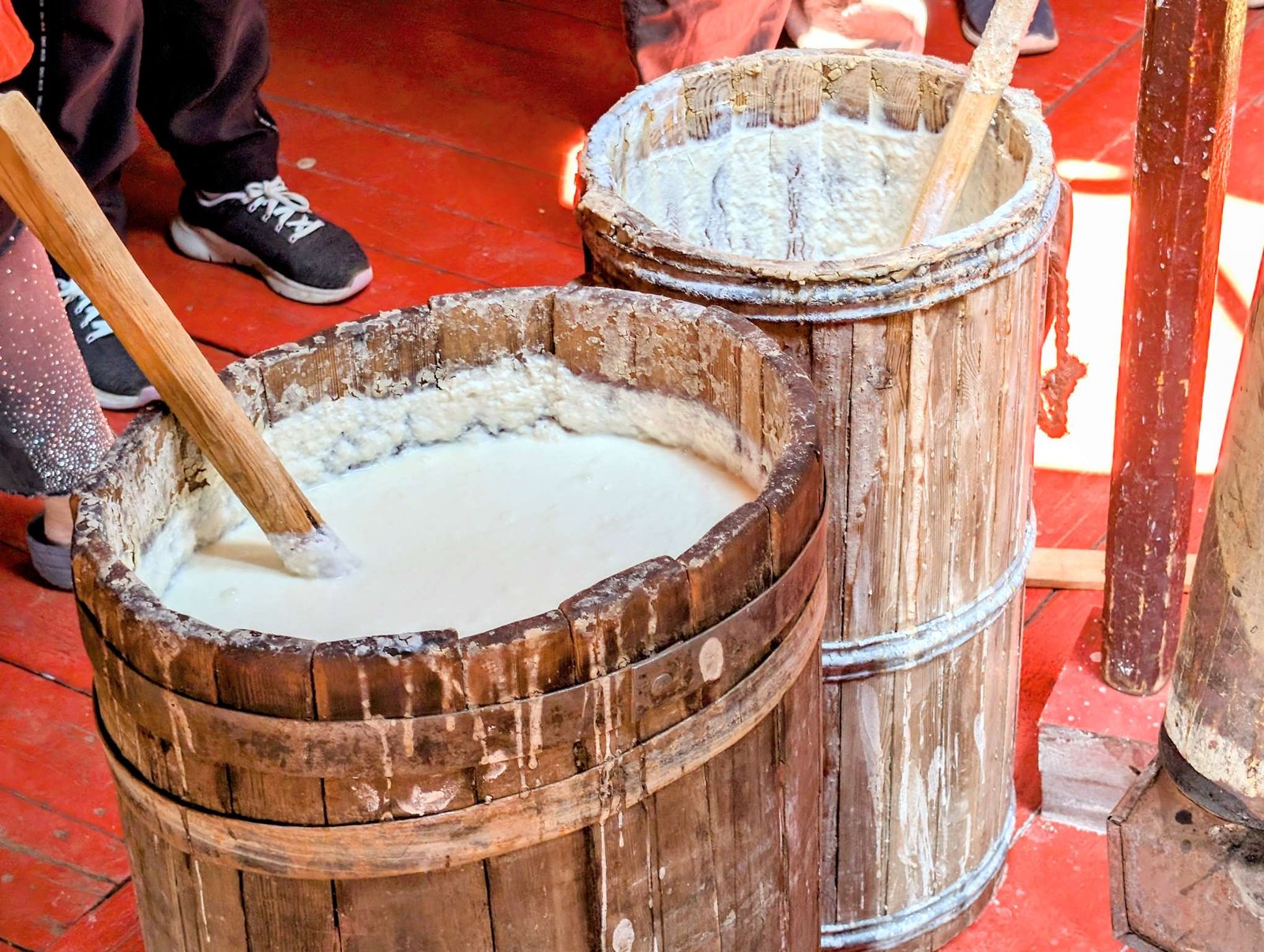
Airag — fermented mare’s milk — is the other essential Naadam experience. Slightly fizzy, mildly alcoholic, tangy in a way that takes a moment to settle. At countryside Naadams especially, you will be offered it from a shared bowl. Accept with your right hand, or both hands with your left supporting your right elbow. Sip it. You do not need to finish the bowl. The gesture of accepting is what counts.
Some vendors also sell tsuivan (stir-fried noodles with meat) and buuz (steamed dumplings). For a broader look at what to eat across Mongolia, read our Mongolian food guide.
What to Wear and Cultural Etiquette at Naadam
Clothing: July in Ulaanbaatar averages 22–25°C during the day and drops significantly in the evening. Light layers. The horse racing finish line is completely exposed — sunscreen, a hat, and sunglasses are essential. If you want to wear a deel (the traditional Mongolian robe), that is welcomed. Mongolians appreciate visitors making the effort. Some shops near the stadium area sell or rent them.
During the ceremony: The opening ceremony has specific moments when the crowd goes quiet — the presentation of the nine tug banners, the formal declarations. Follow the crowd’s lead. Standing when others stand, stillness when the ceremony calls for it.
At the wrestling: Do not walk onto the infield during matches. Do not approach wrestlers without an invitation. Cheering is fine — this is a genuine competition and people are invested. Understanding that the eagle dance before each match is a meaningful ritual, not showmanship, changes how you watch it.
In a ger or with a family: If you attend a countryside Naadam and end up inside someone’s ger — which often happens — different rules apply. Do not step on the threshold. Sit where directed. Accept what is offered. Our ger etiquette guide covers this in full.
How to Get to Mongolia for Naadam
Flights: Chinggis Khaan International Airport (ULN), 52 kilometers south of Ulaanbaatar, is the main entry point. Direct connections operate from Seoul (Incheon), Beijing, Istanbul, Moscow, Frankfurt, and other hubs. Most travelers from the US, Europe, and Australia connect through Seoul or Beijing. Flight time from Seoul is around 3 hours; from Frankfurt, approximately 8 hours with a connection.
Visa: Most Western nationalities enter Mongolia visa-free or via e-visa. US citizens can enter visa-free for 90 days. UK, Australian, and EU citizens are covered under Mongolia’s temporary exemption through December 2026. Verify your passport requirements with the Immigration Agency of Mongolia before travel.
Getting around UB during Naadam: Traffic on July 11 around the stadium is extreme. Taxis and ride-hailing apps (Eber, InDriver) function but move very slowly during road closures. If you are with a tour operator, your driver will know which routes work. If traveling independently, add significant buffer time to any movement on July 11 and 12.
What to pair with Naadam: Most travelers combine Naadam with a longer Mongolia trip. The Gobi Desert is a natural extension — our Gobi Wonders Expedition runs June through September. The central steppe, Khuvsgul Lake, and Karakorum are all within reach on a 10–14 day itinerary. Browse our full tours to see what pairs well with Naadam dates.
Frequently Asked Questions
When exactly is Naadam Festival 2026?
Naadam Festival 2026 runs July 11–13, 2026. The opening ceremony begins at 11:00 AM on July 11 at the National Central Stadium in Ulaanbaatar. July 11 is also Mongolia’s National Independence Day, commemorating the 1921 revolution that ended Chinese rule. Regional Naadam festivals take place in provinces across the country in the surrounding weeks, with dates announced on mongoliatourism.gov.mn.
Do I need tickets to attend Naadam?
Tickets are required for the opening ceremony, wrestling inside the National Central Stadium, and the closing ceremony. Prices start from around $25 USD and go on sale approximately one month before the festival. The archery competition at the National Archery Field and horse racing at the finish line outside the city are both free to attend.
Is Naadam worth attending as an international traveler?
Yes — but manage your expectations for the UB event. The main Naadam in Ulaanbaatar is a large national celebration you watch from a stadium seat, not an intimate cultural window. A countryside Naadam gives far more direct contact with the competitions and the people. Both are worth experiencing; they are genuinely different events.
What is the difference between Ulaanbaatar Naadam and countryside Naadam?
The UB Naadam is the national event: a 60,000-seat stadium, military ceremony, Mongolia’s best athletes. Regional Naadams are smaller, free-entry community events in province and district centers held in the weeks before and after the main festival. At a regional Naadam, you stand meters from the wrestling field rather than watching from the stands — a fundamentally different experience.
What should I eat at Naadam?
Khuushuur — a deep-fried mutton pastry — is the Naadam food. Let it cool before eating (there is hot broth inside), roll it slightly to hold it easily, and eat standing still rather than walking. Airag (fermented mare’s milk) is the traditional festival drink; accept it with your right hand if offered at a rural event.
How far in advance should I book for Naadam 2026?
Book now — it is already April 2026. Hotels and tour packages that include Naadam sell out months ahead. If you want a countryside Naadam experience, even more lead time is needed because the logistics are custom-built around specific regional events. Contact a local operator by May at the absolute latest.
Plan Your Naadam 2026 Trip with a Local Team
Naadam rewards preparation. The travelers who get the most out of it are the ones who knew where to stand at the finish line, understood what the eagle dance meant when it happened, and found a countryside festival where they ended up sharing airag with a wrestler’s family afterward.
That kind of experience comes from local knowledge.
Atlas Mongolia Travel is based in Ulaanbaatar. Our team builds full Mongolia itineraries around Naadam — combining the festival with the Gobi Desert, the central steppe, or Khuvsgul Lake depending on your time and interests. We secure stadium tickets, arrange private transport that navigates July 11 traffic, and connect travelers with regional festivals that do not appear on any public calendar.
Ready to plan your trip? Reach out to our team. We respond within 24 hours.
Written by the Atlas Mongolia Travel team — a locally operated tour company based in Ulaanbaatar.
Join the Naadam Festival Tour 2026
Our 6-day Naadam Festival Tour runs July 11-16, 2026. It includes the full opening ceremony at the National Central Stadium, horse racing at Khui Doloon Khudag, and a day trip to the Orkhon Valley countryside. Starting from $2,200 per person, group departure.

Atlas Mongolia Travel
Atlas Mongolia Travel is a locally operated tour agency based in Ulaanbaatar, Mongolia, specializing in authentic private and group tours across Mongolia.
Leave a Reply