UNCCD COP17 in Mongolia: Every Decision, Explained
For two weeks in August 2026, the argument about the world’s drying land happened in Ulaanbaatar. COP17 — the seventeenth Conference of the Parties to the UN Convention to Combat Desertification — ran from 17 to 28 August, brought delegates from 196 countries and the European Union to Mongolia, and closed with a US$1.3 billion finance package, a first-ever push to put rangelands at the centre of global land policy, and one significant failure.
Coverage of it was thin, and much of what did appear blurred this summit with the climate COP, which is a different treaty entirely. So here is the complete record: what was decided, what was funded, what Mongolia brought to the table, and what got pushed to 2028.
COP17 at a glance
| Item | Detail |
|---|---|
| Full name | 17th session of the Conference of the Parties to the UN Convention to Combat Desertification (UNCCD COP17) |
| Dates | 17–28 August 2026 |
| Location | Ulaanbaatar, Mongolia |
| Theme | Restoring Land. Restoring Hope. |
| Parties | 197 (196 countries plus the EU) |
| Presidency | Mongolia |
| Headline finance | US$1.3 billion across 23 countries on five continents |
| Largest single element | Rangelands Flagship Initiative — US$1.2 billion across 45 projects |
| Main failure | No binding drought protocol; deferred to COP18 |
| Next session | COP18, expected in Egypt, 2028 |
This was not the climate COP
The confusion is understandable, and worth clearing up before anything else.
There are three “Rio Conventions” that came out of the 1992 Earth Summit, and each holds its own Conference of the Parties. The one most people mean by “COP” is the climate convention — COP28 in Dubai, COP29 in Baku. A second covers biodiversity. The third, the UN Convention to Combat Desertification, deals with land: degradation, desertification and drought. That is the one Mongolia hosted.
Different treaty, different negotiators, different numbering. UNCCD COP17 has no relationship to the climate COP of the same number, and the two run on separate cycles. It also operates with a fraction of the attention and a much smaller fraction of the money, which turned out to be one of the recurring complaints in Ulaanbaatar.
Decision one: rangelands stopped being a footnote
The most consequential outcome of COP17 was not a number. It was a reclassification.
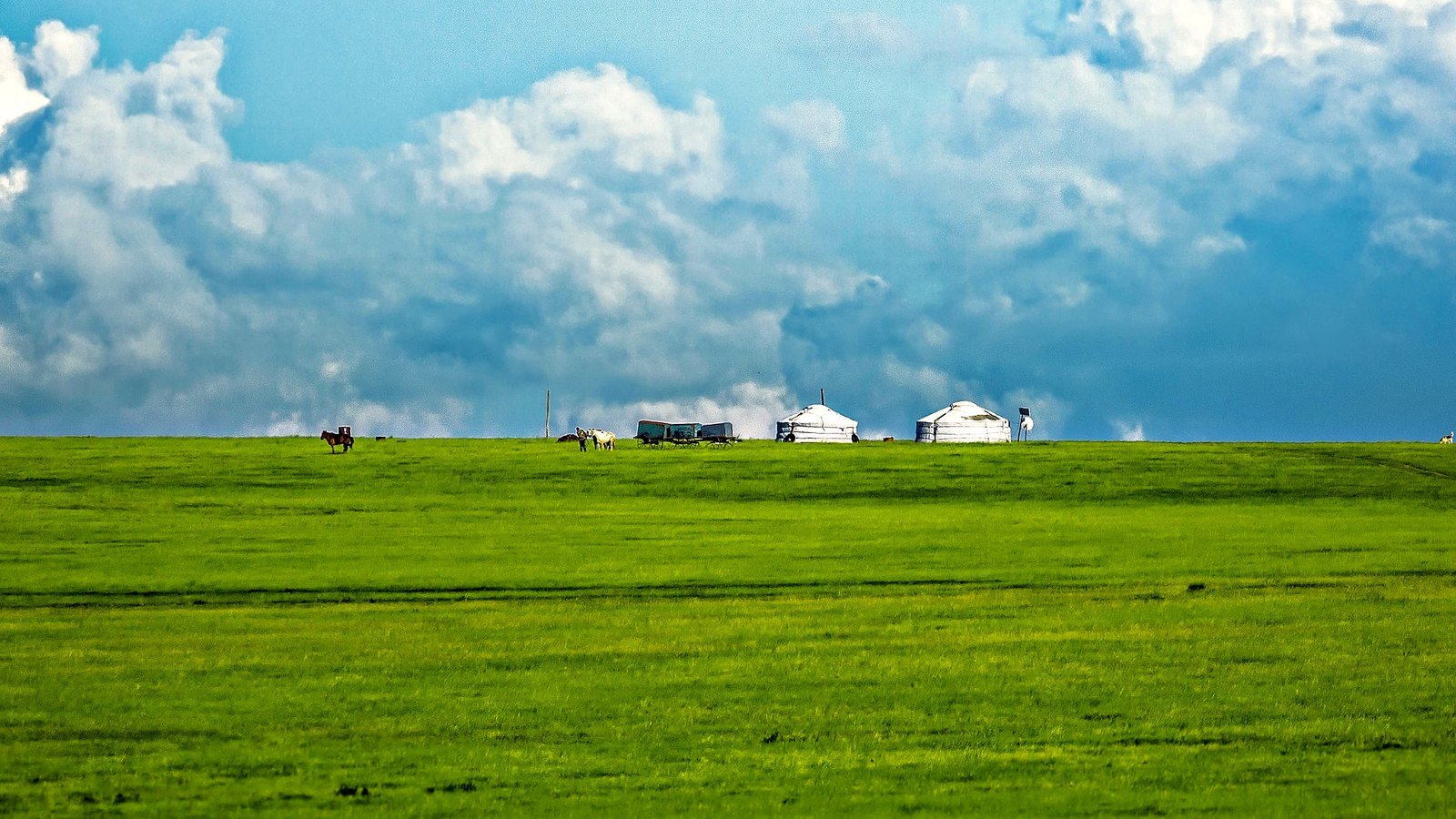
For the first time in the Convention’s history, rangelands sat at the centre of the global land agenda rather than at its margins. Mongolia used its presidency to push a single argument: that rangeland is not leftover space between the productive places, but a working ecosystem in its own right.
The evidence arrived with it. Rangelands Rising, a report published during the summit by the International Livestock Research Institute, GIZ, the Economics of Land Degradation Initiative, the UNCCD and IUCN, laid out the scale:
- Rangelands cover more than half of the Earth’s land surface
- They hold a third of the planet’s key biodiversity areas
- They are stewarded by roughly 500 million pastoralists
- Their ecosystem services are worth an estimated US$21–47 trillion a year, or up to US$5,000 per hectare
The report also overturned a long-standing assumption. Mobile livestock herding has been blamed for driving land degradation for the better part of a century. The research increasingly says the opposite: many rangelands evolved alongside grazing, and well-managed pastoral systems have created and maintained some of the most biodiverse landscapes on earth. What threatens them is not herding but drought, and the conversion of grazing land to crops.
2026 is also the UN International Year of Rangelands and Pastoralists — a designation Mongolia campaigned for. Hosting the summit inside that year was not a coincidence.
Decision two: the Steppe Plan
Mongolia’s central policy legacy from COP17 is the Steppe Plan, which secured backing from Parties, international organisations, the private sector and civil society. Three international initiatives launched under it:
- The Rangelands Flagship Initiative — the largest single mobilisation for rangelands in the Convention’s history
- The Water–Land Nexus Initiative — treating water availability and land health as one problem rather than two
- Nature-based Solutions for Sustainable Infrastructure — building roads, rail and power in ways that do not fragment the landscapes they cross
Alongside these sits the UNCCD Mongolia COP17 Legacy Project, funded with US$3.2 million from the Global Environment Facility plus US$8 million in co-financing. IUCN is the implementing agency; Mongolia’s Ministry of Environment and Climate Change is the executing agency. Its focus is policy frameworks, investment in sustainable rangeland management, and South–South knowledge exchange — in other words, making sure the ideas survive the summit that produced them.
Decision three: US$1.3 billion, and the gap it doesn’t close
Governments, development banks, funds and companies announced a finance portfolio spanning 23 countries across five continents.
| Figure | What it covers |
|---|---|
| US$1.3 billion | Total announced portfolio, land restoration and drought resilience, 23 countries |
| US$1.2 billion | Rangelands Flagship Initiative — 45 named projects |
| US$644.5 million | Identified as new finance |
| US$216.4 million | Confirmed and already moving toward implementation |
| Up to US$400 million | Drought Resilience Investment Facility, launched by UNCCD and Luxembourg |
Mongolia also arrived with a domestic finance agenda: sector-wide sustainable finance principles, a national green taxonomy, a target of 10 per cent green lending by 2030, and a national Business4Land Hub.
Set against the need, the totals stay modest. An estimated US$355 billion a year is required through 2030 to meet global land restoration commitments. Roughly US$77 billion is currently being invested. The UNCCD’s own framing is that inaction on land costs the world close to US$900 billion annually, while investment in healthy land could generate up to US$1.8 trillion through food production, water provision and carbon storage.
Decision four: the Ulaanbaatar Declaration
On 21 August, around 30 mayors, governors and other local and regional leaders adopted the Ulaanbaatar Declaration at the COP17 Mayors’ Forum. The Forum ran from 20 to 22 August, hosted by the Governor’s Office of the Capital City of Ulaanbaatar, and drew more than 200 participants from over 30 countries.
It is a political declaration, not a treaty, and it carries no legal force. What it commits its signatories to:
- Advancing local action on sustainable land management, land restoration and drought resilience
- Deeper cooperation between cities and regions
- Inclusive approaches engaging communities, youth, women and Indigenous Peoples
- A stronger, more permanent role for cities and regions in the UNCCD process
It also reaffirms the Riyadh Process as the continuing platform for structured dialogue between the UNCCD, its Parties and organised local and regional governments.
Running alongside it is the Ulaanbaatar Initiative, led by the capital itself: a voluntary effort to test a practical method for cities to measure and report their own land degradation, with results shared with the Convention by COP18. That last part matters more than the declaration’s language. A pledge with a reporting deadline attached behaves differently from one without.
What did not happen: the drought protocol
The headline failure of COP17 was the one everyone had been watching since Riyadh.
At COP16 in Saudi Arabia in 2024, Parties failed to agree a binding global instrument on drought and pushed the question to Mongolia. In Ulaanbaatar, the African Group pushed hard again for a legally binding drought protocol. Other Parties resisted, preferring a non-binding framework. On 28 August, the final day, consensus failed and the question was handed to the next COP.
Drought remains on the agenda as a stand-alone item, and Parties agreed to continue negotiating toward a decision on proactive drought management. The argument resumes at COP18, expected in Egypt in 2028 — four years after Riyadh first deferred it.
What did advance: the Riyadh Global Drought Resilience Partnership, launched by Saudi Arabia at COP16, moved closer to operational delivery, with work progressing on a proposed pooled fund to support around 70 vulnerable countries. And UNCCD and Luxembourg launched the Drought Resilience Investment Facility, aiming to mobilise up to US$400 million in public and private capital.
Mongolia’s own answer: saxaul and the Billion Trees campaign
None of what follows was decided at COP17. It is the work Mongolia brought with it — and part of why the summit came here at all.
77 per cent of Mongolia’s land is already degraded. In a country where roughly a third of the population still depends on herding, that is not an environmental statistic so much as an economic one. Drought and dzud — the severe winter that follows a dry summer and kills livestock by the million — are not projections here. They are recent memory.
The national response has two visible parts.
The first is the Billion Trees campaign, a President-led national movement launched in 2021 with a target of one billion trees planted by 2030, running in three phases: preparation to 2024, intensification to 2026, and sustained implementation to 2030. Around 128 million trees have gone in so far. Provincial governors have pledged over 20 million seedlings each, and the largest mining companies have committed to more than 600 million between them.
The second, and the one that matters most in the south, is saxaul.
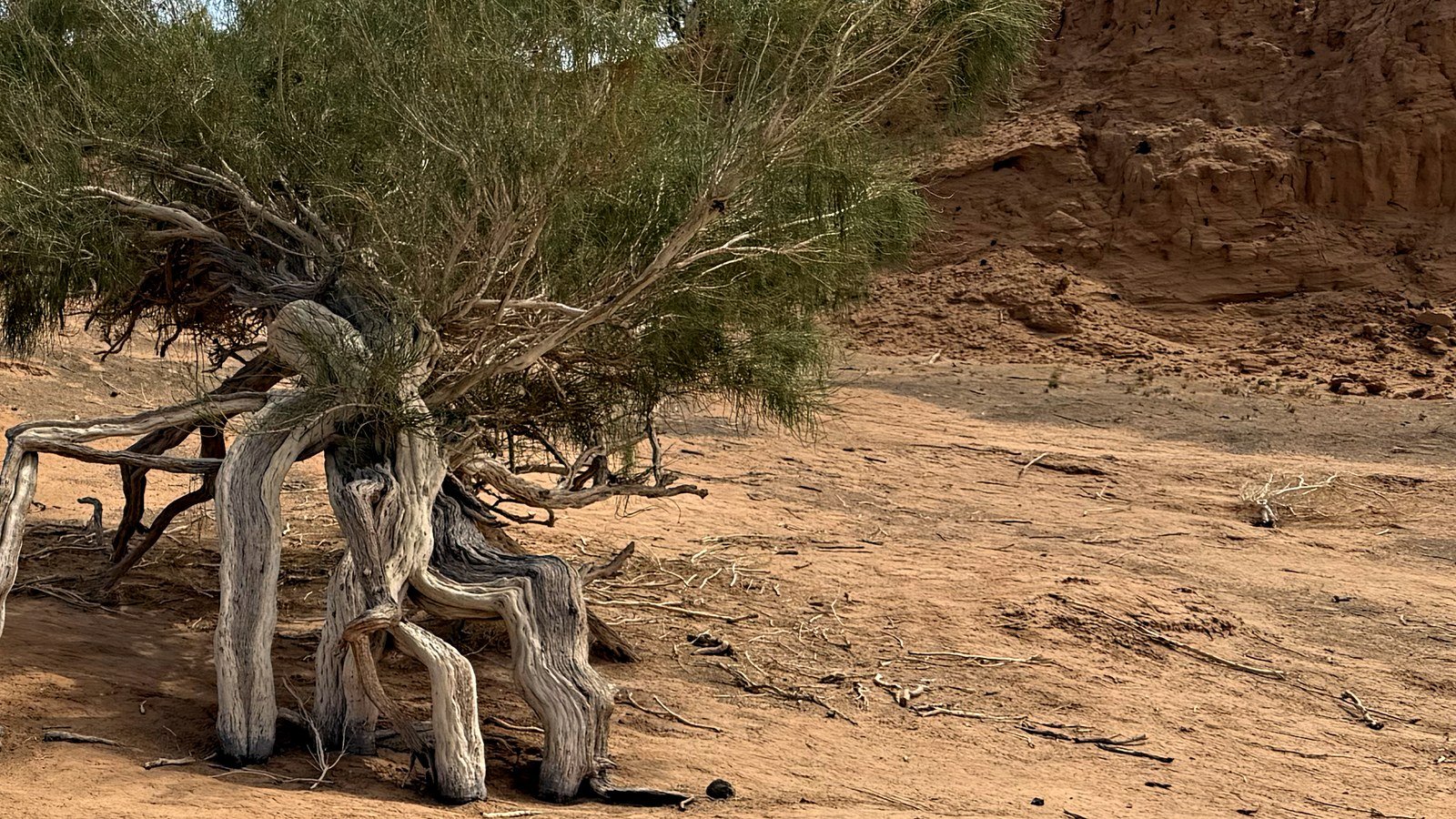
Saxaul — zag in Mongolian — is the tree that holds the Gobi in place. It is short, gnarled, deep-rooted and almost absurdly drought-hardy, and it does two jobs at once: it anchors sand against the wind, and it feeds camels. Where saxaul is cut for firewood or lost to drought, dunes start moving. You can read how much sand a place has lost off the exposed roots of an old one, standing clear of the ground like a wooden tripod.
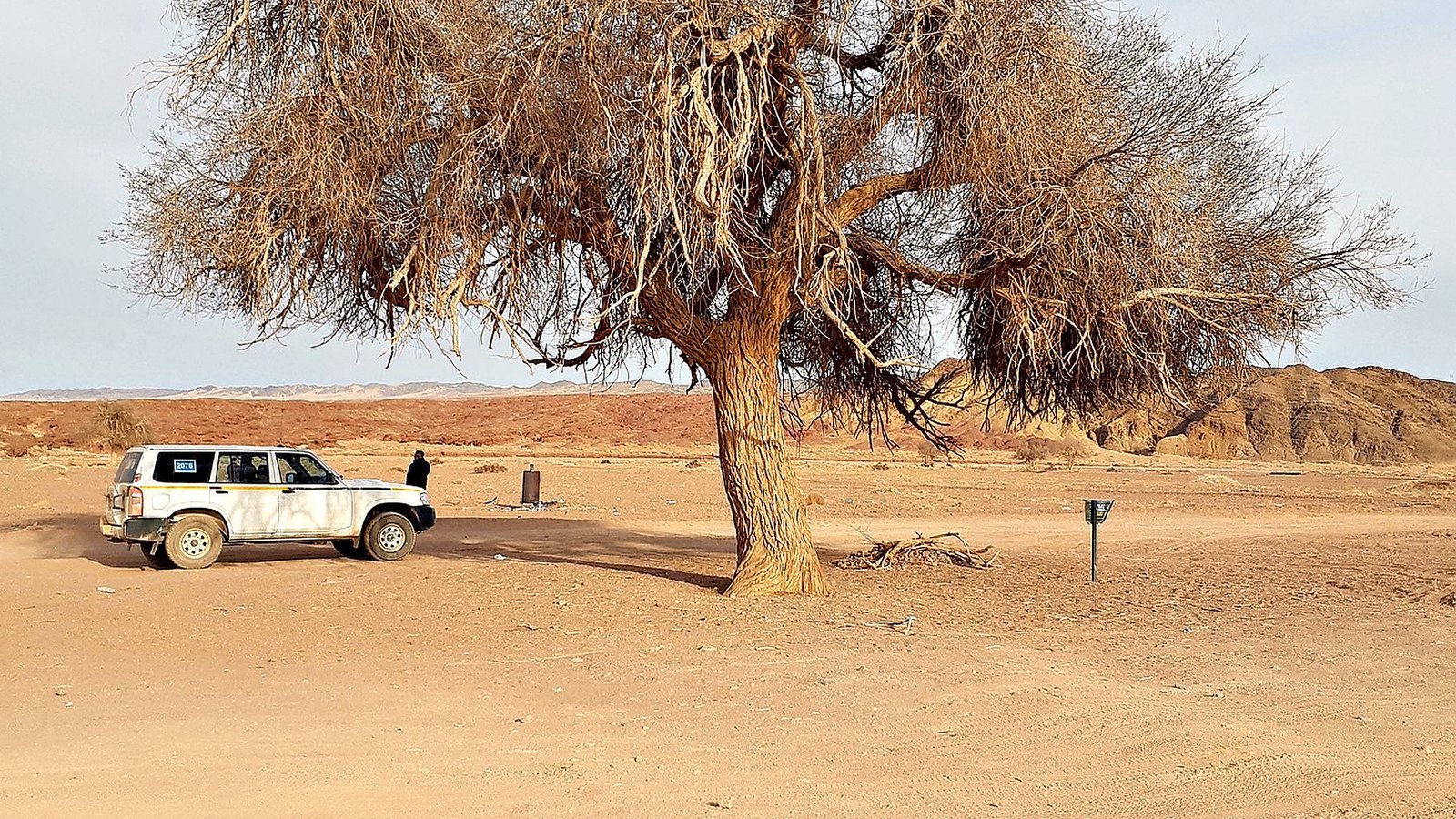
A community-driven Gobi restoration project has been regenerating saxaul forest since 2020 with a survival rate above 90 per cent — high enough to suggest that reforesting parts of the Gobi is genuinely achievable rather than aspirational. Elsewhere, 264,000 trees have gone into 160 hectares across the Gobi and steppe specifically to slow sand movement.
That last point has consequences well beyond Mongolia. The dust storms that hit northern China and Korea each spring, and that reach as far as North America, originate substantially in this region. Holding the Gobi in place is not a domestic project.
What this means if you are travelling to Mongolia
Very little of a summit like this reaches a traveller directly. But it changes the frame, and the frame is worth having.
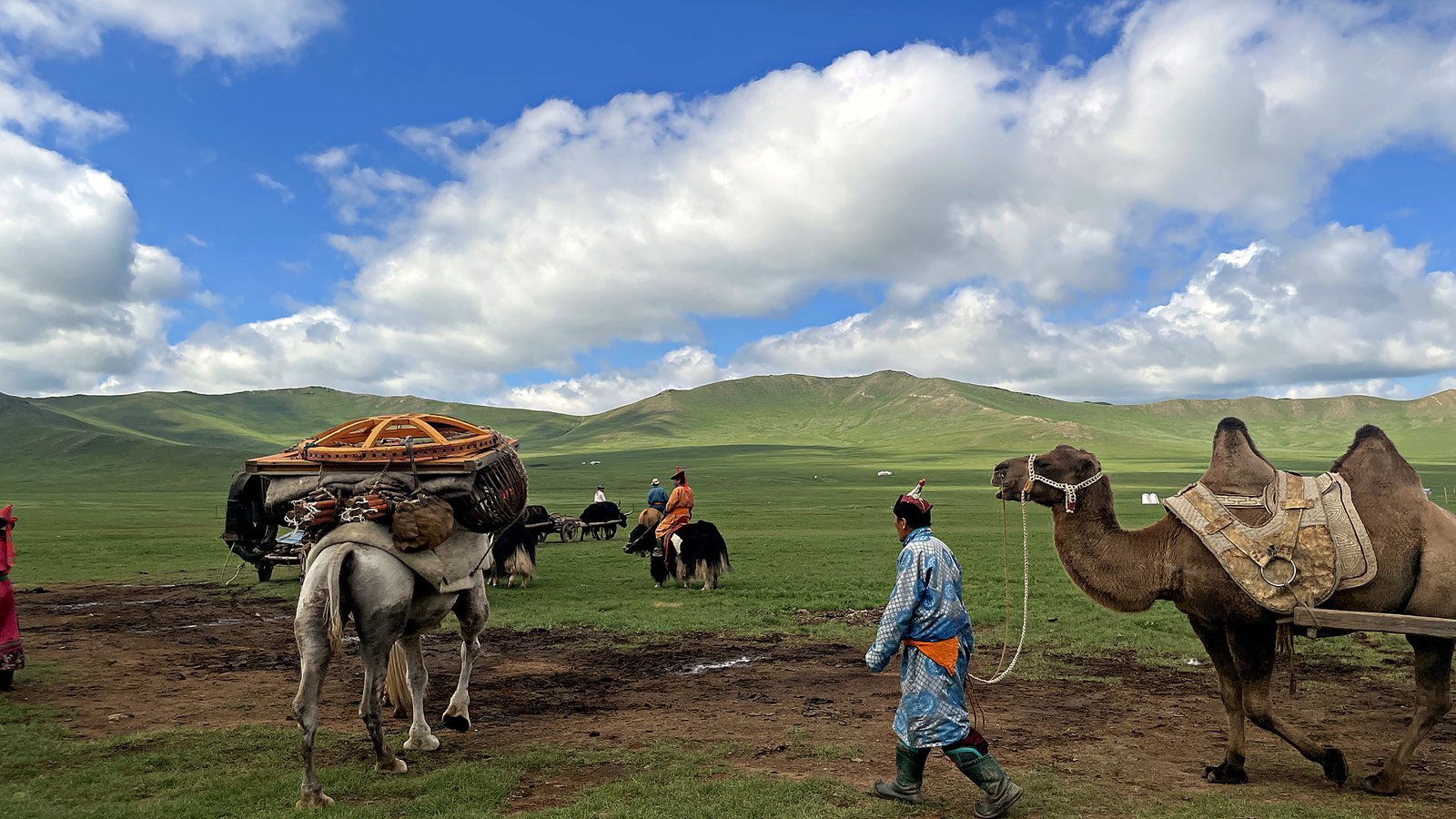
The landscape you cross on a Mongolian trip — the open grassland between Ulaanbaatar and Kharkhorin, the gravel plains of the Gobi, the high pasture of the Altai — is rangeland, and it is neither empty nor unmanaged. It is a working system, maintained by families who move with the seasons and who know, precisely, how much grass a given valley can carry and for how long. That knowledge is what COP17 spent two weeks formalising into policy.
It also explains a few things you will notice on the ground. Why herders move camp rather than staying put. Why a driver will detour around a stretch of pasture rather than cut a new track across it. Why the family you stay with talks about the winter in a way that sounds more like accounting than weather.
If you want the numbers behind the landscape before you go, our Gobi Desert statistics and nomadic Mongolia statistics pages cover the terrain and the herding economy in more detail, and the Mongolia tourism statistics page sets out who actually visits and when. For planning around the seasons this article keeps mentioning, start with the best time to visit Mongolia.
The drought protocol: a four-year timeline
| Session | Host | Year | Outcome on drought |
|---|---|---|---|
| COP16 | Riyadh, Saudi Arabia | 2024 | No protocol agreed; deferred to COP17 |
| COP17 | Ulaanbaatar, Mongolia | 2026 | No protocol agreed; deferred to COP18. Drought retained as a stand-alone agenda item |
| COP18 | Egypt (expected) | 2028 | Negotiations to continue |
Frequently asked questions
Was COP17 the climate summit?
No. COP17 in Ulaanbaatar was the Conference of the Parties to the UN Convention to Combat Desertification, which deals with land degradation, desertification and drought. The climate COP belongs to a separate treaty, the UN Framework Convention on Climate Change, and runs on its own numbering and schedule.
What was the main outcome of UNCCD COP17?
A US$1.3 billion finance portfolio across 23 countries, with US$1.2 billion of it directed to rangelands through the Rangelands Flagship Initiative — the largest single mobilisation for rangelands in the Convention’s history — and the first time rangelands were placed at the centre of the global land agenda.
Did COP17 agree a drought protocol?
No. The African Group pushed for a legally binding protocol, consensus was not reached, and on the final day the question was deferred to COP18. Drought remains a stand-alone agenda item and negotiations will continue.
What is the Ulaanbaatar Declaration?
A non-binding political declaration adopted on 21 August 2026 by around 30 mayors, governors and regional leaders at the COP17 Mayors’ Forum. It commits signatories to local action on land management and drought resilience and calls for a permanent role for cities and regions in the UNCCD process. It is a declaration, not a treaty.
Why did Mongolia host COP17?
Mongolia is one of the countries most exposed to land degradation — 77 per cent of its land is already degraded — and roughly three-quarters of its territory is rangeland. It also campaigned for 2026 to be designated the UN International Year of Rangelands and Pastoralists, and used the presidency to put rangelands at the centre of the agenda.
When and where is COP18?
COP18 is expected to take place in Egypt in 2028.
Sources
- UNCCD — COP17 closing press release, 28 August 2026; finance release, 24 August 2026; Ulaanbaatar Declaration release, 21 August 2026
- Rangelands Rising: Investing in Sustainable Management and Restoration — ILRI, GIZ, Economics of Land Degradation Initiative, UNCCD and IUCN, launched 24 August 2026
- IUCN — “Mongolia-led project to tackle land degradation, as UNCCD COP17 approaches”, 7 August 2026
- UNDP Mongolia — Gobi desertification and saxaul restoration reporting
- Institute for Strategic Studies, Mongolia — One Billion Trees campaign analysis
- Premium Times, Down To Earth and Euronews — COP17 closing coverage, 28–29 August 2026
We run small-group and private tours across the rangeland this article is about — the central steppe, the Gobi and the Altai. If you are planning a trip and want a route built around the seasons rather than a fixed schedule, write to bookings@atlasmongoliatravel.com for a free, no-obligation consultation.

Atlas Mongolia Travel
Atlas Mongolia Travel is a locally operated tour agency based in Ulaanbaatar, Mongolia, specializing in authentic private and group tours across Mongolia.

Leave a Reply